
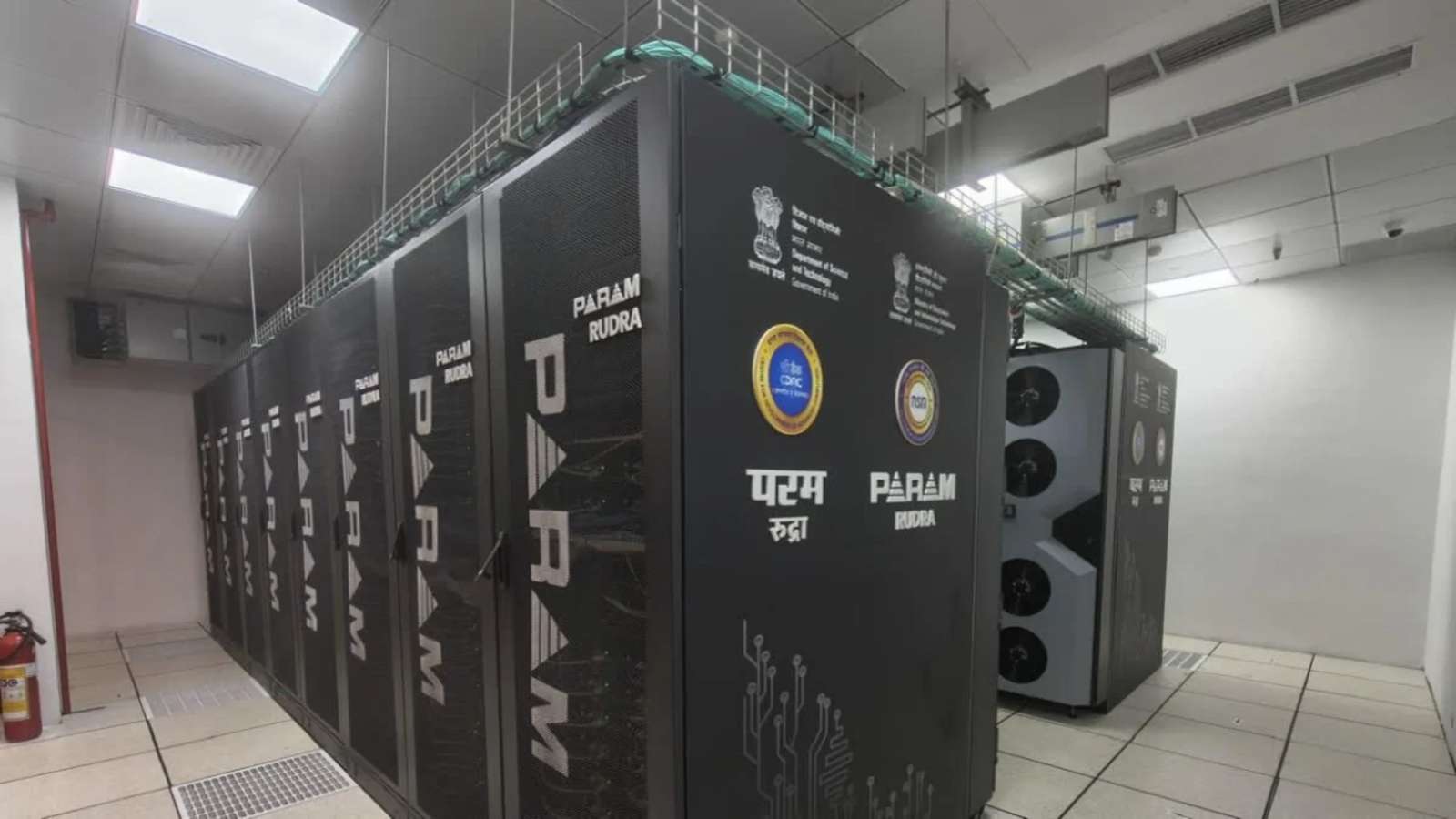
Bengaluru-based deeptech startup Turiyam AI has deployed its inference engine on an indigenous server architecture at the Centre for Development of Advanced Computing (C-DAC) in Pune.
The company integrated its inference-first compute platform with locally developed Rudra 1 and 2 servers, enabling the execution of advanced AI workloads within a domestic compute environment.
Sanchayan Sinha, Co-founder and CEO of Turiyam AI, said the deployment demonstrates India’s ability to build across the AI stack. “By validating performance within C-DAC’s environment, we are demonstrating that advanced AI workloads can run on domestically engineered systems without compromise,” he said.
The deployment marks the execution of a complete Indian AI stack, combining a locally developed model, inference engine, and server infrastructure. As part of validation, an LLM for the Hindi language, covering 37 dialects, ran successfully within the C-DAC environment, demonstrating the system’s performance on indigenous infrastructure.
With the deployment, the startup wants to show that an Indian-developed model can run on a domestic inference engine and server setup within a high-performance computing environment.
E Magesh, Director General of C-DAC, said the organisation continues to work with industry and research partners to strengthen India’s computing ecosystem. “The validation of advanced AI workloads on indigenous computing infrastructure reflects the growing maturity of India’s research and innovation ecosystem,” he said.
C-DAC, under the Ministry of Electronics and Information Technology, leads national efforts in high-performance computing and AI research. Turiyam AI focuses on inference-layer technologies that enable complex models to run at lower cost and energy use.
Recently, last month, BharatGen Technology Foundation also signed an MoU with IIT Bombay and C-DAC India to jointly advance foundational AI research for the country. The collaboration is designed to build a sovereign AI infrastructure that is rooted in India’s linguistic diversity.
Under the MoU, the three institutions will collaborate on four areas: distributed AI infrastructure, multimodal LLMs, AI for Indic and low-resource languages, and multilingual datasets and evaluation frameworks.
- Amazon Warns Engineers Against AI Productivity Traps in Latest Memo
- Gnani AI Launches Prisma v3.0 Speech Recognition Model for 10 Languages
- Venttup Raises $3 Million To Expand Precision Manufacturing
- Articul8 Launches Bivia To Help Enterprise AI Agents Make Decisions
- NVIDIA Launches Open-Weight Transcription Model for 40 Languages
- Sarvam AI Rolls Out Indus Cowork to 2,500 Maharashtra Govt Officials