
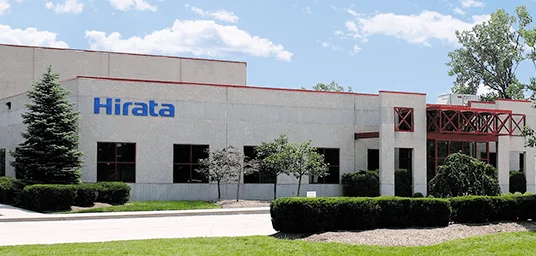
Japanese semiconductor equipment maker Hirata Corporation has entered India through a partnership with manufacturing solutions provider ATS India. ATS India will act as Hirata’s exclusive distribution partner in the country.
The partnership aims to improve Indian manufacturers’ access to semiconductor equipment and automation technology.
It will initially focus on Hirata’s standard products for semiconductor manufacturing and advanced packaging. The companies said the move will address limited local access, long lead times, and technical support gaps.
John Derzy, VP at Hirata Corporation of America, said India is an important growth market for the company. He said the partnership aims to build long-term capability rather than only bring products into the country.
Hirata and ATS have worked together for more than a decade in sectors including automotive, with the new agreement extending into semiconductors. Hirata will initially offer standard products before moving towards more customised solutions as the market matures.
The portfolio will include Equipment Front End Modules (EFEM), FOPLP Load Ports, and PLP Panel Handling Robots. It will also include high-performance wafer handling robots. These systems support wafer and panel handling across semiconductor manufacturing and advanced packaging processes.
The partnership will target semiconductor manufacturing, backend and OSAT processes, advanced packaging, and handling automation. OSAT refers to outsourced semiconductor assembly and test operations. Hirata said these operations remain largely manual or semi-automated in India.
“The focus of this partnership is on building the local commercial, technical and service ecosystem,” Kishen Kavikondala, CEO of ATS India, said in a statement. He said the companies will focus on precision manufacturing solutions before expanding into customised offerings.
Kavikondala also said ATS India sees a multi-million-dollar opportunity in India’s equipment design capabilities by 2030. He said local equipment availability could reduce dependence on cross-border logistics and delayed technical support.
Hirata expects the collaboration to increase automation across India’s semiconductor manufacturing processes. Derzy said the companies expect changes in equipment access and adoption over the next two to three years.
The partnership is also expected to support local supply chains and precision manufacturing skills.

Your reaction
Discussion
What's your take on this story?
No comments yet — be the first to share your view.