
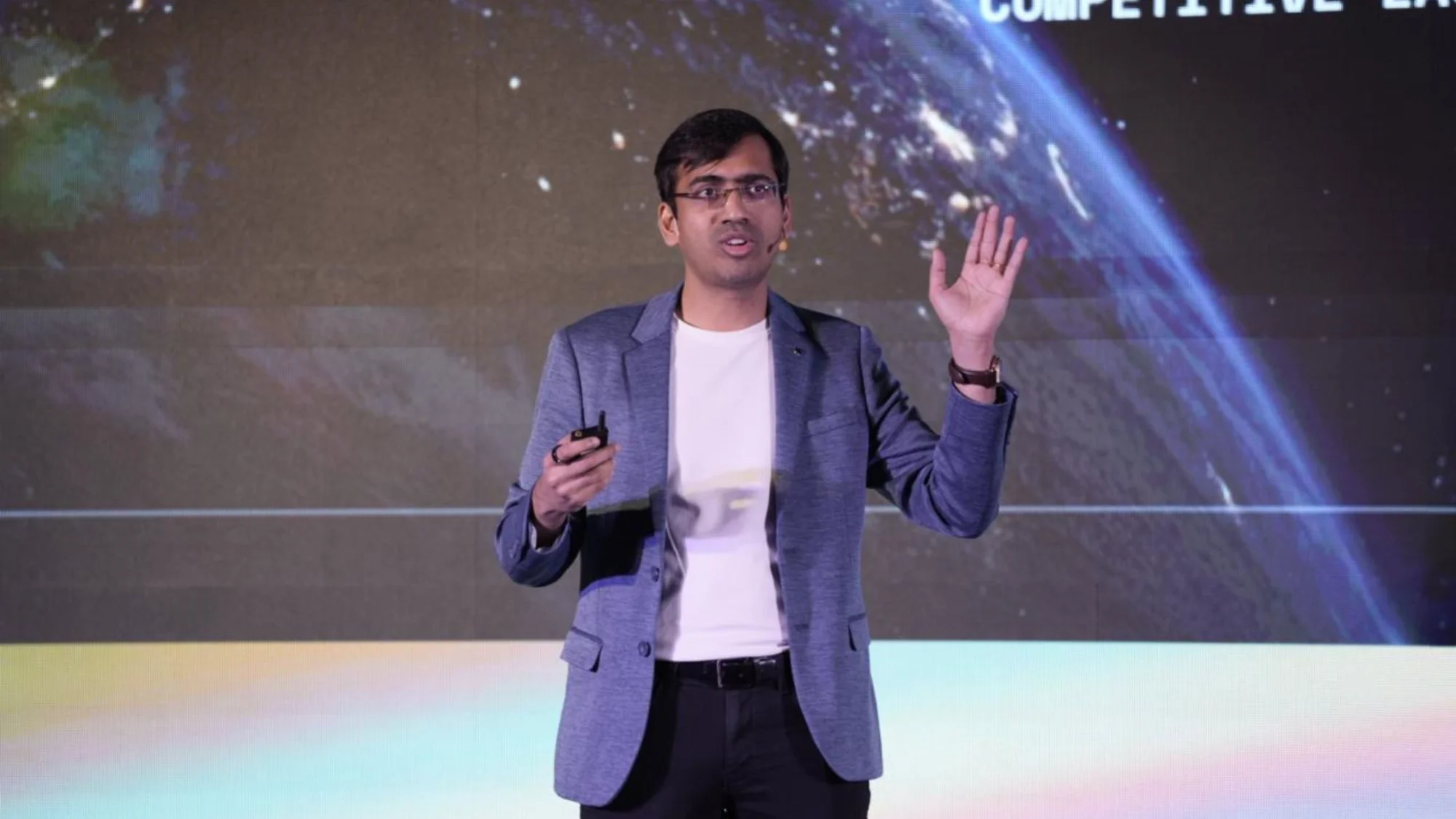
Hyderabad-based private launch startup Skyroot Aerospace plans to increase launch frequency to one launch per month from a new facility, its Co-Founder and CEO, Pawan Kumar Chandana, said at the Arkam Annual Meet 2026 in Bengaluru.
This new facility, ‘Infinity Campus’ and the Vikram-1 rocket were inaugurated by Prime Minister Narendra Modi in Hyderabad recently. Skyroot had mentioned that the 2,00,000-square-foot campus can produce one rocket per month.
The remarks came during Chandana’s keynote on India’s growing space tech market and launch demand. He said the company aims to expand its launch capacity as global demand for small-satellite launches increases. He spoke at the annual event organised by venture capital firm Arkam Ventures, an investor in Skyroot, which brought together founders, investors, and industry leaders.
“Space exploration is no longer a dream; it is a reality,” Chandana said at the event. “We are building towards a future where we go from one launch a month to multiple launches in a day.”
Skyroot also recently completed a 145-second endurance test of its Dhawan-III cryogenic rocket engine on an indigenous mobile test stand built in-house. It said it developed the engine under the Aatmanirbhar Bharat ARISE-ANIC initiative with a focus on reusable and greener propulsion.
Chandana said Skyroot aims to build a global space tech company from India and added that early funding challenges have given way to support from investors and government initiatives.
He also highlighted a gap in global launch capacity. Around 219 private launches were expected globally in 2025. Only 33 were serviced by private providers outside China and SpaceX, he added.
He further said that the company’s Vikram-1 launch vehicle uses 95% indigenous components. The company is on schedule to launch the vehicle in the first half of 2026. Vikram-1 will be able to deploy multiple satellites to orbit and become India’s first fully carbon-fibre launch rocket. It uses 3D-printed hypergolic engines, and its Kalam-1200 booster is the largest privately built rocket stage in India.
With smaller satellites now accounting for over 75% of global launches, there is a need for faster launch services. According to reports, India’s space sector could grow from about $13 billion today to over $40 billion by 2030.
The sector may attract $3-5 billion in venture and private equity funding over the next five years.
Bala Srinivasa, Managing Director at Arkam Ventures, said the next decade of venture capital will focus on founders building global technology companies from India. “Our focus has always been on backing outlier founders developing foundational technology platforms,” he said.
Industry leaders at the event said India’s startups are increasingly building products for global markets. They added that investors are seeking companies that can compete internationally in sectors such as space and artificial intelligence.
[Note: The headline has been amended for clarity.]

Your reaction