Key takeaways
- Pursue a PhD to enhance innovation and methodology in AI startups.
- PhD founders achieve higher success rates and valuations at IPO.
- Technical expertise is essential for building deep-tech AI startups.
- Experience with advanced AI tools is crucial for core team members.
- Success in AI entrepreneurship requires understanding existing technologies and possibilities.
Meta AI chief Yann LeCun, in a recent interview with Zerodha co-founder Nikhil Kamath, advised budding AI entrepreneurs in India to pursue an academic degree, such as a master’s or PhD, particularly in technical and complex fields like artificial intelligence, before building a startup.
“Doing a PhD or graduate studies trains you to invent new things and ensures that your methodology prevents you from fooling yourself into thinking you’re being an innovator when you’re not,” he said.
LeCun added that while a PhD is not a strict requirement for success, it offers significant advantages for entrepreneurs. “It gives you a different perspective,” he said. “In a complex, deeply technical area like AI, it’s useful to learn about what exists out there, what’s possible, and what’s not.”
His comment resonated with many founders. “If you are building a deep-tech startup, which is more than just a GPT wrapper, you will need technical people in the core AI team,” said Pijush Bhuyan, computer vision engineer at Awiros. He added that companies need people who have got their hands dirty with PyTorch, and who have spent hours implementing state-of-the-art research papers, not prompt engineers or people hailing from an SDE background without prior experience.
Amit Sheth, the chair and founding director of the Artificial Intelligence Institute at the University of South Carolina (AIISC), agreed with LeCun, saying that this was definitely true for deep-tech startups. “Several of my PhDs have started successful startups (and I have done four). Of course, there are plenty of cases where founders did not get advanced degrees but have succeeded, so this is unnecessary, but in general, those with deeper experience in technical innovation have an edge,” he said.
Startups founded by Sheth’s students include AppZen, thunk.ai, Objective, Inc., and Clinical AI Assistance.
Rajan Anandan, managing director at Peak XV Partners (formerly Sequoia Capital India), believes the Indian startup ecosystem would benefit from more founders with deep expertise in artificial intelligence and software development. According to a research from Private Circle, only 8% of newly launched AI startups have founders with a PhD degree.
A 2017 study by the National Bureau of Economic Research showed that startups with at least one PhD founder are more likely to succeed and have higher valuations at IPO. The research found that having a PhD founder increases a startup's chances of a successful exit by over 50%.
Vishnu Vardhan, the founder of Vizzhy and SML, aptly described the sad state of Indian AI startups in an exclusive interview with AIM, stating, “Indian startups often focus on business applications instead of foundational innovation, with investors prioritising quick returns over long-term deep-tech investments.”
He said that the so-called deep tech investors clearly have no theses whatsoever. “I met a few VCs who said they were deep tech investors. I asked them their ticket size; they don’t even understand the scale of investment required for true deep tech.”
Exceptions Galore
Elon Musk, the man behind companies like Tesla and SpaceX, never pursued a PhD or master’s degree. Despite this, he successfully built and led some of the most innovative companies in the world.
Interestingly, earlier this year, LeCun engaged in a banter with Musk, who questioned the former’s contribution to AI by asking how much research he had conducted “in the last five years.” Pat came LeCun’s reply: “Over 80 technical papers published since January 2022.”
“SpaceX would not exist without the thousands of scientific papers on rocket engine design, propellant chemistry, rocket control, material science, orbital mechanics, heat dissipation, trajectory planning, and the hundreds of scientists who got where they are by studying these papers,” claimed LeCun.
Deep Tech Startups in India
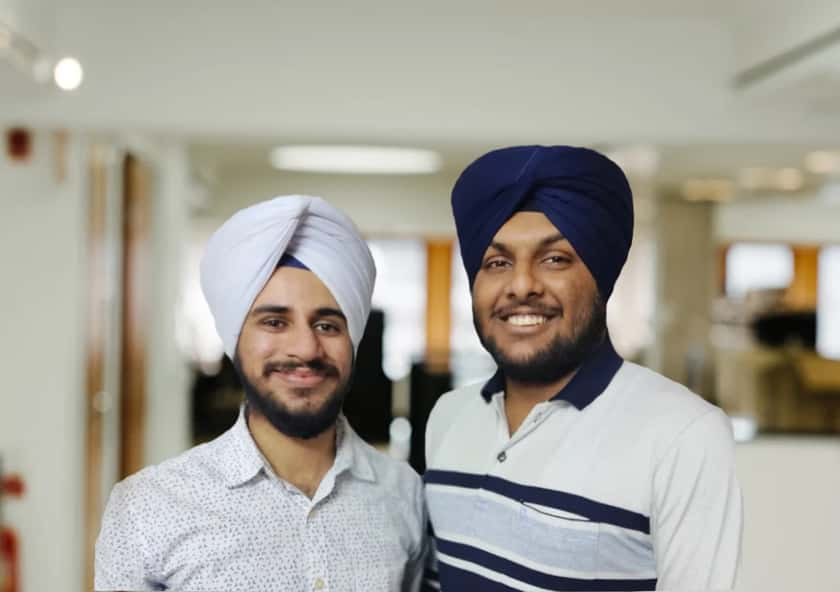
Similarly, Vishnu Ramesh, founder of Subtl.ai, couldn’t agree more. “We have come so far with Subtl.ai thanks to people like Manish and Pranav coming in as my partners. Super excited to disrupt the custom SLM RAG space!” he said.
Manish Shrivastava, co-founder and chief scientist at Subtl.ai, has a PhD in computer science from IIT Bombay. Similarly, CTO Pranav Goyal has a dual degree, a BTech in computer science and an MS in computational linguistics from the International Institute of Information Technology, Hyderabad (IIITH).
Notably, Sarvam AI, one of the most popular AI startups in India, was founded by Vivek Raghavan, who has a PhD in electrical and computer engineering from Carnegie Mellon University. His co-founder, Pratyush Kumar, also holds a PhD from ETH Zurich.
Similarly, Pranav Mistry, founder of TWO AI, completed his BE in computer science from Gujarat University, followed by an MDes in Design from IIT Bombay. Ritwika Chowdhury, the founder of Unscript, holds an MTech in electronics and electrical communication engineering from IIT Kharagpur.
Rise of AI Startups by Researchers
In the West, many AI researchers have recently founded their own AI startups. François Chollet, the creator of Keras, recently announced his departure from Google. Not long after, Toby Shevlane, a scientist at Google DeepMind, also revealed that he was leaving the company to pursue his own venture.
Nearly all researchers who co-authored Google’s Transformers paper ‘Attention Is All You Need’, which shaped the foundation of modern AI, later left the organisation to start their own companies to tackle specialised niches within AI.
“…At that time GPT-2 had just come out and the trajectory of the technology was pretty clear…So I called up my co-founders and I said ‘Maybe we should figure out how to build these things,’” said Cohere CEO Aidan Gomez in a recent podcast, elaborating on the need to capitalise on the wave of future internet models.
Fei-Fei Li, co-director of Stanford’s Human-Centered AI Institute, co-founded World Labs in 2024. The institute, valued at over $1 billion, aims to develop AI systems with advanced spatial intelligence for 3D interaction.
Similarly, Ilya Sutskever, co-creator of ChatGPT, shifted his focus to AI safety by founding Safe Superintelligence, reportedly valued at $5 billion. Meanwhile, in March, computer scientist Kai-Fu Lee founded 01.AI, valued at $1 billion, to develop open-source LLMs specific to China.