Key points
- Kanishk these two points are what ive referenced Based on gas chromatography and mass spectrometry (GC-MS) analyses, 1,840 volatile organic compounds (VOCs), so called the “human volatilo
- This is the link to the site https://www.sciencedirect.com/science/article/abs/pii/S1558787817300539
Key takeaways
- Dognosis uses dogs' keen sense of smell to detect cancer through volatile organic compounds in human breath.
- The startup combines trained dogs with artificial intelligence for an at-home early cancer detection test.
- Dogs have an extraordinary number of olfactory receptors, enhancing their ability to identify subtle chemical changes in humans.
- The method aims to be cost-effective, non-invasive, and accessible for early cancer screening.
- Dognosis's test has been validated in a clinical trial published in the Journal of Clinical Oncology.
In 1989, a 44-year-old woman in London became alarmed when her dog, a Doberman-Collie, was incessantly sniffing and trying to bite off a pigmented mole on her thigh. She had been ignoring the lesion for days, but the dog was obsessed with it. So, she sought a dermatological evaluation, and the mole turned out to be malignant melanoma.
Dogs have 300 million olfactory receptors, enabling them to detect subtle chemical changes in humans, including volatile organic compounds (VOCs) associated with cancer. For decades, dogs have been considered a potential, non-invasive cancer screening method. However, their accuracy fluctuates with fatigue and environmental distractions.
Now, a Bengaluru-based cancer detection startup wants to address that. Founded in 2023, Dognosis uses artificial intelligence and trained dogs as an at-home early cancer detection test.
Canine Cancer Screening
Co-founder Akash Kulgod's curiosity was piqued when he "learned that dogs were sniffing COVID-19 all across the world," he tells AIM. Meanwhile, co-founder Itamar Bitan served in the Israel Defense Forces' (IDF) canine special operations unit, where he worked on bomb detection, and later trained dogs to sniff out Parkinson's and breast cancer at another organisation in Israel for two years.
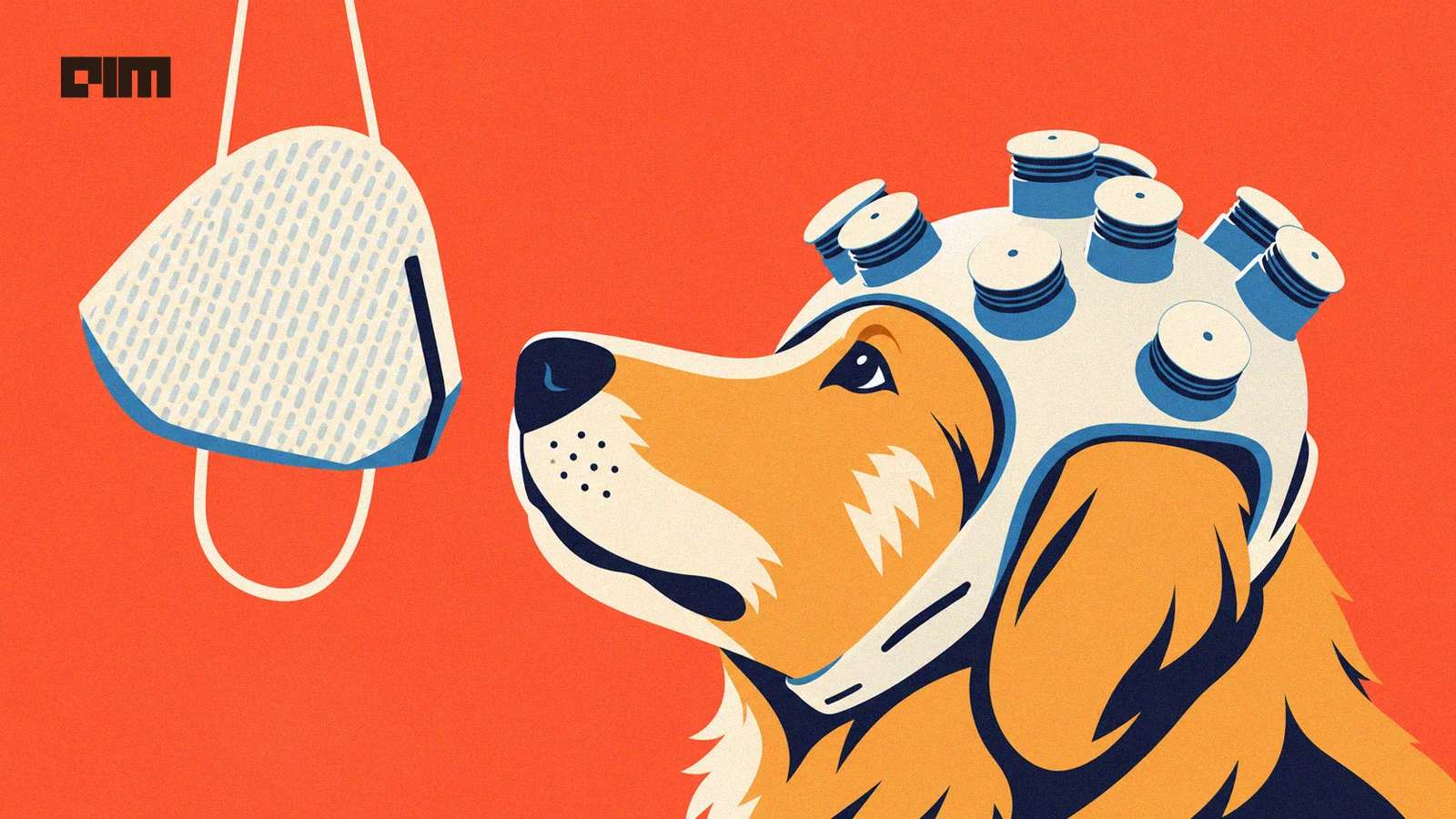
The startup developed DogSense, a brain-computer interface (BCI), after winning a $75,000 contract with the Singapore government to build a 3D map of explosive residues in post-blast scenes using scent-trained dogs. The technology monitors dogs as they sniff an affected person's mask, while AI models evaluate their body language. The dogs are trained to detect VOC patterns that correspond to cancer.
The AI quantifies their cognitive state, which enables standardising and scaling cancer screening, Kulgod says.
Each dog gives behavioural cues when it finds what it thinks is cancer, and the AI converts them into a prediction on a scale of 0 to 100. Several dogs sniff every sample, and their scores are combined.
Large language models "can't yet read dogs from their body language and their brainwaves," Kulgod says, so Dognosis built its own model. It belongs to Meta's V-JEPA class of video and world models. The model mainly takes in video, with other data embedded, such as sensor data from the dogs' brain activity and respiration patterns, to ascertain cancerous VOCs.
The test was validated in a clinical trial published earlier this year in the Journal of Clinical Oncology. The trial had 3,000 participants, with 1,500 in a test set and 283 people with cancer, Kulgod says. About 100 of those were stage one and two cancers.
However, he is careful to say it's not a definitive diagnostic tool. "It is a pre-screening tool that can be done at home, is non-invasive, and flags whether a person needs a follow-up," he adds.
A high score leads to a follow-up at a partner site, which involves imaging, he says. The imaging shows whether a biopsy is needed, and the biopsy confirms whether the person has cancer.
Dognosis has so far analysed 10,000 samples.
The Model
Dognosis claims to detect about 80% of the cancers that occur in India. These include head and neck, breast, cervical and other gynaecological, and upper and lower gastrointestinal cancers. The remaining are rare, so there are not enough samples to show statistical significance, though Kulgod says Dognosis "might also be detecting others."
The startup offers a membership, where members get a free-of-cost follow-up. Pricing is not out yet, and the details are still being finalised. "The goal is to fix a cost that everyone in India can afford," Kulgod says.
Access starts with a waitlist, which is open to everyone above 35. It plans to launch in Bengaluru early next year.
Dognosis plans to serve consumers as well as businesses. In the US, it is still doing customer discovery and plans to enter late next year. In both markets, it plans to keep a direct-to-consumer channel.
Venture capital firm Boost VC came in early, writing what Kulgod calls a "plus check" in January 2024.
Dognosis has raised two rounds. Accel India led the $1.5 million second round earlier this year. It is not looking to raise another round anytime soon.
Spending mostly went into novel hardware, a lab, building teams, and a clinical trial he calls "the largest in the world," followed by publishing, quality standards, scaling and automating the lab. Most of the capital has gone into research and development (R&D).
Two companies, one in Germany and one in Israel, are trying to do the same thing, Kulgod says. He thinks Dognosis is "a bit ahead" because neither is yet rolling out a product. "We'll be first in the world," he says.
The lab can process about 100 samples a day on the current version of the platform. The goal is to reach about 1,000 a day in the next six months, he says.
The dogs work in SniffSpace, the startup's olfactory workstation. It was designed to keep dogs engaged, move samples in and out with their identity recorded, contain odours, and prevent contamination. It also carries many sensors so each session is fully recorded, to capture "as much data from the dogs as possible," he says.
Dognosis plans to launch a "sniff gym" in Bengaluru next year, where people can bring their dogs to learn how to sniff. It will then recruit dogs with relatively significant olfactory senses to sniff blood samples and scale sniff gyms around the world.
Spotted an error? Tell our editors. Read our editorial standards and corrections.
Selling to AI teams? Put your brand in front of the 5M+ people who read AIM every month. Plan a campaign