
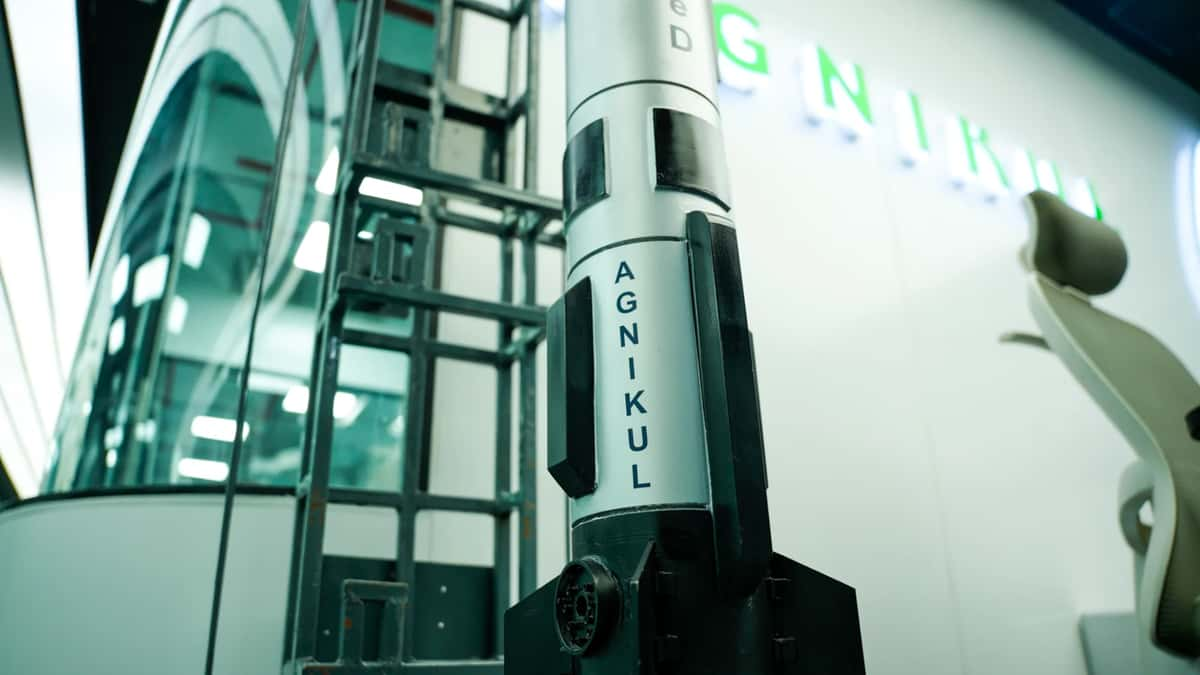

The IIT Madras Research Park (IIT-MRP) in Chennai looks almost nothing like a rocket factory. It does not feature massive scaffolding to accommodate rockets. It does not boast welding machines for fuel and oxidiser tanks, or tooling rigs for complex plumbing. Instead, the research park spans a vast area with a garden in the centre surrounded by tall office buildings.

Yet, a space tech startup calls this space its base, building and testing some of its most critical components. Agnikul Cosmos, founded by aerospace engineer Srinath Ravichandran (CEO) and entrepreneur Moin SPM (COO) in 2017, has quickly become one of India’s most closely watched startups.
The company is developing Agnibaan, a launch vehicle for small satellites, and has drawn attention for using additive manufacturing (3D printing) to build rocket engines. In 2024, it launched its Agnibaan SOrTeD demonstrator mission, showcasing its single-piece, 3D-printed, semi-cryogenic engine technology that was a milestone for Indian space tech.
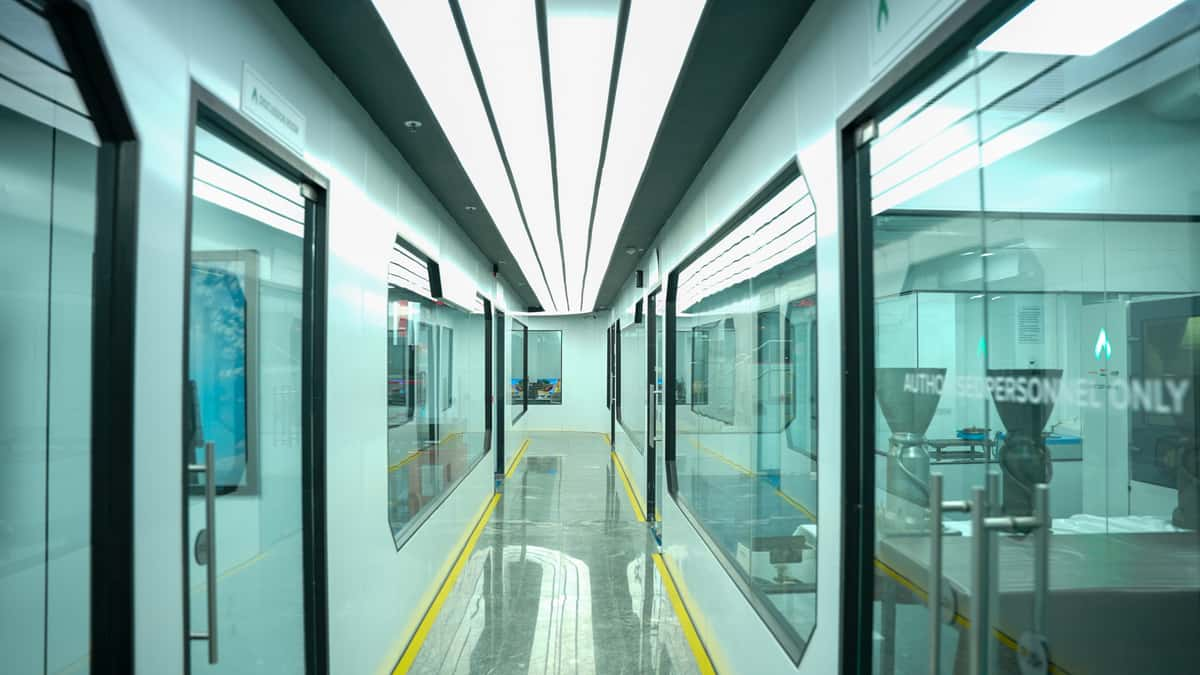
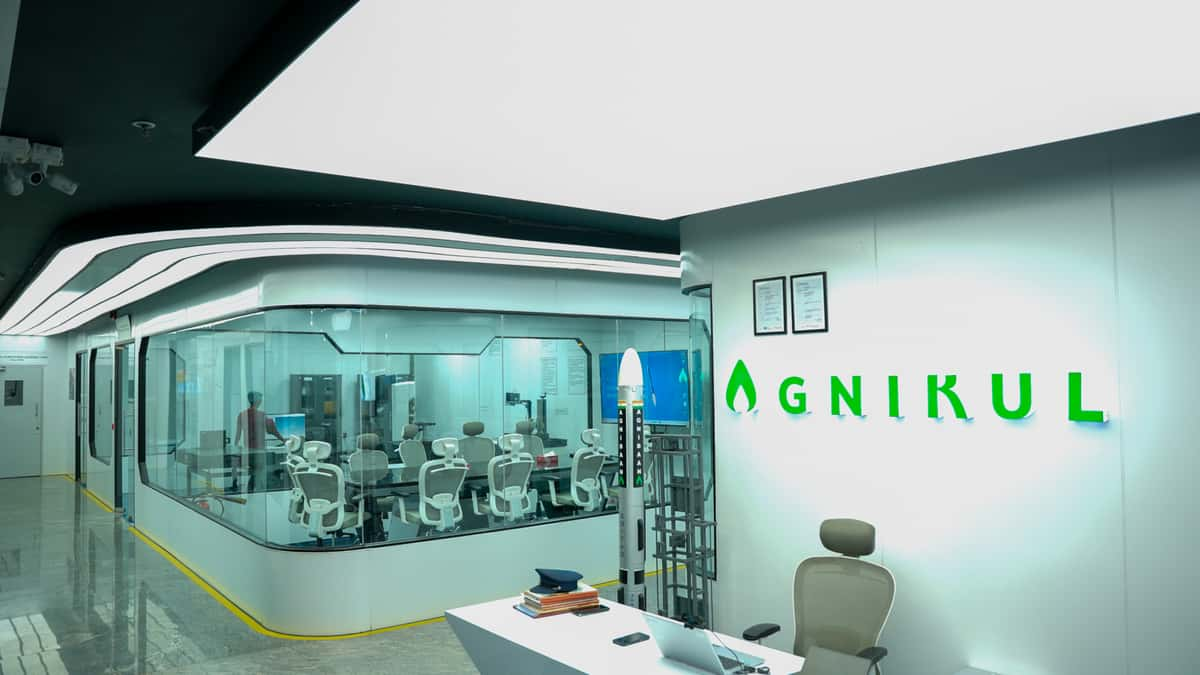
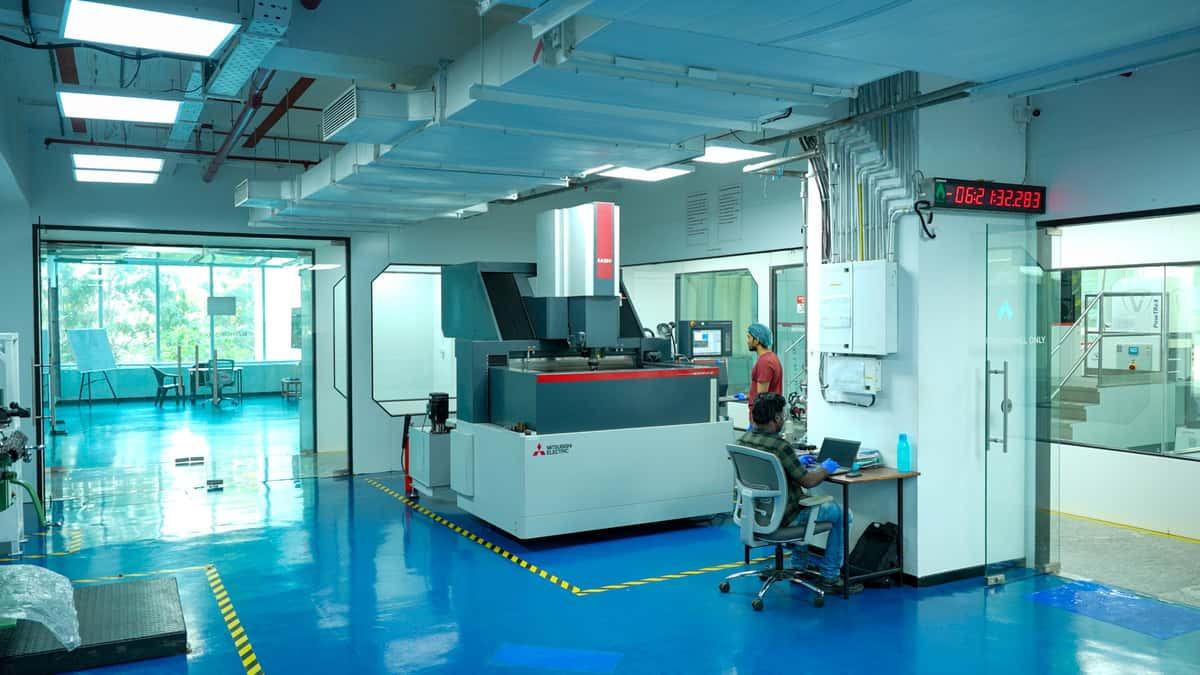
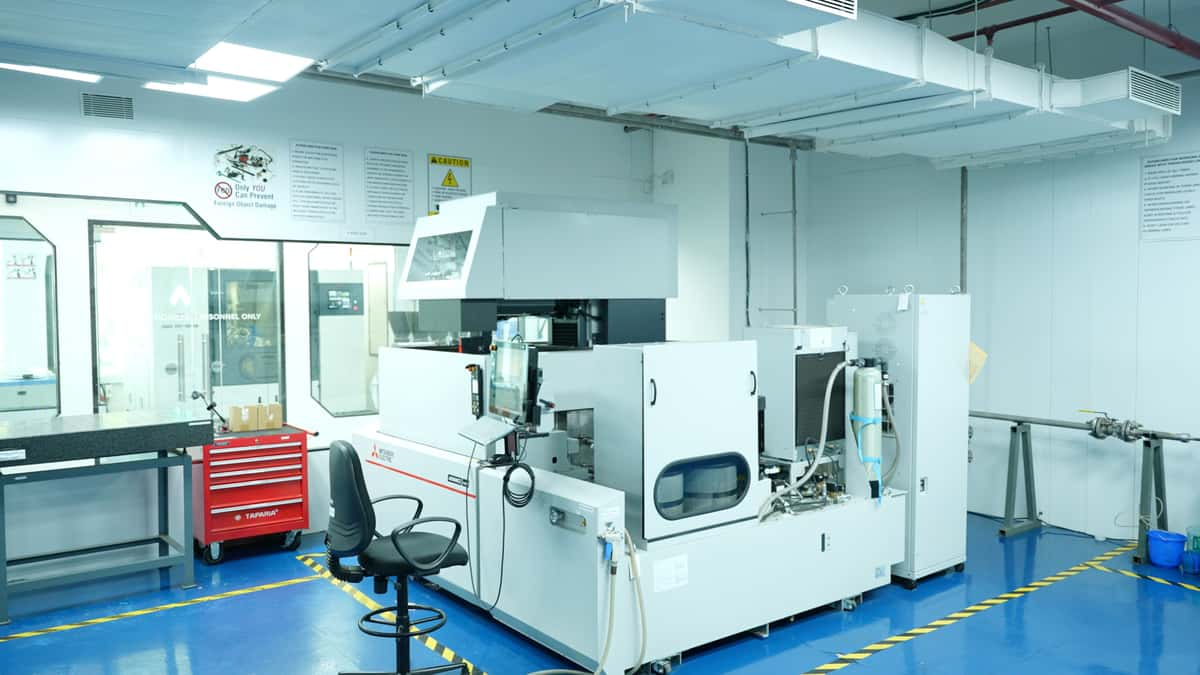
At its facility at IIT-MRP, lasers fuse layers of metal powder into rocket engines in one section, while in another, engineers inspect, clean, and prepare components for testing. For Co-founder and CEO Srinath Ravichandran, the startup’s ergonomic workspace reflects a broader shift taking place in manufacturing itself.
“I think this is the future of manufacturing,” he tells AIM during a walkthrough of the facility. “Gone are the times when you need to see the sparks flying and the hot environment and all. You can now make this happen within an IT park.”
https://youtu.be/2ehvQN29tfQ?si=wdacHW97uAuT_K2g
Where Powder Becomes Propulsion
The journey for manufacturing these propulsion parts begins with metal powder. Inside one of the company’s additive manufacturing units, printers use lasers to fuse layers of Inconel, a heat-resistant alloy commonly used in aerospace applications. Layer after layer, the machine builds a rocket engine from the ground up.
Ravichandran compares the process to something more familiar.
“I think of it like laying dosa batter,” he quips. “A layer of powder is coated, and then lasers point wherever you want, and then it solidifies those parts. Then one more layer. So it’s like three-dimensional dosa making.”
The approach differs from traditional manufacturing, where engineers start with a block of metal and remove material until they get the desired shape. In this process, the company begins with raw material, using only as much as needed.
The result is a complex engine with internal channels that would be difficult to create using conventional techniques. Ravichandran points to one finished engine and describes what lies beneath its surface.
“If you point an X-ray at it, you will see inside that there are literally thousands of channels. It’s like a maze of plumbing inside,” he shares.
Those channels control how fuel and oxidiser move through the engine. Their design directly affects performance.
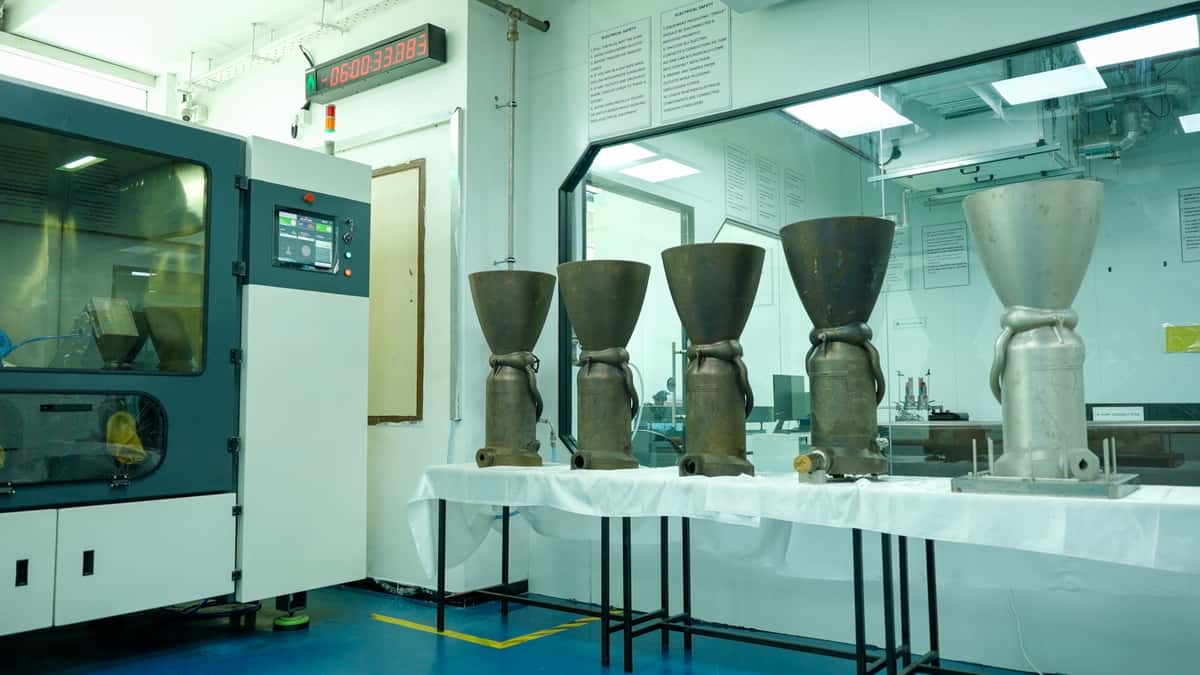
The printing process itself is far from simple. Engineers fine-tune hundreds of variables, from laser power to scan strategy. A large-format printer at the facility can manufacture components up to one metre tall in a single piece.
According to the team, printing an engine takes three to four days. Qualification timelines also reduced significantly. What once took months can now move through manufacturing and testing within days.
The Machines Behind Rockets
One surprise element inside the facility is that Agnikul is not only building rocket engines. In some cases, it is also building the machines needed to manufacture them. After printing, engines contain unused powder trapped inside intricate internal passages. Removing it requires specialised equipment to depowder the system.
The machine vibrates and rotates printed components to remove trapped particles from internal channels. Any leftover powder could interfere with fuel flow during operation.
Commercial solutions exist abroad, but Agnikul wanted greater control over the process. “If you can make a rocket, you can make a machine. That was the inspiration,” Ravichandran boasts.
That mindset emerged partly from necessity. The startup found that some equipment required for advanced additive manufacturing was unavailable locally or did not meet its specific requirements. As a result, engineers began designing their own tools around the manufacturing process they envisioned. The outcome is a facility that looks less like a traditional production line and more like a laboratory where manufacturing methods evolve alongside the products themselves.
Listening to What the Engine Says
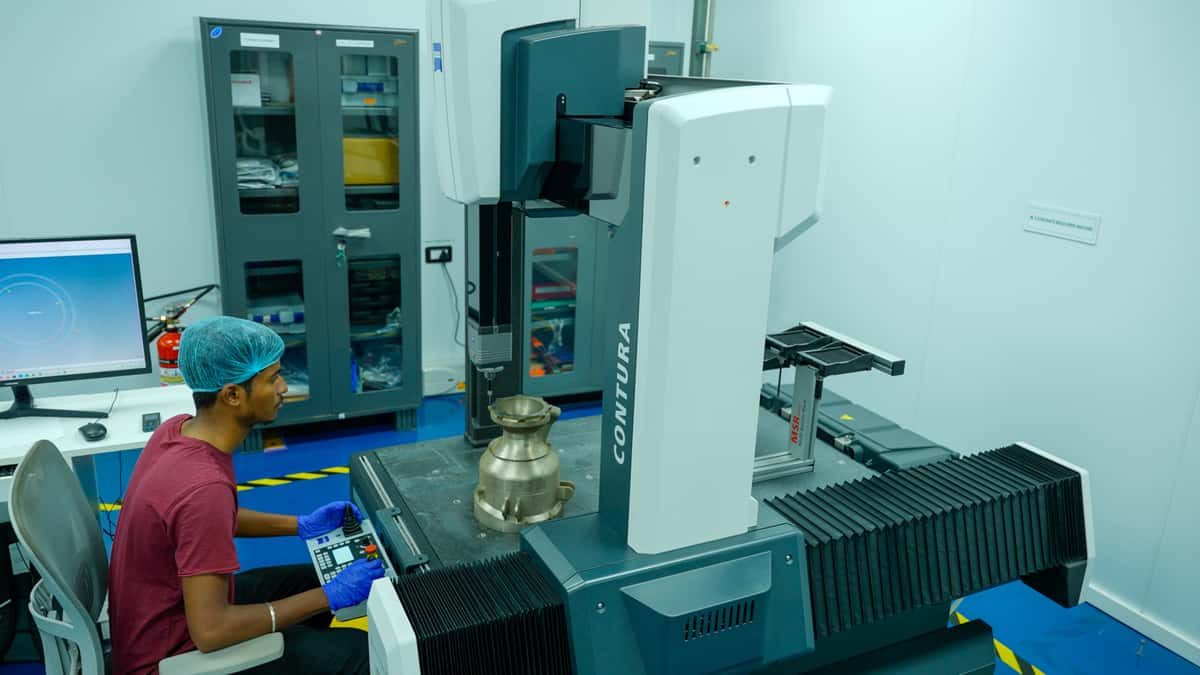
The most striking part of the walkthrough is not the machinery but the attention given to validation. Agnikul’s Mission Director, Umamaheswari Kumaraswamy, talks about the layers of inspection and testing that occur before an engine ever reaches a rocket.
The process begins with raw material qualification. It continues through inspections, heat treatment, component-level testing, and full-duration engine tests. The company also validated engine performance at an ISRO test facility.
Confidence, she affirms, comes from understanding every stage of the hardware’s journey.
For Ravichandran, testing is as much about observation as it is about performance numbers. “By the time you fly it, you know every little bit of the engine,” he says.
He recalls reviewing data with engineers and looking for even the smallest deviations. “If there is a small change, the engine is telling you something. So, you have to be curious enough to know what.”
That philosophy extends beyond manufacturing. Ravichandran sees rockets as infrastructure that will enable a wider space economy.
“People are now thinking of space as an environment. Not as a destination,” he notes.
He speaks about future applications ranging from pharmaceutical manufacturing to orbital data centres. This comes after the company announced a partnership with GPU cloud provider NeevCloud to deploy a space-based AI data centre in low Earth orbit (LEO) by the end of 2026.
Yet he returns repeatedly to the same point. None matter unless space is more accessible.
“Today, unfortunately, the bottleneck is launch,” he says. “People have figured out hundreds of use cases for space, but getting there is still a challenge.”
For Agnikul, that challenge begins in a facility that many visitors would mistake for an ordinary office. Behind its doors, engineers spend their days turning metal powder into rocket engines and, ultimately, into access to orbit.
- From Humanoid Robots to Telecom Trials, 12 Major Announcements at NVIDIA GTC Berlin 2026
- Anyone Can Make a Robot Move, Few Can Make It Stop
- After ISRO’s PSLV Failure, TakeMe2Space Looks to SpaceX for Reliable Launch
- Why AI Agents are the Next Frontier in Quantum Security
- Physical AI Squeezes Labour Market, And Low-Skilled Immigrant Jobs May Be First to Fall
- Rocket Math Isn’t Mathing: Why India’s Space Launches are Expensive