
For decades, getting satellite payloads to space has captured most of the attention but the bigger challenge lies in getting them back. Today, most payload return systems end in ocean splashdowns. Capsules descend under parachutes, land in water, and require maritime recovery before scientists can retrieve them.
That process has become a growing bottleneck as companies and researchers explore manufacturing in microgravity. Scientists have already tested drug crystals, semiconductors and materials in space, where the absence of gravity can reduce impurities and change how molecules form.
Yet, commercial use has stayed limited because bringing products back quickly remains expensive and unpredictable. Meanwhile, India’s expanding space ambitions are adding urgency to the problem.
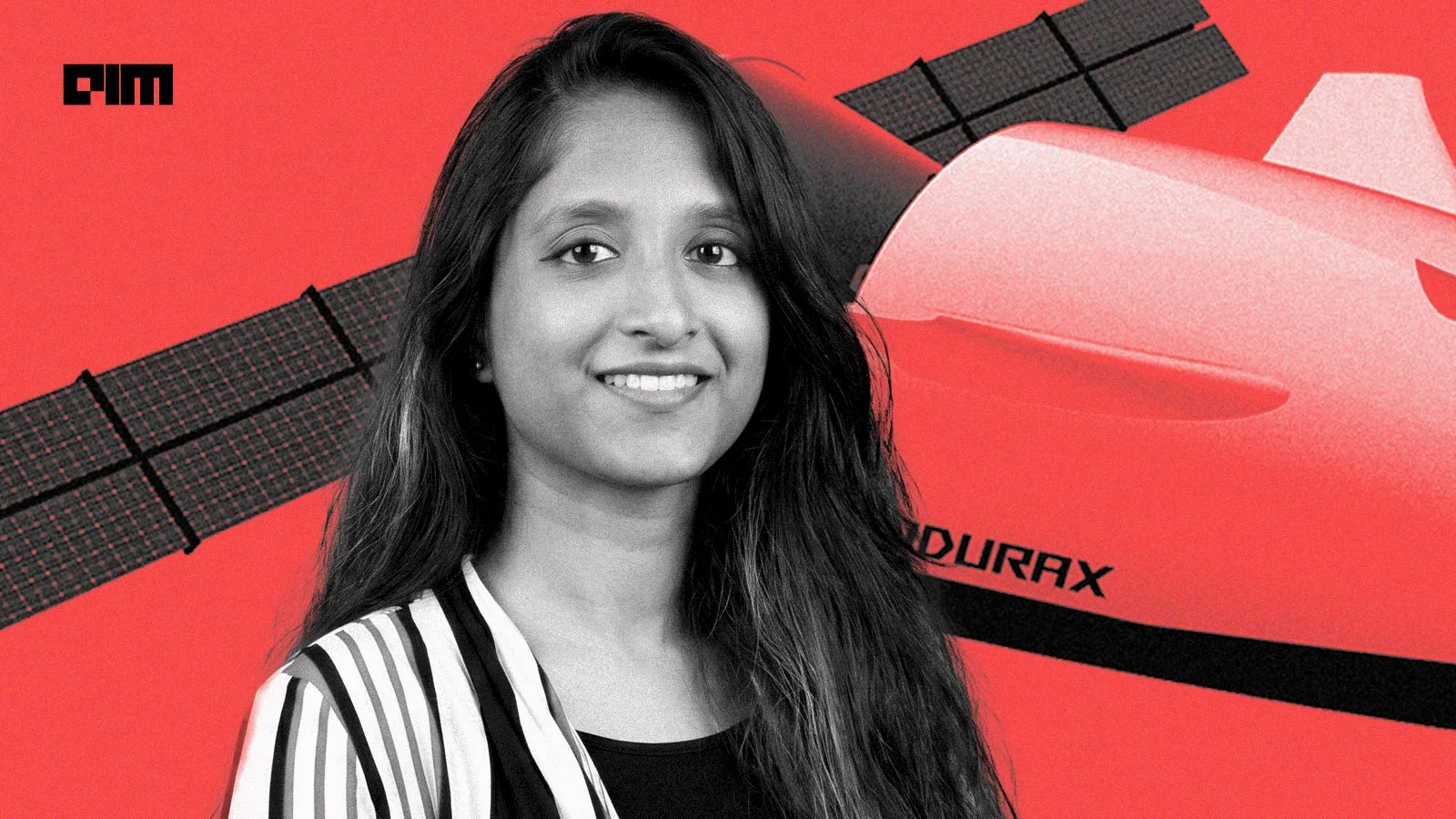
With private players entering launch systems, satellite manufacturing and defence applications, startups are beginning to tackle the missing pieces of space infrastructure. One of them is Hyderabad-based space startup AnduraX, which wants spacecraft to return less like capsules and more like aeroplanes.
The company’s name comes from “endurance” and “expedition”, reflecting what it describes as the persistence required to tackle difficult engineering problems. The startup also draws inspiration from companies such as SpaceX, though its focus lies on return logistics rather than launch systems.
While companies such as SpaceX have reduced the cost of getting payloads into orbit, AnduraX is focusing on what happens after that journey. It wants to build systems that make space useful for industries on Earth, easing access to space, and utilise that environment to benefit humanity on Earth.
It is building a reusable spaceplane called Ares, completed its first Air Drop Mission (ADM-01) in late May this year. The test involved dropping a vehicle from near-stratospheric altitudes to validate the guidance, navigation and control systems that would eventually steer an orbital vehicle back to Earth.
Sree Supranayi K, Co-Founder and CEO of AnduraX, tells AIM in an interview that the startup aims to launch its first re-entry mission by 2028. However, its immediate focus lies in solving a problem that has long limited commercial activity in orbit: bringing payloads back quickly and safely.
After completing a recent drop test, AnduraX is targeting a precision runway landing demonstration by the end of 2026, a milestone it says could cut payload recovery time to under an hour and unlock applications in pharmaceuticals and semiconductors.
“Navigating the vehicle autonomously back to earth and ensuring it lands at a precise location,” Supranayi says. “That is what we are targeting to achieve by the end of this year, with precision showcasing the precision landing capability.”
Why Avoiding the Ocean Matters
For AnduraX, runway recovery is not simply an engineering preference. It is central to the company’s commercial pitch. Supranayi describes that ocean recovery adds time, uncertainty and logistical costs. Space-manufactured products, especially in pharmaceutical research, often require rapid access to laboratories upon return to Earth.
“The moment you get it in a runway landing, it becomes easier and quicker to recover the payload within half an hour to one hour. The payload can then be handed back to the customers, and immediate experimentation can begin,” she says.
Yet, landing a spacecraft on a runway is more difficult than recovering a rocket booster. Unlike boosters that return to fixed pads after short flights, orbital vehicles re-enter Earth’s atmosphere at extreme speeds and must navigate autonomously to precise landing zones. Supranayi says guidance, navigation and control systems become critical because “navigating the vehicle autonomously back to earth and ensuring it lands at a precise location” forms the backbone of the mission.
That timeline matters because some experiments lose value with delays. Space-based pharmaceutical manufacturing, particularly protein crystallisation, has shown promise in producing purer crystals than Earth-based methods.
According to Supranayi, the lack of reliable return systems has prevented broader adoption. “Among all the experiments you can do in space, the top 200 remain pharmaceutical,” she says.
She adds that the absence of gravity helps produce larger, purer crystals, which could shorten drug discovery timelines. The startup also sees applications in semiconductors, optical fibres and advanced materials.
“On the semiconductor side, it removes impurities. It helps develop purer vapours and a more heat-resistant semiconductor,” she describes further.
https://youtu.be/K9iqnv_SCzg?si=p9LeFm7SysDoV-z7
AnduraX’s timeline overlaps with India’s space ambitions. India plans to launch the first module of its space station by 2028, with full completion targeted for the next decade.
For Ankit Anand, Founding Partner at Riceberg Ventures and an investor in AnduraX, private companies will need to build the supporting infrastructure around government-led missions.
“ISRO will be totally out of resources, out of budget if they want to do everything by themselves,” Anand says. “If we enable this ecosystem to be for private players to come and create, it will drive new capital resources, fresh talent.”
According to Anand, the larger challenge for Indian deep tech is not a shortage of money but a shortage of risk capital. Space startups often require years of experimentation before showing commercial returns, making patient investors essential.
Anand has backed several deep-tech ventures through Riceberg Ventures and co-founded KickSky Space Lab, one of India’s early VC-backed space accelerators. He says India’s space startup ecosystem has matured significantly in recent years, with stronger founder pipelines and more specialised technical talent emerging after private participation opened up.
Anand argues that private companies can focus on specific technical missions while agencies such as ISRO continue broader national programmes. AnduraX stood out to him because it chose a difficult mid-layer technical problem in the space where people are using the data to bring things down, with potentially large commercial upside.
He believes India should avoid simply replicating older space infrastructure. Instead, he argues the country has an opportunity to leapfrog by building for the technologies likely to matter a decade from now. “If you try to play a catch-up game it’s very hard to compete in this world,” he says, pointing to India’s mobile payments success as an example of skipping legacy systems and moving directly to newer infrastructure.
A Runway Instead of a Rescue Boat
India also enters the race with lower private funding levels than global peers. China’s space tech investment crossed $1 billion in 2025, while India remained significantly lower. For founders such as Supranayi, that gap makes speed and focused execution more important than scale alone.
Globally, companies such as Sierra Space, Rocket Lab and Varda Space Industries are building orbital return systems. However, AnduraX believes its focus on low-gravity re-entry and runway landing could offer advantages over ocean-based recovery.
Apart from speed, the company argues that runway landings reduce wear on vehicles. Ocean splashdowns expose spacecraft to saltwater, increasing refurbishment needs.
“When you do not have the issues of this ocean recovery, it makes the vehicle more reusable than refurbishable because it won’t be prone to any kind of salt water contamination there,” Supranayi says.
The startup believes India can still establish a position in the re-entry race despite entering later than global competitors. “We don’t want to follow the same trend again in the re-entry vehicle or whatever the future of space is,” Supranayi says. “Why not be the first in the world in something?”
For her, pharmaceuticals remain the biggest long-term opportunity. Beyond drug discovery, she points to 3D bioprinting in microgravity as a future possibility. “I look at being able to print organs in space,” she says, arguing that faster experimentation cycles could eventually accelerate research in cancer and neurodegenerative diseases.
For now, the next milestone is closer to Earth. Before reaching orbit, AnduraX must first prove that a returning vehicle can land precisely where intended and do it fast enough to matter.

Your reaction
Discussion
What's your take on this story?
No comments yet — be the first to share your view.