
The AI race is being played out inside sprawling data centres, with companies spending billions on chips, cooling systems, and power infrastructure to train larger models and process more data. Yet as electricity demand rises and land-based constraints tighten, some firms have begun asking if the next data centre should not be on Earth, but in space.
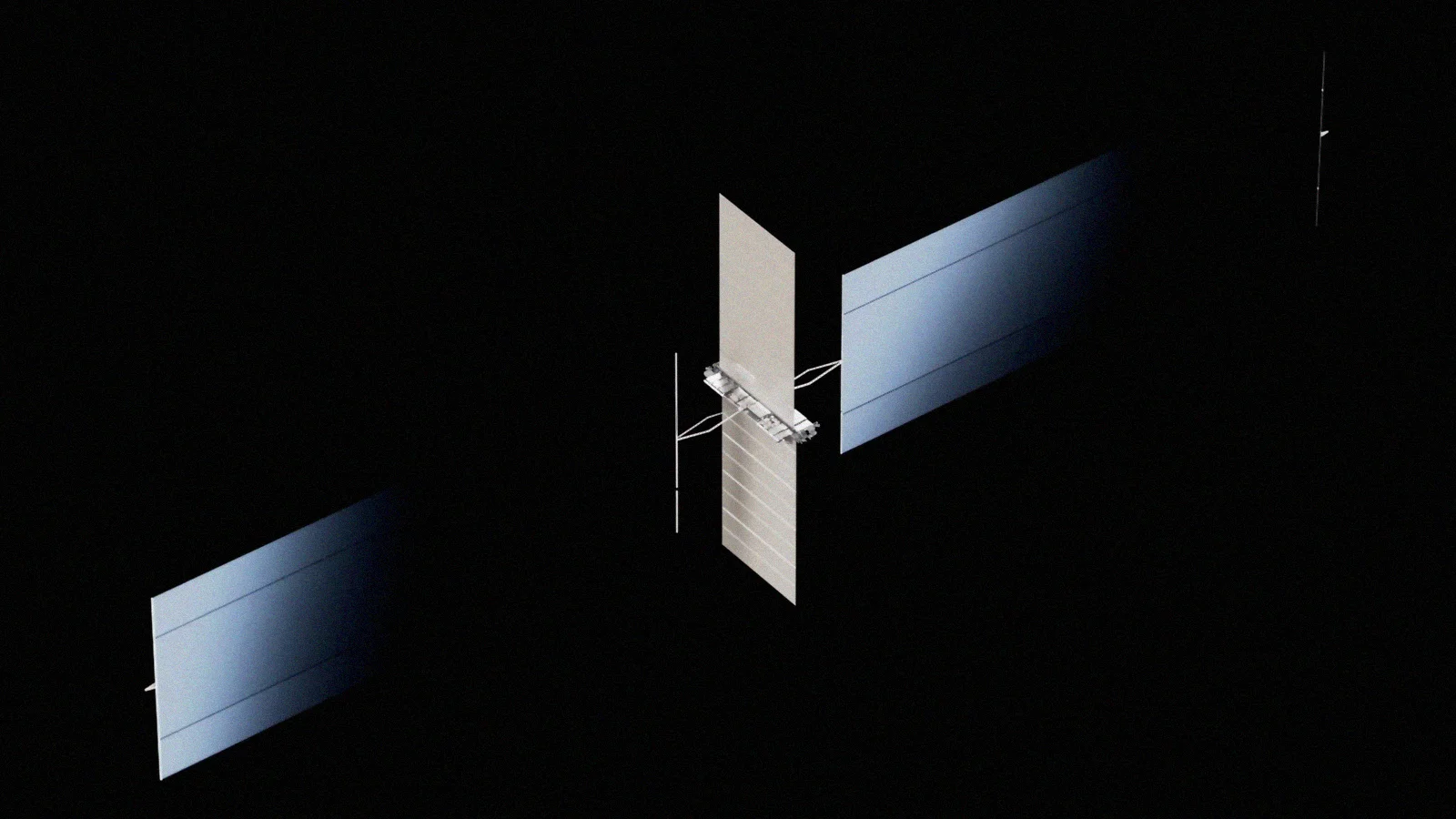
SpaceX believes it’s close to solving some of those limits. During a recent company podcast, CEO Elon Musk unveiled AI1, the company’s first generation of AI satellites designed to carry computing workloads into orbit.
The satellite marks the first step in a plan that ties together reusable rockets, solar power and AI chips to create what Musk described as “a rack of compute in space”. The podcast featuring Musk and Ian Dahl, SpaceX’s Director of Satellite Engineering, outlined how Starship, solar energy, and AI chips will support the effort.
The initiative aims to build space-based compute systems that SpaceX says could eventually help scale civilisation’s energy use beyond Earth.
The AI1 satellite will carry a peak compute payload of 150 kW and sustain an average compute power of 120 kW. It will feature a 150 kW solar array, a 110-square-metre deployable liquid radiator system, and a wingspan of 70 metres when fully deployed.
Speaking during the podcast, Musk said the move is part of a larger ambition to harness more solar energy from space. He argued that Earth-based infrastructure limits access to power and cooling, making orbit a practical location for future compute systems.
Watch @ElonMusk provide a technical update on SpaceX’s capability to manufacture, launch, and operate AI satellites at scale → https://t.co/PSCyWrNsOg pic.twitter.com/vhtr46uax7
— SpaceX (@SpaceX) June 8, 2026
Simpler Than Starlink
Unlike Starlink satellites, which rely on phased array antennas and communication hardware, AI1 focuses on computing. The satellite uses a centralised compute module, large solar arrays, and a deployable thermal management system to dissipate heat in space.
SpaceX said the architecture also includes redundant pumping loops and shielding against micrometeoroids.
“The AI satellite is much simpler than a Starlink satellite,” Musk said. “The AI satellite is essentially a lot of solar cells. You still need some laser links, but you don’t have all of the super complex antennas that you have on a Starlink satellite.”
The company plans to place these satellites 600–800 kilometres above Earth. According to Musk, latency concerns should remain limited because light travels quickly between orbit and ground systems. SpaceX said each satellite could connect through laser links and integrate with the 10,000-strong Starlink constellation to transmit data to Earth.
AI1 will also rely on interchangeable compute providers. Early reference designs include NVIDIA GB300 and Rubin chips, though the company said it could support other processors and TPU systems in orbit.
The company also argues it has a head start. Much of AI1’s design borrows from technologies already developed for Starlink V3 satellites, including solar systems, laser links, and thermal management.

Much Beyond Earth
The idea of orbital data centres may sound distant despite all the recent attention, but SpaceX argues that the timing now makes sense given the rapid rise in AI demand. Training advanced models requires large clusters of chips, cooling systems, and electricity. As demand grows, companies have started warning about power shortages and grid constraints.
“In order to start to make some progress, we need to launch satellites to orbit Earth and capture solar power,” Musk said during the podcast. “That avoids the need to build massive power plants on Earth and deal with cooling.”
SpaceX believes reusable rockets could make the economics work. The company linked the AI satellite programme to Starship, which Musk described as necessary to lower launch costs and increase payload capacity. He argued that orbital computing becomes possible only if launch costs fall sharply and large payloads can be moved to space frequently.
“We expect Starship to be flying more than once per hour down the road,” Musk said, adding that the heavy launch vehicle would enable millions of tonnes of payload to reach orbit annually within a few years, a scale Musk believes is required for orbital infrastructure.
Interestingly, SpaceX recently successfully launched Starship V3, its largest and most powerful rocket. However, both stages of the rocket suffered engine failure.
With Starship, the company wants to reach an annualised rate of one gigawatt of space AI compute by the end of next year. “Reusability is the fundamental breakthrough,” he said, adding that the company would attempt to increase capacity tenfold each year, eventually targeting a terawatt of compute power in orbit.
“We don’t think this is a super hard problem compared to things we already do,” Musk said, pointing to Starlink-derived solar and thermal technologies already in development.
The company is also expanding manufacturing in Bastrop, Texas, where it plans to build production systems for AI satellites and solar technology. Musk said SpaceX expects solar production and AI satellite manufacturing to begin operating at volume by the end of next year.
SpaceX has announced their new Gigasat factory in Bastrop, Texas, which will start producing AI satellites by the end of 2027.
• 1,000+ acres of land owned/under contract
• Over 11 million square feet of building potential
• Solar ingots and wafer, solar cells, and AI sats… https://t.co/KB0WGfp6t5 pic.twitter.com/HherYtAfmO
— Sawyer Merritt (@SawyerMerritt) June 8, 2026
That experience aligns with the company’s broader positioning ahead of its $75 billion IPO announcement just days ago, targeting a valuation of $1.77 trillion. In its listing, SpaceX described itself as a company building integrated infrastructure across “space, connectivity, and AI”, signalling that orbital compute may become a larger commercial focus alongside launches and broadband.

Your reaction
Discussion
What's your take on this story?
No comments yet — be the first to share your view.