
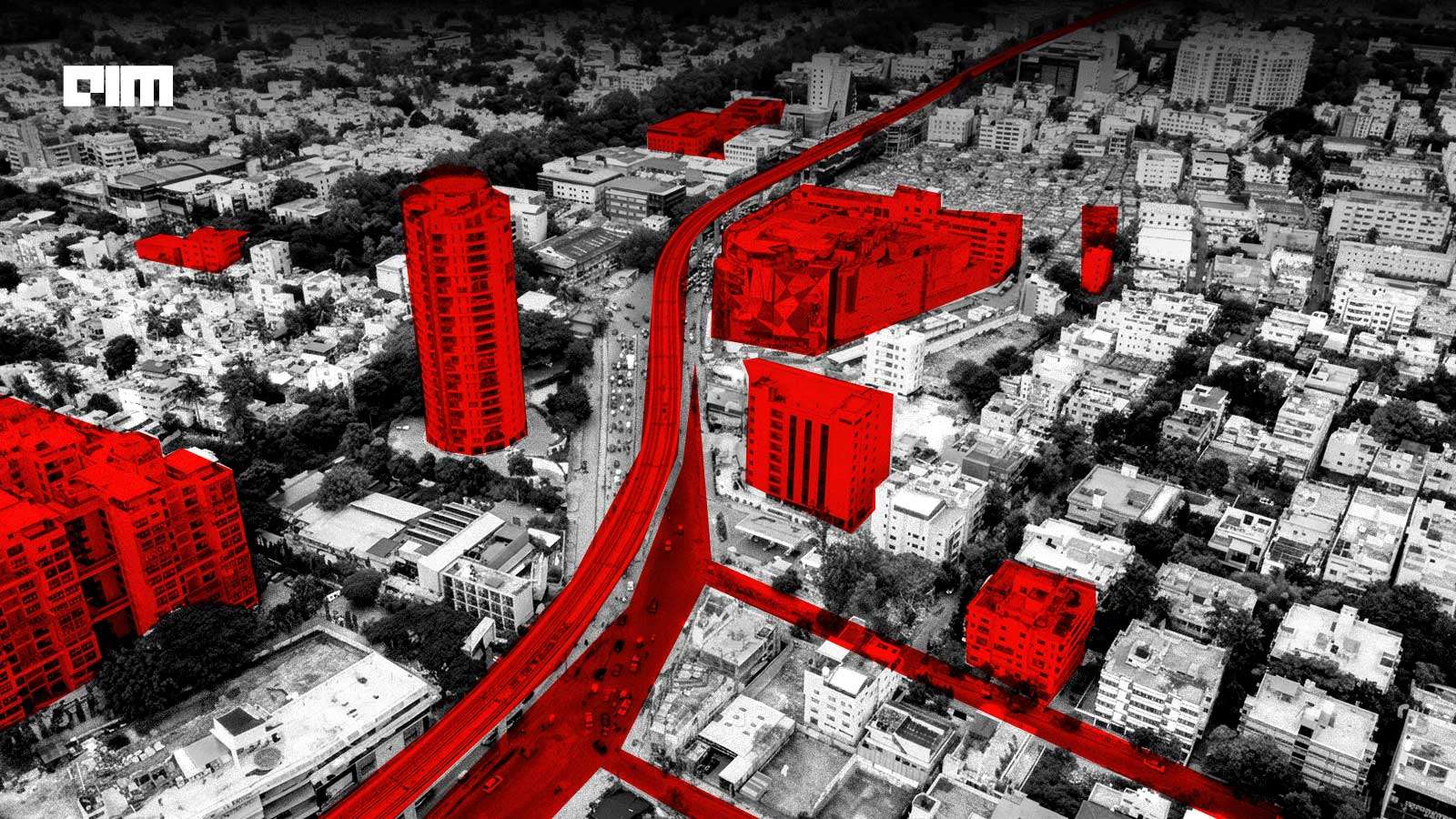

As per reports, High-Activity micro markets across major cities drive over 80% of India’s future office demand and supply.
Bengaluru’s office market is increasingly being shaped by the rise of specialised micro-markets, each evolving with its own mix of talent density, infrastructure, rental economics, and enterprise concentration. The city’s Outer Ring Road (ORR) corridor continues to retain a structural edge, particularly for global capability centres (GCCs) and large technology occupiers.
The strength of the micro-market was recently reinforced when managed office provider IndiQube signed a ₹75 crore Grade A workspace leasing agreement for a GCC of a leading healthcare technology company.
According to Cushman & Wakefield, GCCs currently occupy a significant share of India’s nearly 900 million sq ft Grade A office stock and continue to drive more than 40% of leasing activity across key micro-markets. National office supply touched 14 million sq ft in the January–March 2026 quarter, while vacancy levels fell to 9.5%. Rentals, meanwhile, rose 2–3% year-on-year, with premium pricing peaking in Bengaluru’s ORR corridor at ₹105 per sq ft.
What differentiates Bengaluru’s micro-markets today is the type of enterprise ecosystem they support. ORR, in particular, has evolved into one of India’s densest technology corridors, hosting over 4 lakh professionals across AI, semiconductors, fintech, and digital health sectors. Companies such as Google, NVIDIA, Visa, Qualcomm, and Amazon operate in close proximity along the corridor.
The ORR Advantage
Office rentals across established business corridors, including ORR, are projected to grow 3–4% annually through FY26, according to Cushman & Wakefield. Compared with central business district (CBD) and secondary business district (SBD) locations, ORR offers larger contiguous floor plates, stronger scalability, and newer institutional-grade developments better aligned with the expansion requirements of modern GCCs.
“CBD and SBD locations retain their appeal for financial services and consulting firms that value proximity to the city centre, but they cannot match ORR's supply depth or GCC concentration,” Anshuman Magazine, Chairman and CEO, India, South East Asia, Middle East and Africa, CBRE, tells AIM.
Whitefield, in East Bengaluru, continues to emerge as a strong competing technology corridor, particularly for large-scale campuses and integrated developments. The micro-market has recorded among the highest rental growth rates in India, rising nearly 19% over the past three years due to sustained demand and tightening vacancy levels, per Altre.
North Bengaluru, meanwhile, is gaining traction due to improving infrastructure, land availability, and airport connectivity, making it increasingly attractive for long-term enterprise planning. Electronic City, in South Bengaluru, continues to attract occupiers focused on cost efficiency and engineering talent access.
Still, industry experts believe ORR’s biggest advantage lies in ecosystem maturity rather than just real estate availability.
“Each of Bengaluru's micro-markets has its own distinct character, and that diversity is actually a strength for the city as a whole. But for GCCs evaluating where to put down roots or expand, the corridors differ meaningfully,” Magazine mentions.
He further adds that ORR offers a more complete combination of talent depth, workplace quality, residential catchments, and integrated office developments—factors that increasingly matter as GCCs move into higher-value functions such as product engineering, digital transformation, and advanced analytics.
As Bengaluru’s commercial landscape expands into newer corridors, the broader question facing the city’s office market is whether emerging micro-markets can replicate the ecosystem density, enterprise clustering, and talent networks that ORR has built over nearly three decades.
Rishi Das, Co-founder and CEO of IndiQube, states that every major economic cluster is shaped by a defining anchor moment, and Bengaluru’s ORR followed the same trajectory.
“When Maruti set up in Gurgaon, it didn’t just build a factory. It built a gravitational field. Suppliers followed. Vendors followed. People followed,” Das shares.
Bengaluru’s technology corridor evolved similarly, beginning with first-generation Indian IT firms before expanding through the rise of startups and GCCs.
“It began with the first generation of Indian technology—Infosys, Wipro, and their contemporaries. Then came the e-commerce generation. Flipkart, Ola, and others didn’t just occupy space in the corridor; they redefined what a business ecosystem means,” he says.
Das notes that what started as a technology corridor has now transformed into a fully integrated enterprise cluster combining tech parks, startups, GCCs, residential ecosystems, and talent pools within one interconnected geography. “Now we are in the third generation—AI, semiconductors, deeptech—and ORR remains the address of choice. This is no longer about office supply or rental arbitrage. The corridor has evolved from a real estate address into a full enterprise ecosystem.”
He also highlights that demand across the corridor has remained resilient despite rising rentals and traffic concerns.
“At IndiQube, our corporate headquarters is on this corridor, and we operate over 15 properties with nearly 2 million square feet across ORR,” Das says. “The upcoming metro connectivity will further strengthen demand by improving accessibility and reducing commute times. Even as rentals have grown steadily at 8–10%, occupier demand has held firm.”
GCCs are Reshaping the Market
The surge in GCC activity has fundamentally reshaped Bengaluru’s office market dynamics, especially across ORR and neighbouring micro-markets such as Whitefield, Bellandur, HSR Layout, and Sarjapur.
According to the Karnataka Digital Economy Mission, Bengaluru accounted for nearly 48% of India’s GCC leasing transactions in Q1 2026, translating to approximately 4.37 million sq ft, with GCCs contributing around 44% of total office leasing activity nationwide during the same period.
Madhavi Menon, City Director of Bangalore at the flexible workspace provider The Executive Centre, believes that’s exactly where the ORR's strength lies—in the combination of talent availability, infrastructure, and premium-grade office assets.
“The Outer Ring Road (ORR) has established its own niche in the GCC ecosystem of Bengaluru due to the presence of a combination of factors like talent pool availability, infrastructure, and modern offices,” Menon states.
She adds that GCCs are increasingly prioritising sustainable and future-ready office infrastructure, as they take up a more prominent role. “The GCC environment in India is evolving structurally from its conventional role as an incubation center to an innovation hub with high value,” she states.
According to her, sectors such as e-commerce, BFSI, technology and retail-consumer analytics are leading GCC leasing activity, while mandates are increasingly focused on AI/ML, digital engineering, and enterprise transformation.
“In Q1 2026, GCC leasing was led by e-commerce (24%), BFSI (20%), technology (20%), and RCA (19%), reflecting the growing diversity and sophistication of occupiers,” Menon states.
She adds that India is also witnessing the emergence of “mid-tier GCCs” and “nano GCCs” that prefer managed and flexible workspace models.
Flexible Workspaces Move Into Mainstream
India’s flexible workspace market has expanded rapidly over the last few years, growing to nearly 85 million sq ft by the end of 2025, according to Cushman & Wakefield. This shift is becoming increasingly visible across Bengaluru’s ORR corridor, where enterprises are adopting ‘core + flex’ workplace strategies that combine traditional offices with managed workspaces.
IndiQube recently announced a ₹52 crore managed workspace deal with a leading Japanese e-commerce company for approximately 35,000 sq. ft. on ORR, underlining continued demand from multinational occupiers.
Sijo Jose, Co-founder and Director – Property Acquisition at SpazeOne, notes that ORR continues to remain one of the most attractive corridors for flexible workspace operators. “The presence of GCCs and high-growth companies fuels the need for flexible, fully managed workspaces that can be scaled quickly.”
Despite operational challenges such as congestion, he believes the corridor’s talent ecosystem outweighs the drawbacks. “Even with traffic constraints, the corridor’s proximity to talent and established business ecosystem outweighs operational challenges,” Jose adds. “Coworking spaces are increasingly becoming an extension of enterprise real estate strategies here.”
Shesh Rao Paplikar, Founder and CEO of BHIVE Workspace, also calls ORR a “goldmine” for GCCs.
“Bengaluru is driving over one-third of India’s total GCC leasing, and ORR continues to be a goldmine for GCCs as it brings together what few other corridors can: talent, infrastructure, and ready supply in one ecosystem,” Paplikar states.
He adds that companies are increasingly prioritising talent access and scalability over commute concerns. “We’re seeing strong traction for enterprise-grade, plug-and-play offices on ORR because they allow companies to set up and expand without long-term lock-ins.”
Paplikar also notes that hybrid and distributed work models are further strengthening demand for managed office infrastructure.
ORR Evolves Into Innovation Economy Hub
Industry leaders increasingly view ORR not merely as a commercial district but as an innovation-led economic cluster underpinning India’s digital economy. The corridor today houses a mix of multinational GCCs, mid-sized global firms, startups, AI-led enterprises, and deeptech companies.
Das believes ORR’s biggest strength lies in the decades-long ecosystem compounding that newer micro-markets cannot immediately replicate.
“What began in the early 2000s as ORR has since become an arc—the East and South-East Arc,” he says. “A continuous belt stretches from Koramangala through the Silk Board to Marathahalli and beyond. This is arguably the most powerful new economic cluster in the country today.”
He adds that the corridor’s maturity makes it easier for enterprises to attract and retain talent at scale.
“Thirty years of compounding tech parks, social infrastructure, connectivity, and residential depth make it easier for companies to attract and retain talent at scale,” Das states. “That kind of foundation is not built quickly.”
- The Hardest Part of Industrial AI Isn’t Adoption—It’s On-Site Deployment
- Why FDEs Are Emerging as a Critical GCC Role
- AI Is Forcing India's GCCs to Move Beyond Cost Arbitrage
- How India’s Nano Retail GCCs Built a 3x AI Lead Over Walmart and Target
- Chennai’s GCC Boom Is Getting Bigger. But is There Room for Smaller Occupiers?
- India's 60 Lakh Tech Workforce is Growing—But Not On Par With AI Revenue Surge