
Even as venture capital into AI startups hits record highs, a persistent bearish case shadows every deal: will any of these companies survive long enough to matter?
The fear is that OpenAI, Google, and Anthropic—flush with the best talent and hundreds of billions in backing—will inevitably swallow every viable niche.
OpenAI’s decision to shut down its Sora app and API later this year should ease some of that anxiety. It turns out even the best-funded incumbents can’t dominate every front.
Vertical Value for the Win
This narrowing of focus is precisely why Anthropic has found a more stable financial balance than OpenAI. Its releases are surgically aimed at either enterprise or software development use cases.
OpenAI’s retreat from Sora is not an isolated rollback. Launched with massive hype in 2025, estimates from Forbes suggest Sora was burning as much as $15 million per day in compute costs.
According to an estimate by Factorial Funds, generating five minutes on Sora would take about an hour on a single NVIDIA H100 GPU, which costs between $25,000 and $40,000.
It is also estimated that approximately 89,000 H100 GPUs would be needed to support the creator community on TikTok and YouTube, rising to 7,20,000 during peak demand.
OpenAI is now pulling back from experimental, consumer-facing bets in favour of enterprise platforms where revenue is more predictable. In recent months, it has diversified its focus to include e-commerce features, autonomous web browsing, image generation models, and a push towards a personal hardware device with former Apple design lead, io, and more.
According to a Wall Street Journal (WSJ) report, Fidji Simo, OpenAI’s CEO of Applications, told her staff they need to focus on delivering strong business productivity use cases.
At the centre of this shift sits Frontier, its enterprise platform for managing agent-based systems across business workflows. Through a multi-year deal, Amazon is investing up to $50 billion into OpenAI, becoming the exclusive third-party cloud provider for Frontier via AWS.
In parallel, OpenAI has reportedly been courting private equity firms with aggressive terms, offering guaranteed returns of around 17.5% and early access to models in exchange for embedding its tools across entire portfolio companies.
This strategy aims to lock in long-term revenue streams, effectively turning PE firms into large-scale distribution channels.f
OpenAI says the “tough decision” to discontinue Sora is a response to the growing compute demands of its AGI roadmap.
“Every day we’re making tradeoffs in how we apply compute across research, product launches, and inference, and we’re prioritising the highest-value uses that best advance our mission,” the company said in a statement to AIM.
“As we focus and compute demand grows, the Sora research team continues to focus on world simulation research to advance robotics that will help people solve real-world, physical tasks.”
The ‘Focus’ Thesis
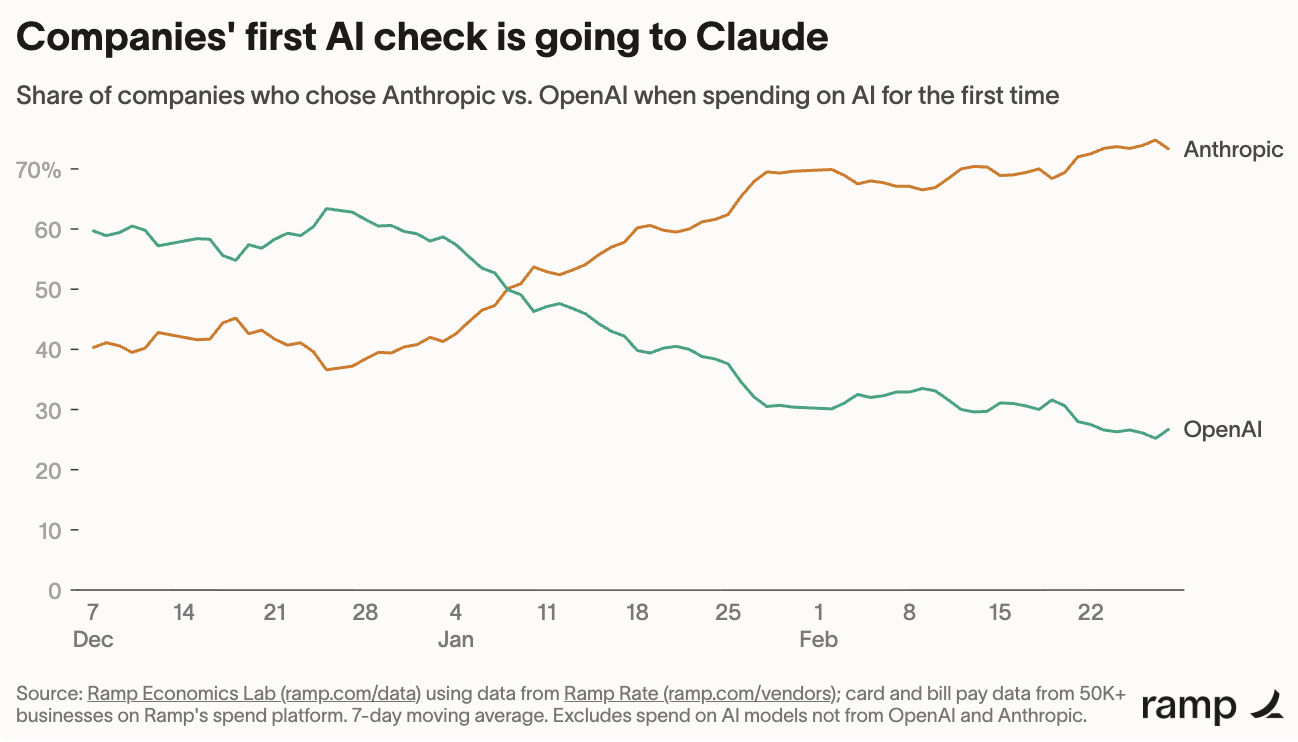
Besides, OpenAI’s pivot also aims to address a worrying trend: Ramp data shows that 70% of new enterprise AI spending is currently going to Anthropic.
Source: Ramp
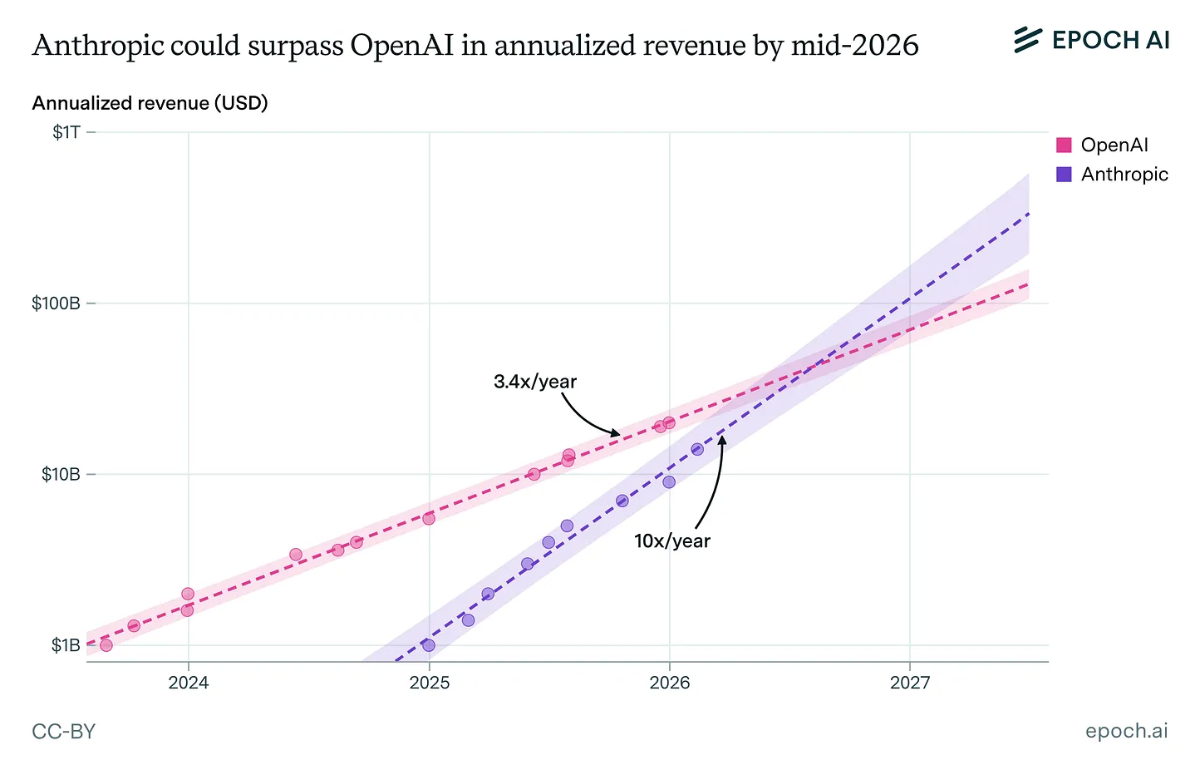
Another report from the WSJ indicates that Anthropic expects to reduce its cash burn to roughly one-third of revenue in 2026 and just 9% by 2027, reaching break-even by 2028.
OpenAI, by contrast, projects its burn to remain around 57% of revenue through 2026-27, with profitability only around 2030—implying a dramatically more capital-intensive path, with cumulative burn potentially an order of magnitude higher than Anthropic’s.
Source: EpochAI
Whether OpenAI’s sharpened enterprise focus closes that gap remains an open question. However, the shutdown of Sora sends an unmistakable signal to founders: OpenAI simply cannot afford to chase every use case. That constraint is shaped as much by internal priorities as by external economics.
“Sora does appear to reinforce the view that broad horizontal AI products are harder to monetise than high-frequency, high-value workflows such as coding,” said Leslie Joseph, principal analyst at Forrester Research, in an interaction at AIM. “But it may be too neat to treat OpenAI’s retrenchment as a general signal.”
Joseph attributes the shelving of products partly to internal drama, citing “uneven product stewardship, shifting priorities, fragmented execution, significant talent leakage and a tendency to pursue multiple fronts at once.”
The WSJ report also noted that current and former OpenAI employees said the “do everything” approach sometimes led to a “lack of focus” and made it difficult to understand the company’s direction.
Joseph concludes that “Sora, specifically, was hard for OpenAI to monetise and sustain, especially when paired with weak product discipline.”
“The opportunity was never ‘broad AI for everyone.’ It’s always targeted, monetisable niches where the problem is acute, the buyer is clear, and the workflow is specific enough to support strong product-market fit and defensible economics,” he adds.
Investment professionals have been making this argument well before Sora's obituary was written.
During an interaction with AIM before the discontinuation of Sora, Bhumika Krishnani, an investment associate at Arkam Ventures, noted that there are plenty of problems to solve despite the existence of OpenAI and Claude.
“Vertical AI exists because horizontal play is not just good enough, and is inefficient to solve niche problems,” she had said. “If you’re using the same kind of platforms or models for all your problems, it’s like using a sword for a knife.”
Krishnani believes founders will continue to choose problems based on the inefficiencies they’ve encountered in their years of corporate experience or personal experience.
“There are opportunities in areas where AI enables something that was not possible before,” she added.
At the same time, companies like OpenAI and Anthropic are increasingly acquiring startups, not just for products but for talent, distribution, and enterprise footholds.
This suggests that even frontier labs are opting to buy into specialised vertical capabilities rather than build everything in-house.
OpenAI alone has completed roughly 17 acquisitions over the past three years, with deal activity accelerating in 2025-26. Its acquisition of Astral, whose tooling integrates into everyday Python workflows, and Promptfoo, focused on AI testing and security, along with hiring the Founder of OpenClaw, all point in the same direction.
Even in areas it now considers core, like developer tooling and enterprise infrastructure, OpenAI is not consistently building from first principles. Instead, it is absorbing companies that have already solved narrow, high-value problems and embedding them into its stack.
Essentially, OpenAI is recognising that specialised teams operating at the edge are often faster and more effective than replicating the same capability internally.
The Google Exception
There is, of course, an exception. Google doesn't share OpenAI's financial constraints.
Massive profits from search, advertising, cloud, Workspace, Android, and hardware give it the runway to sustain hundreds of simultaneous experiments with relative ease.
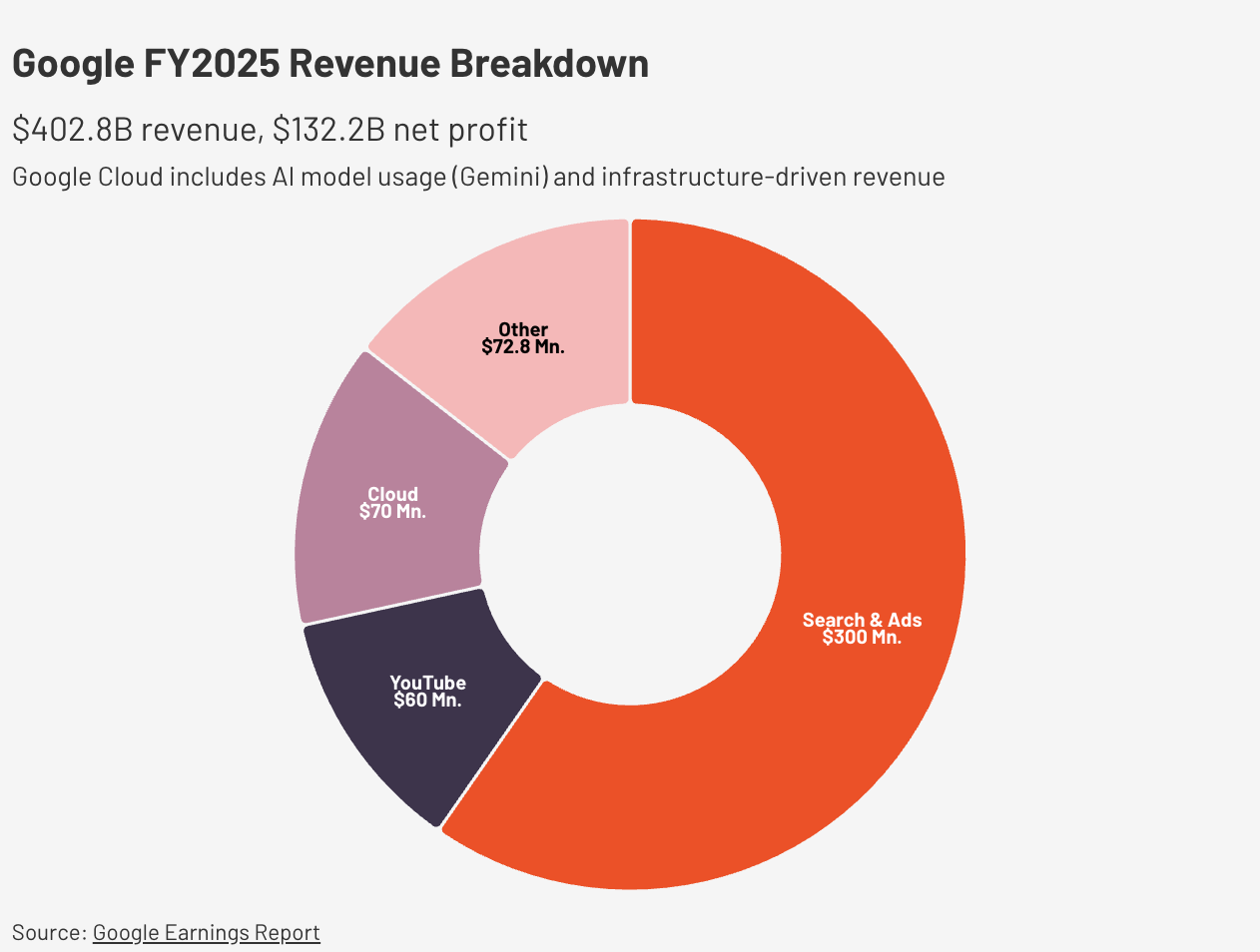
“They can fund broad horizontal AI bets longer than OpenAI or Anthropic because it has far deeper cash flows and multiple monetisation paths across search, ads, cloud, Workspace, Android, and devices,” says Joseph.
“More importantly, it can cross-leverage its AI research to deepen consumer value proposition in each of these markets, which gives it a distinct moat.”
However, he still concludes that, even as Google can subsidise loss-making horizontals for a longer time, Joseph said, “But over time it is still likely to converge on focused monetisation within its existing markets, rather than relying on a single broad AI front end.”
“OpenAI, on the other hand, really has little to no moat.”

Your reaction
Discussion
What's your take on this story?
No comments yet — be the first to share your view.