
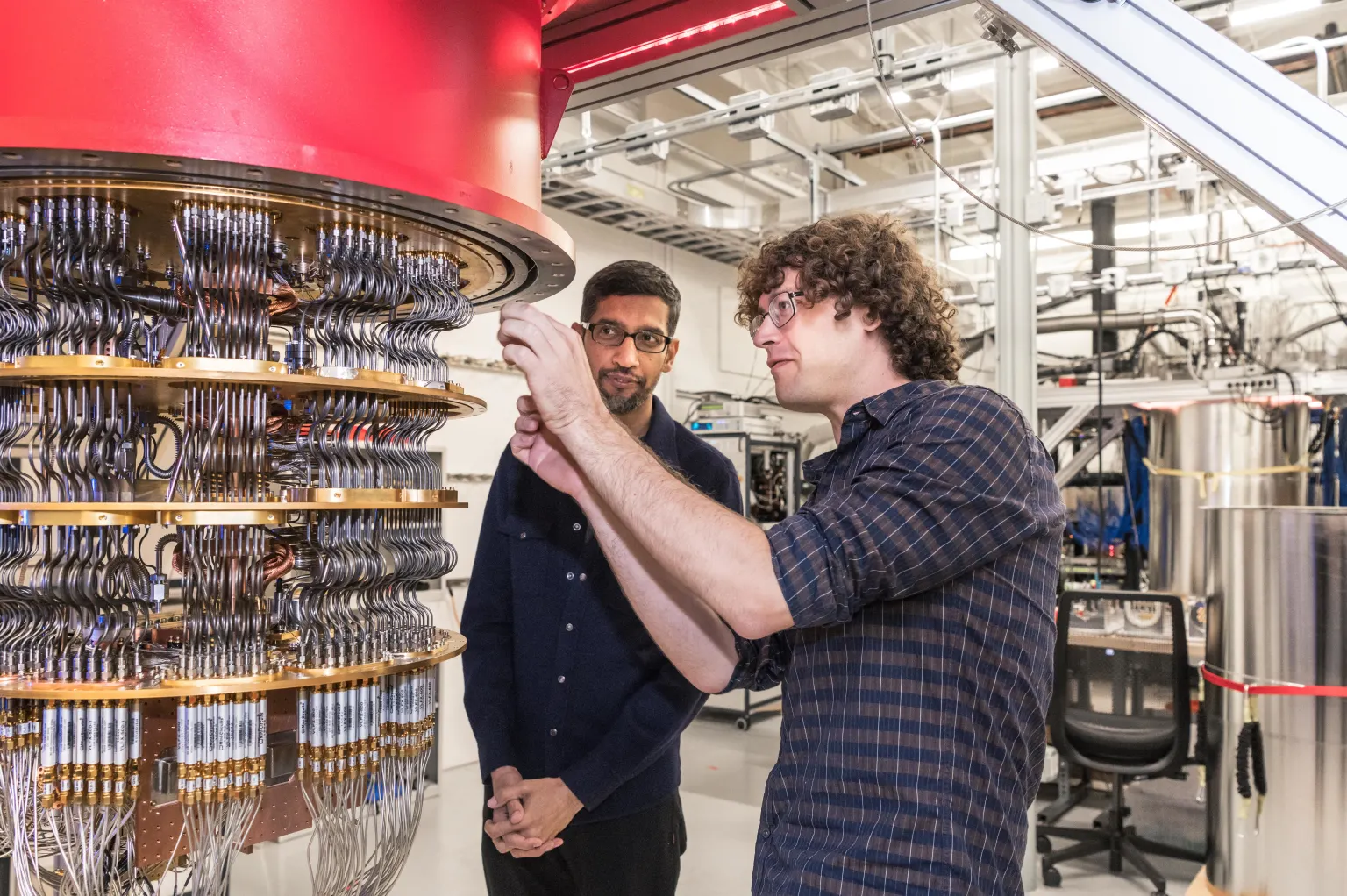


After going silent on quantum computing for a while, Google announced that it has successfully created a quantum computer capable of performing calculations that would require the top-performing supercomputers 47 years to complete. This significant advancement aims to provide undeniable evidence that experimental quantum machines can surpass conventional competitors.
According to a research paper – Beyond-Classical Computing Using Superconducting Quantum Processors by Google’s scientists, the company’s latest technology surpasses the capabilities of current classical supercomputers.
Google’s research paper showcases the ability of larger quantum computers to handle “noise,” which refers to interference that poses a threat to the delicate states in which qubits operate, enabling them to continue performing calculations.
The researchers state, “We can confidently assert that our demonstration falls within the realm of quantum computation beyond classical capabilities.” Critics argue that the rival machines were evaluated based on a randomisation task that favors quantum computers and lacks practical significance outside of academic research.
Steve Brierley, CEO of Riverlane, a quantum company based in Cambridge, views this development as a significant milestone, stating, “The debates surrounding quantum supremacy, whether we had reached it or could reach it, are now settled.”
In April, Google published another research paper titled “Phase Transition in Random Circuit Sampling” presenting a more advanced quantum device, intended to settle the ongoing debate.
In comparison to the 2019 Sycamore that consisted of 53 qubits, the fundamental units of quantum computers, the latest-generation device incorporates 70 qubits.
The exponential enhancement in computational power of a quantum computer is directly proportional to the increase in qubits. Consequently, the new machine exhibits a staggering improvement, being approximately 241 million times more powerful than its 2019 predecessor.
In a declaration made four years ago, Google asserted that it had become the first company to attain “quantum supremacy,” a pivotal milestone indicating that quantum computers had surpassed their conventional counterparts. During that period, Google faced opposition from competitors who contended that the disparity between their machine and traditional supercomputers was being exaggerated.
Recently, Microsoft also announced its roadmap for building a quantum supercomputer which it would be able to build within a decade. The company also released Azure Quantum Elements, a copilot for building quantum computers.
Moreover, IBM, the brand of quantum computing also sped up its process of building quantum computers, to build beyond classical computing.