Can AI Make India’s Roads Safer?
By Prachi Pradhan ·
India records nearly 1.7 lakh road deaths and more than 4.8 lakh injuries every year, according to government data. More than a quarter of these fatalities involve people under the age of 25. While the country’s licensing systems test theoretical knowledge of traffic rules, critics argue that safe driving demands far more, including hazard perception, situational awareness, sound judgement and responsible road etiquette.
Studies published in the IJRDO Journal suggest that India’s road safety challenge is not just about infrastructure or enforcement; it’s deeply linked to driver behaviour. The current scenario presents several critical challenges. Many accidents occur not because drivers do not know the rules but because they fail to anticipate risks, misjudge speed or react too late in complex traffic situations.
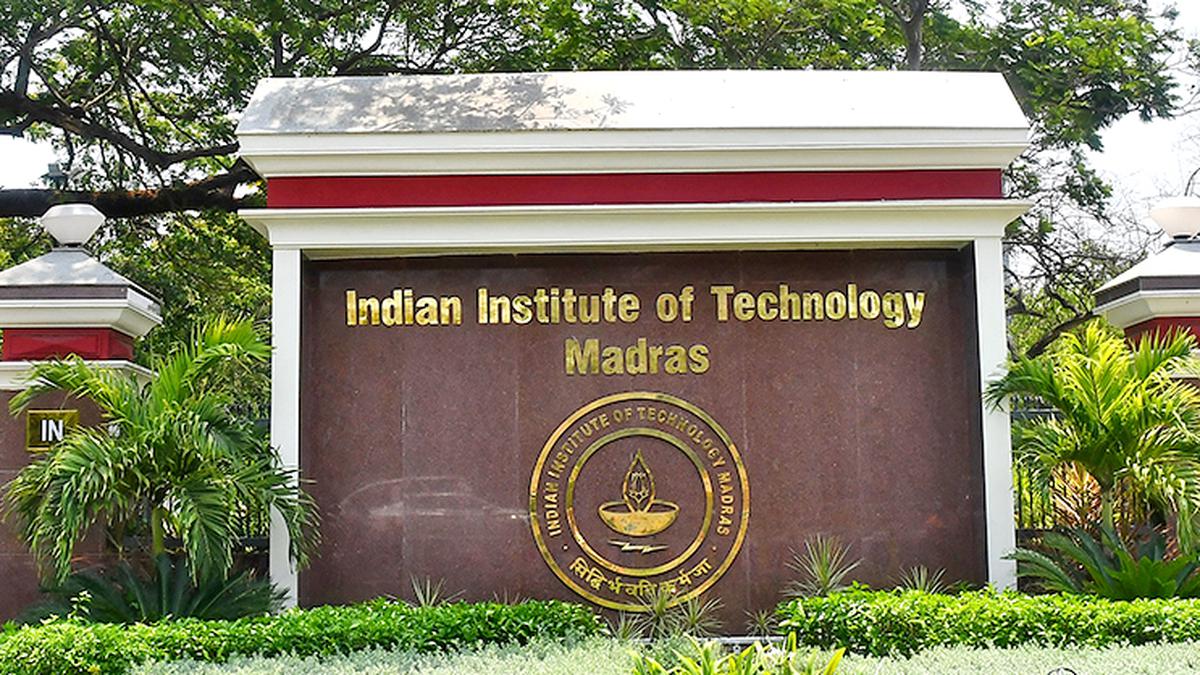
To address this gap, especially for novice drivers, the Indian Institute of Technology Madras has introduced ‘ThinnAI’, an AI-enabled personalised driver training platform developed by its Centre of Excellence for Road Safety (CoERS). The platform was unveiled at the India AI Impact Summit 2026.
ThinnAI is primarily designed for first-time drivers aged 16 and above, even before they apply for a Learner’s License. The platform aims to strengthen pre-licensing education by focusing on behavioural readiness.
According to Prof Venkatesh Balasubramanian, Head of Centre of Excellence for Road Safety (CoERS), IIT Madras, the idea is to intervene early, before risky driving patterns take shape. “Driving requires high-order cognitive abilities such as risk perception and situational awareness. These are not developed simply by memorising traffic rules,” he says.
“Learning to drive on Indian roads demands more than rote theoretical knowledge. The existing licensing system prioritises theoretical recall over behavioural readiness, leaving novice drivers unprepared while driving on roads,” Prof Balasubramanian explains.
He noted that driving has to be learned and that the process should become a habit. Behavioural discipline forms a habit. When a habit is formed through controlled learning, outcomes are better because structured and guided exposure can help young drivers internalise safety practices.
ThinnAI functions as an AI-powered, self-paced learning system. After registration, learners first undergo gamified behavioural tests designed to assess attention span and decision-making ability. This is followed by six structured video modules covering defensive driving, hazard perception and road rules. The platform includes quizzes, mock tests, scenario-based training, AI-generated summaries and text-to-speech features.
These gamified assessments replicate real-life traffic situations and require learners to make split-second decisions. The goal is not only to test knowledge but also to evaluate reaction patterns and judgement under pressure.
Unlike traditional classroom-based driver education, ThinnAI adapts to each learner’s pace. The system identifies mistakes, recommends targeted modules and explains errors to reinforce learning. “When habits are formed through controlled learning, outcomes are better. ThinnAI builds awareness, judgement and responsibility, not just readiness [to obtain a licence],” Prof Balasubramanian notes.
By combining behavioural science, adaptive learning and AI, the platform seeks to redefine how driver education is delivered in India. “The goal is not to produce license holders but responsible road drivers,” he says.
ThinnAI also forms the ‘first gate’ of knowledge in the CoERS proposed three-gate licensing model. Pilot testing is currently underway to evaluate usability and learning outcomes. The next phase involves integrating ThinnAI into India’s learner licensing system, potentially linking it to the Sarathi and Parivahan portals. Plans also include vernacular language support and rollout across multiple states.
“This is part of a larger systematic reform. The three-gate model ensures that drivers are evaluated not just on theoretical knowledge but on behavioural competence and road readiness,” he explains.
By nurturing a safety-first mindset among young drivers, ThinnAI aims to reduce crashes caused by behavioural lapses and foster a culture in which road safety is seen as a shared responsibility.
Research cited in the IJRDO Journal indicates that early behavioural intervention could significantly lower youth-related crash rates. Globally, nearly 12% of road fatalities involve people under 25, making early education particularly crucial. Targeting this demographic before they begin driving independently could have a long-term impact on society.
As India works towards its vision of zero road fatalities by 2047, initiatives like ThinnAI show how AI can shift road safety efforts from enforcement to prevention.