
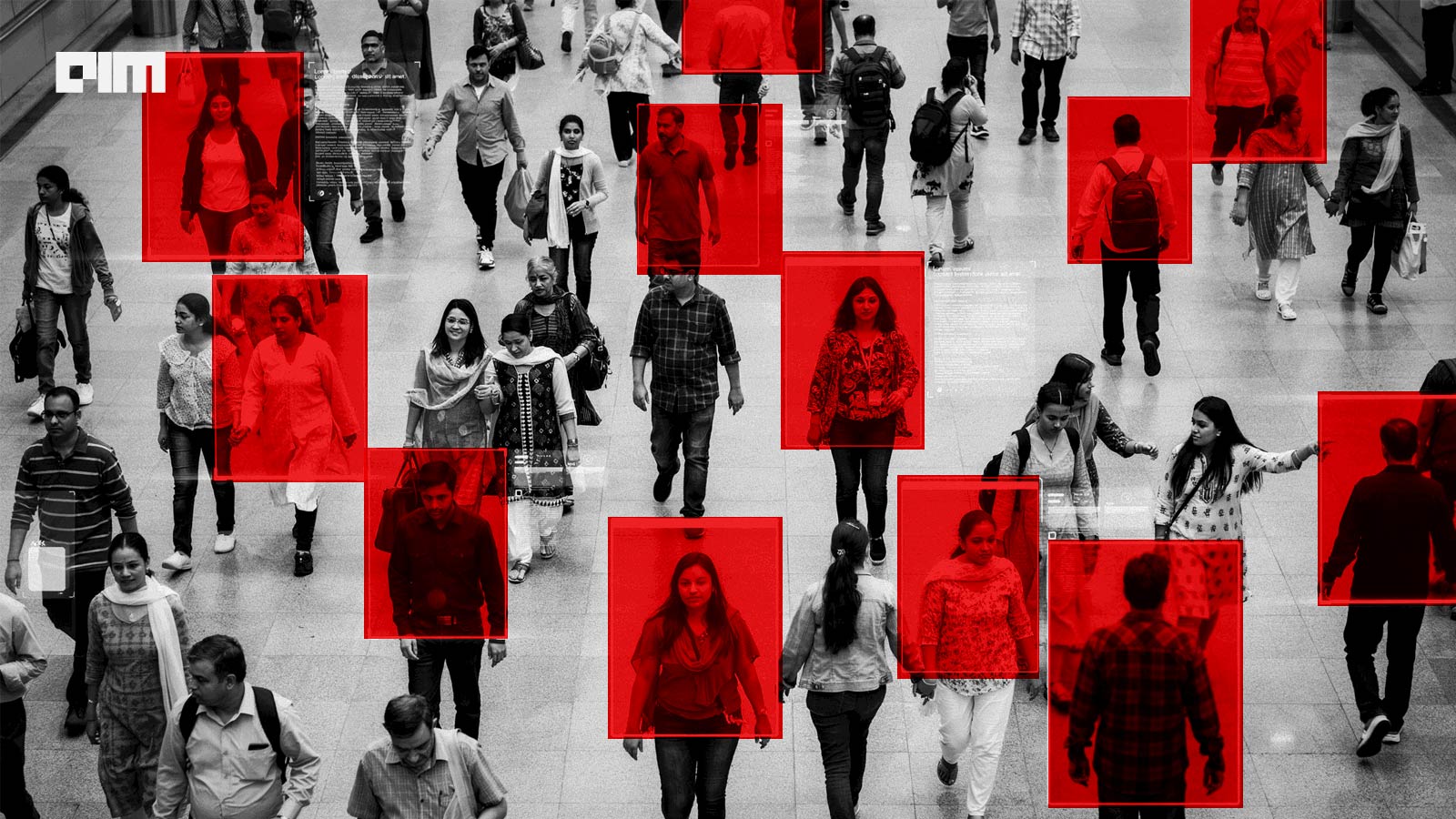
The use of video surveillance in India’s public sector has shot up drastically over the past few years to meet the needs of the times, whether to ensure security at critical public infrastructure like, Roads, Highways, airports, bus stops, and markets, or to monitor mass crowds such as in the recent Cockroach Janata Party protests.
For decades, India imported CCTV cameras, primarily from China. However, last year, the Ministry of Electronics and IT barred the sale of CCTV units without Standardisation Testing and Quality Certification, effectively banning the import of Chinese cameras and giving an impetus to domestic manufacturers to ramp up production. Now, some of them are integrating AI to make their security systems more proactive.
Vehant Technologies, a 21-year-old Noida-based firm incubated at IIT Delhi, has installed its AI-powered surveillance solutions across Indian roads and highways, critical infrastructure, and large public gatherings such as the Kumbh Mela and Magh Mela. Its proprietary AI software continuously analyzes live video feeds in real time to detect security threats, traffic violations, suspicious activities, and public safety incidents, instantly generating alerts that enable authorities to take timely and informed action.
"We're contributing to this shift by developing advanced AI analytics, and indigenous threat screening solutions backed by strong in-house R&D and collaborations with premier institutes," remarks Anoop G Prabhu, Co-founder and CTO of the company, in a conversation with AIM.
The security needs of government agencies and critical infrastructure are broader and more stringent. Depending on the use case, we deploy AI-powered video analytics, indigenous physical security solutions, or an integrated combination of both to strengthen perimeter security, protect critical assets, manage crowds, and support intelligent traffic management.
"The AI does the complex analysis in the background, and the operator's job is just to interpret a clear output and make the call," he says, adding that the company continues to offer support after installation.
AI at Airports
The central government is also interested in using AI-powered software at airports. The Central Industrial Security Force (CISF) has begun linking airport facial recognition systems at six cities to a national data fusion centre, connecting surveillance feeds across critical sites to intelligence networks.
Meanwhile, The Bureau of Civil Aviation is conducting trials of full-body scanners at Delhi, Bengaluru, Hyderabad, and Kochi airports through the CISF. A senior security official involved in the trial tells AIM that the aim is to minimise physical frisking while improving threat detection capability.
In line with this industry shift, Vehant has recently launched India's first indigenous MilliView® Body Scanner, capable of detecting both metallic and non-metallic threats. The scanner uses advanced deep learning algorithms for high-precision anomaly detection, enhancing the accuracy and efficiency of security screening. Over five years of R&D undertaken in collaboration with IIT Delhi, the scanner uses low-power, non-ionising radio waves to scan a body within five seconds, identifying non-metallic items that may escape a metal detector, and eliminating the need for physical pat-downs.
Rather than producing an image of a passenger's body, the software renders detected items on a generic avatar, so an officer sees only the location and type of a flagged object.
Vehant affirms MilliView complies with guidelines set by the Bureau of Civil Aviation Security and has been evaluated by government authorities against the operating requirements for airports and other government sites. The company is now pursuing certification from the European Civil Aviation Conference.
Meanwhile, at Kempegowda International Airport in Bengaluru, Industry.AI, a vision AI company and member of NVIDIA's Metropolis partner network focused on AI-powered video analytics, connects more than 500 camera feeds across the airport's T2 terminal to models trained on NVIDIA's TAO Toolkit.
The platform identifies unattended baggage, tracks passenger queues at check-in and security lanes, flags unauthorised people or vehicles on airport grounds, and detects speed violations outside the terminal.
“Our platform speeds up passenger flow during peak hours of operation by alerting staff to longer-than-optimal lines,” shares Industry.AI Founder and CEO Tejpreet Chopra.
Meanwhile, AI is also transforming how airports treat explosive detection. This year, the Airports Authority of India placed an order to implement Vehant’s Nanosniffer device at more than 60 airports, including the newly opened terminal at Jodhpur.
The explosive trace detector device detects trace levels of explosives using differential scanning calorimetry rather than spectrometry used in many detectors. The AI software identifies commercial and homemade explosives, including RDX, nitroglycerin and ammonium nitrate, along with narcotics, distinguishing between military, standard, and homemade categories rather than issuing one generic alert.
Monitoring Crowds
Large public gatherings raise a different set of problems, since crowd density, fire risk, traffic, and parking need continuous monitoring across wide stretches.
Vehant's OKEAN platform applies analytics to current CCTV infrastructure rather than requiring new hardware. At the Maha Kumbh gathering in Prayagraj in 2025, the company's video analytics tracked crowd numbers at locations such as the river ghats, flagged rising density before it reached unsafe levels, and triggered alerts for fire or smoke detected on camera feeds, while also monitoring parking occupancy and violations across the site.
Vehant has applied the same approach at the Magh Mela and the Tiruvannamalai Karthigai Deepam festival.
During the Kumbh Mela, the Uttar Pradesh Police used AI software to count arrivals at entry points and to sound alerts when sections of the crowd reached unsafe density.
Amit Kumar, IPS officer who was incharge of operational command and human-machine integration at the festival says, "We want everyone to go back home happily after having fulfilled their spiritual duties. Separate reporting recorded roughly 2,700 CCTV cameras installed at the site, some carrying AI capability for detecting crowd density, barricade jumping and fire.”
Railway stations present the same set of problems. RailTel Corporation, the telecom and IT arm of Indian Railways, secured a contract from the Ministry of Railways in May 2026 to install an AI-based surveillance system at New Delhi Railway Station, one of the busiest transit hubs in the country. The system integrates video analytics with the station's camera network to support real-time threat detection and crowd monitoring.
Traffic Management
Vehant has deployed Automatic number plate recognition and traffic violation detection software across more than 80 Indian cities, running on already installed camera networks and identifying over-speeding, signal jumping, wrong-lane movement, no-helmet riding, and triple riding in real time.
Once the system captures a violation image and number plate, the data passes to government databases for verification before an e-challan is issued. Delhi Police runs these traffic violation software, with similar deployments in Gurugram, Raipur, Agra, and Ahmedabad.
In addition, Vehant Technologies offers a comprehensive portfolio of physical security solutions, including AI-enabled Under Vehicle Scanning Systems (UVSS), deployed at oil and gas facilities, railway stations and other secured sites, capturing high-resolution images of the underside as a vehicle passes through. Then, it analyzes that image in real time to identify potential threats, contraband, or suspicious items, rather than just producing a picture for someone to squint at.
Whether systems built in India compete with established suppliers over time depends on certification, field performance data, and cost.

Your reaction
Discussion
What's your take on this story?
No comments yet — be the first to share your view.