
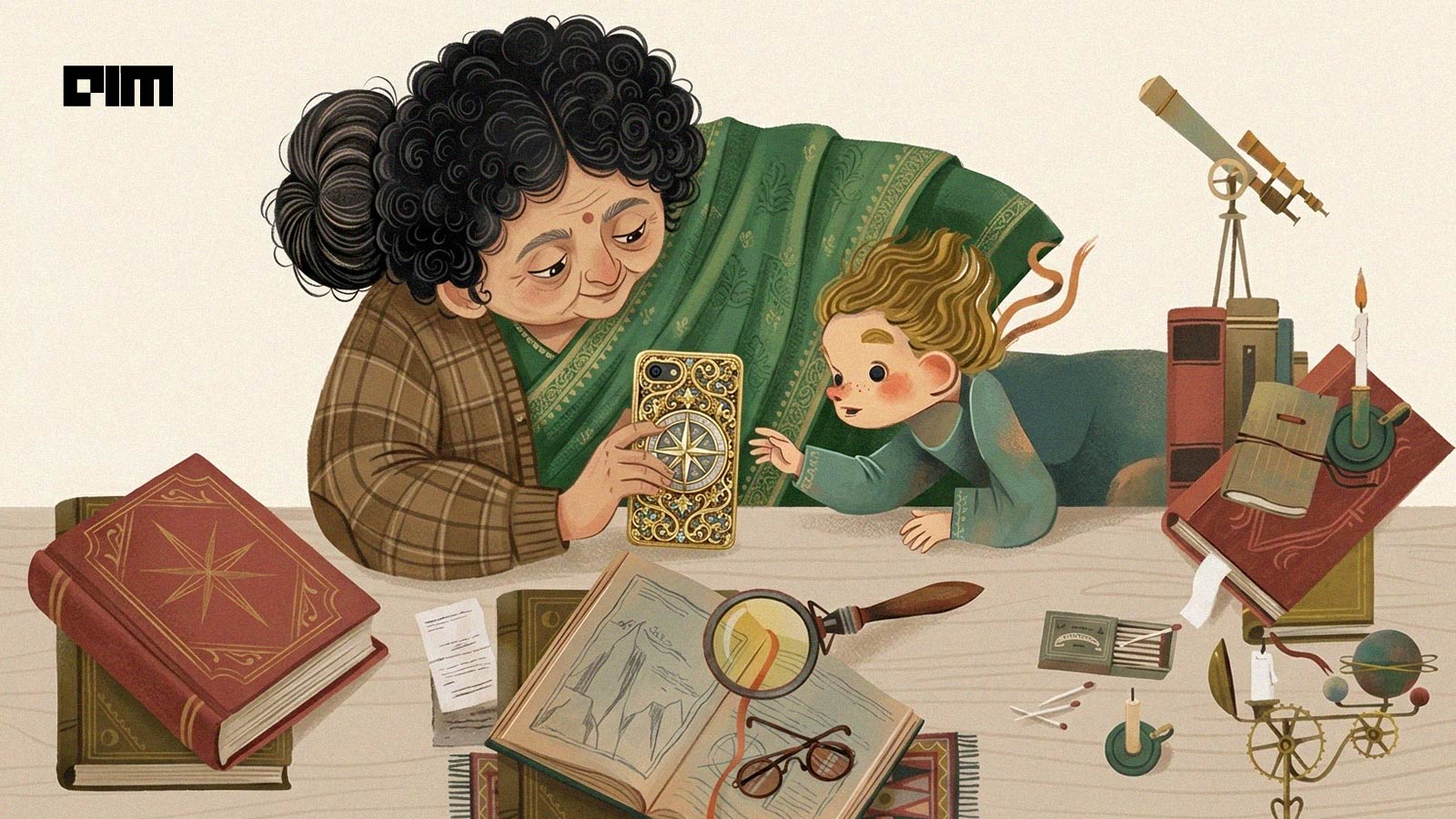
For many millennials and Gen Zs growing up in the early 2000s, the bedtime routine involved parents reading from illustrated books or humming nursery rhymes before sleep. Fast-forward to today, and children are increasingly engaging with AI-powered apps that can generate personalised stories, speak in different voices, and even adapt narratives to a child’s interests in real-time.
One such platform is Pixie, a Bengaluru-based AI-powered audio storytelling platform for children that is now gaining traction among parents in India and abroad. The startup is positioning itself as a voice-first AI platform that aims to reduce children’s screen dependency while still keeping them entertained and engaged.
The Problem Statement
The idea for Pixie came to Shiv Bansal, the company’s Co-founder and CEO, during a visit to the United States last year. He noticed his four-year-old nephew spending a lot of time online and on the screen as his parents struggled to balance work and childcare responsibilities.
“My nephew was completely engaged in watching television and YouTube channels. My sister, who worked at Meta, felt guilty because handing over YouTube became the easiest solution,” Bansal tells AIM.
The experience prompted him to consider whether artificial intelligence could create a healthier alternative to screen-based entertainment.
He and IIT Hyderabad alum Rahul Agarwal, who earlier worked at Amazon on the Alexa product, designed Pixie as an audio-first storytelling platform for children aged three to six. Instead of videos, the app generates personalised stories using AI narration, sound effects, background music, and familiar characters. Parents can customise stories around lessons they want their children to learn.
For example, if a child refuses to share toys, a parent can generate a story featuring the child, their favourite fictional character, and a moral lesson around sharing.
“One of our users generated a story where Lord Hanuman, as a main character, teaches her daughter Naira why she should brush her teeth,” he adds.
Interactive Storytelling
The rise of platforms like Pixie reflects a major shift in how children consume stories today. According to Bansal, kids are now used to the fast, interactive style of YouTube and Instagram reels.
“A child’s brain is now tuned towards listening to something new constantly. Traditional books are static while digital storytelling creates a more dynamic experience,” he notes.
However, Bansal insists that Pixie is not trying to replace books entirely. “They are replacing video consumption.”
Research in early childhood education appears to support the growing interest in digital storytelling.
A 2024 study published in the Jurnal Pendidikan Anak Usia Dini Undiksha found that interactive audio-visual storytelling can improve children’s imagination, creativity, language learning, and emotional development. It also noted that traditional storytelling methods based mainly on printed books were becoming less engaging for children growing up in the digital era. It stressed that interactive digital storytelling could make learning more enjoyable while improving children’s concentration and understanding of moral values.
Another finding from the study showed that teachers and child respondents gave website-based digital storytelling platforms an average acceptability rating of 95%, indicating strong engagement and educational value.
“Screen-Free” Engagement Model
Bansals asserts that “its biggest use cases currently revolve around bedtime, mealtime, and car rides moments when parents typically hand over screens to children.
The app already has more than 5,000 users across 12 countries, including India, the US, Australia, Canada, and the United Kingdom. Some of its most active users spend nearly 50 minutes a day on the platform.
Now, it is turning that growth into a larger business, as while most apps only see 1–2% of people paying, Pixie is seeing a 15% conversion rate to paid users. The strong organic growth in India and North America has set the stage for the startup's next phase of expansion.
Stories Built Around Indian Families
Alongside Pixie, platforms such as ‘Bolo Buddy’ are also experimenting with AI-powered storytelling but with a stronger focus on emotional bonding and Indian cultural narratives.
For Raghvendra Singh, Founder and CEO of Bolo Buddy and GrowingwithKid, the idea emerged from his own experience as a working parent struggling to spend time with his daughters.
“The bedtime window became the only meaningful time I could spend with my daughters. That was the space where both parents and children were relaxed, and where memories were actually being created,” he tells AIM.
The platform grew from small bedtime rituals he shared with his children, including guessing games, movie nights, and improvised bedtime stories. “There was always this guilt that no matter how much time you give your children, it still feels less,” he expresses.
Unlike many global storytelling platforms built around Western characters and contexts, Bolo Buddy is attempting to create stories rooted in Indian culture, languages, and family structures.
“If I say Panchatantra stories or Ramayana, Indian children instantly connect with those references. I wanted to build something that could even preserve grandparents’ stories, he notes.
The platform allows parents and grandparents to record stories in regional languages so children can continue listening to them later. The founder has built the platform for languages including English, Hindi, Hinglish, and Tamil. The AI helps tame it according to their requirements.
“If my mother narrates a story today, that memory can stay on the platform forever for my daughters,” he adds.
Currently in beta testing, Bolo Buddy is working with a small group of parents before initiating a wider rollout. Singh claims the platform has already received interest from Indian families living abroad, including users from Canada, France, and Singapore.
Also, he is preparing to expand it to more Indian languages. However, he is not looking at external funding and is focusing on improving the product.
The Future of Children’s Storytelling
As AI storytelling platforms gain traction, they are reshaping the future of childhood learning by blending education with entertainment. They come at a time when concerns over screen addiction continue to grow globally.
Pixie is currently experimenting with schools in Bengaluru, where teachers are using AI-generated storytelling to explain topics such as habitats, gravity and even Mars simulations.
Bansal believes AI storytelling could eventually allow children to learn at their own pace rather than follow rigid classroom structures.
“If a child learns about the moon, the next question they ask is, ‘What is gravity?’ Then instantly a content piece gets generated explaining gravity through an audio-based story,” he explains.
The bedtime story is no longer confined to the pages of a book. It is becoming interactive, personalised, and increasingly powered by artificial intelligence.

Your reaction
Discussion
What's your take on this story?
No comments yet — be the first to share your view.