
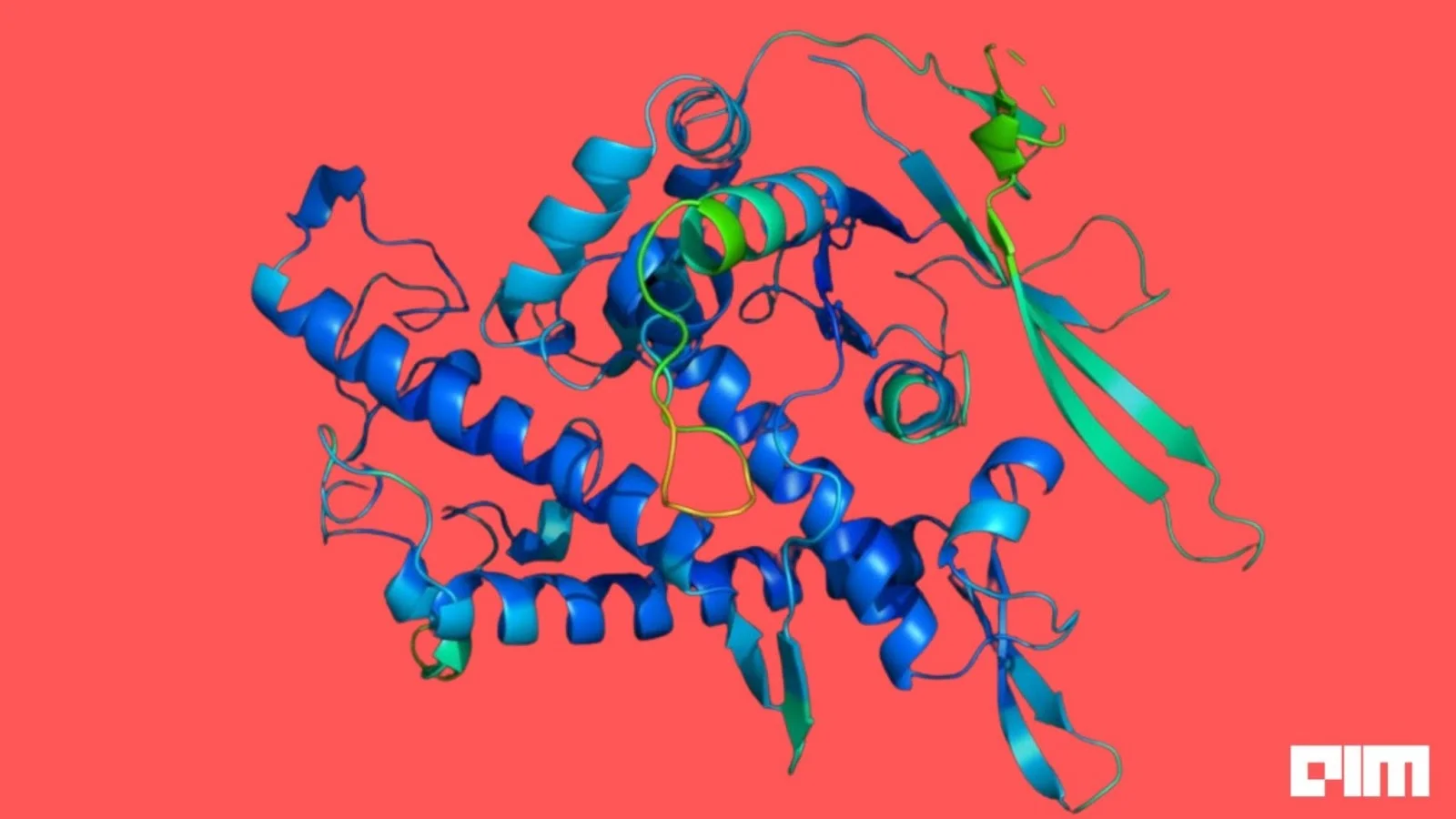
India’s life sciences industry is undergoing a structural shift as AI-driven tools are reshaping how research and drug discovery are conducted. At the centre of this transformation is AlphaFold, an AI system developed by Google DeepMind, which is rapidly gaining traction across academia and industry.
According to Google DeepMind, India is now the fourth-largest adopter of AlphaFold globally, with more than 180,000 researchers actively using the platform. This milestone signals a fundamental shift in how biological research and drug discovery are conducted nationwide.
What began as a breakthrough in computational biology is now defining India’s life sciences ecosystem. It is accelerating research timelines, democratising advanced structural biology, and placing the country at the forefront of AI-driven scientific innovation.
Beyond collaborations with the US and UK governments, Google DeepMind is also expanding its footprint in India through partnerships with government bodies and research institutions.
Google DeepMind, Google Research, and Google.org have partnered with the Anusandhan National Research Foundation (ANRF) to accelerate the adoption of AI in scientific research.
Through this initiative, the organisation aims to provide researchers, students, and early-career professionals in India with access to advanced AI models, along with training programmes, mentorship opportunities, hackathons, and community innovation challenges.
This effort will lead researchers and engineers in India to access several frontier AI tools. These include AlphaGenome, an AI model designed to help scientists understand how mutations in human DNA sequences influence gene function; AI Co-scientist, a multi-agent system that acts as a virtual scientific collaborator; and Earth AI, a suite of models built on Gemini’s advanced reasoning capabilities to support applications ranging from environmental monitoring to disaster response.
Scientists worldwide are already using AlphaFold, an AI system capable of accurately predicting the structures and interactions of proteins, DNA, RNA, and ligands, to accelerate breakthroughs in research.
The collaboration is expected to further expand adoption as Indian scientists begin leveraging AlphaGenome and other newly introduced AI systems.
But, Why India?
India’s growing importance in the global life sciences ecosystem provides a strong foundation for AlphaFold’s rapid adoption.
According to an EY report, 23 of the world’s top 50 life sciences companies have set up operations in India, most within the past five years.
According to JLL data, Hyderabad houses GCCs for nine of the world's top 18 pharma, biotech, and medical device companies. The city’s healthcare GCC landscape features global pharmaceutical giants, including Johnson & Johnson, Merck Life Science, Sanofi, GSK, Bristol Myers Squibb, Eli Lilly, Amgen, Bayer, and Sandoz.
AI is already making a measurable impact on protein modelling. Tools like AlphaFold can model proteins in hours instead of months. This allows companies such as GSK and Sanofi to speed up R&D by 30–40%, enabling faster identification of drug targets. Indian GCCs are increasingly adopting these technologies to improve early-stage drug discovery and contribute to global pharmaceutical innovation.
A Vast Research Ecosystem Driving Adoption
India’s life sciences ecosystem provides fertile ground for AI-driven structural biology tools.
Purav Gandhi, CEO and founder of Healthark Insights, states that India has one of the largest life sciences research ecosystems in the world. It includes over 1,000 active academic life sciences departments and national institutes. Additionally, there are about 200 pharma, biotech, and CRO R&D centres. The country also hosts more than 100 global capability centres (GCCs) focused on bioinformatics, drug discovery, and digital R&D.
“This creates a research base of scientists working on protein biology, genomics, and translational research areas where AI-driven structural prediction tools like AlphaFold are directly applicable,” Gandhi says.
Within this ecosystem, laboratories are now using AlphaFold routinely for protein modelling, although the depth of integration varies across institutions.
AlphaFold is particularly impactful in structural biology, bioinformatics, and early-stage drug discovery workflows. Researchers use the platform to predict protein structures, evaluate mutation effects, validate drug targets, and enable structure-based drug design when experimental data is unavailable.
“In practical terms, tasks that earlier required 6–24 months of experimental structure determination can now be initiated with high-confidence structural hypotheses in hours to days,” Gandhi says. He adds that this method can reduce early-stage target characterisation timelines by about 30–50% and lower exploratory structural biology costs by 20–40%, by prioritising experiments rather than replacing them.
Rather than eliminating laboratory experimentation, AlphaFold improves hypothesis generation and experimental prioritisation, allowing scientists to focus resources more effectively.
Adoption Across Academia and Industry
Adoption is already visible across leading academic institutions such as IISc, IITs, and CSIR-CCMB, where AI-enabled protein modelling supports target discovery and functional annotation.
As adoption expands, AlphaFold and related generative biology tools are expected to compress early discovery cycles by several months per program while simultaneously improving R&D productivity across multiple targets.
From Experimental Science to Data-Driven Discovery
Industry practitioners are already observing measurable efficiency gains as AI tools become embedded within research workflows. Greg Killian, Senior Vice President (SVP) and Head of the Life Sciences and Healthcare businesses at EPAM, says adoption is becoming widespread across pharmaceutical organisations.
Killian states that multiple clients are using it and figuring out how to use it, presumably in a more targeted way, and notes that this is more common than not at the moment.
The shift is supported by advances in high-performance computing and cloud infrastructure, which are democratising access to large biological datasets and accelerating computational workflows.
Democratising Structural Biology in India
Experts say AlphaFold’s rapid uptake reflects India’s unique convergence of scientific talent and digital capability.
Sarvesh Singh, Director and CEO, Life Sciences and Pharma, Telangana, says, “India’s rapid adoption of AlphaFold across academic labs, biotech startups, and translational research centres reflects our scientific depth and digital capability.”
Tools like AlphaFold are democratising high-end structural biology, allowing Indian researchers to accelerate drug discovery, vaccine design, and protein engineering.
“With our strong AI talent base and expanding life sciences ecosystem, India is well-positioned not just to use such platforms but to build the next generation of AI-driven biological innovation,” Singh adds.
As AlphaFold adoption deepens across academia, biotech startups, and pharmaceutical R&D centres, its primary impact is becoming clear: faster hypothesis generation, improved research throughput, and better capital efficiency — rather than replacement of experimental science.

Your reaction
Discussion
What's your take on this story?
No comments yet — be the first to share your view.