

Open Bengaluru company Maya Research’s website, and you will not be greeted by a hero section screaming benchmark scores, performance numbers, or a list of model capabilities. Instead, the voice AI startup’s landing page shows a lush green village with cattle, farms, and agriculture.
It represents Vempalle, a town in Andhra Pradesh’s Kadapa district. That is where CEO Dheemanth Reddy was born, and placing his native town at the centre of Maya’s website is more than a personal touch.
It is an homage to the idea of nativeness that sits at the heart of the company’s product philosophy. The year-old startup believes that Indian languages are shaped by places and cultures, and that voice AI should preserve those nuances rather than flatten them into a generic voice that simply ends up translating.
“People often confuse voice as a technology and don't think of it as an interface,” Reddy tells AIM. He explains that it is the layer through which people interact with AI, which means the model needs to understand not just the language being spoken, but the local context, references, and nuances behind it.
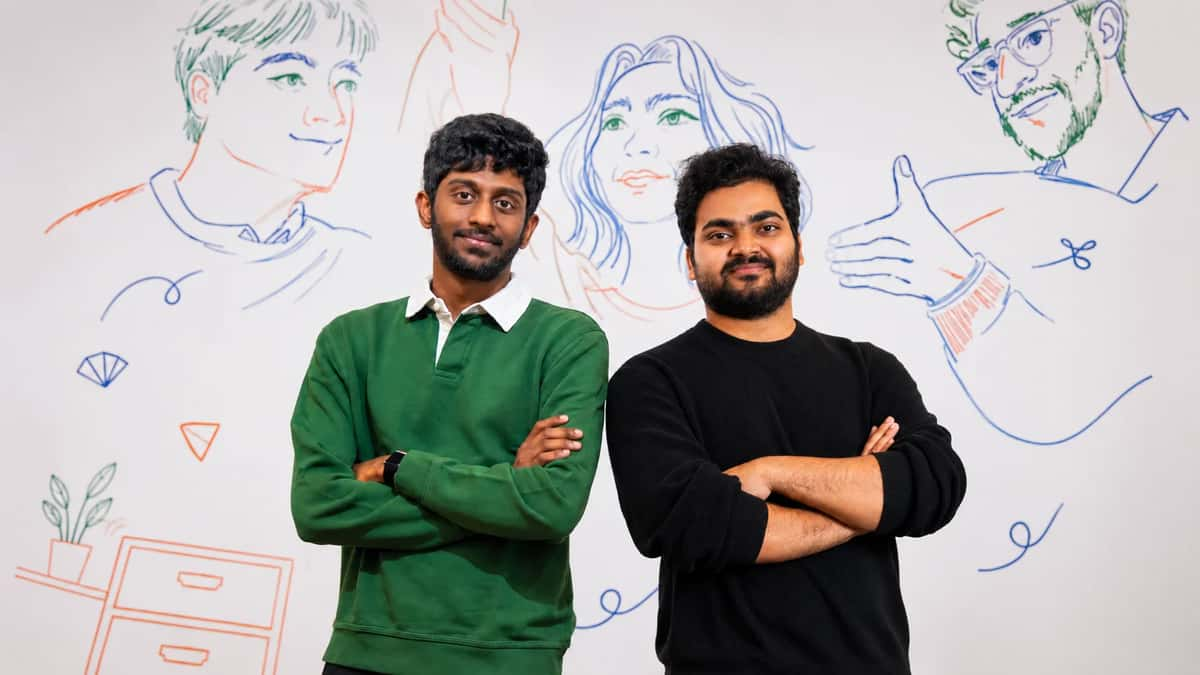
For Reddy, co-founder and CTO Bharath Kumar, and his team, this has been the guiding philosophy, as the company recently released its Maya 2.0 models, which have delivered strong benchmark results.
No Voice is the Same Voice
Reddy wants the world to focus less on benchmark scores, ELO ratings, and numbers, and more on how Maya’s models sound. “When I want to show people how our models are better than the competition—I don’t show them the benchmarks. I just let them hear how the models speak side by side.”
With a flurry of voice AI startups sprouting, not just globally but in India, Maya Research wants to focus on two aspects: cost and emotion.
The company’s latest models, Reddy says, have been extensively tuned to provide subtle emotion. He demonstrates Maya 2 speaking the same language in multiple settings, such as in a casual conversation, an e-commerce agent, a BFSI voice agent, a casual storytelling voice mode, and so on. Each setting offers a different subtle emotion.
On paper, the differences may seem minor, perhaps little more than a shift between formal and informal speech. But Reddy says each requires its own nuance in tone, pacing, and emotion, particularly when the model is being deployed in enterprise settings.
A generic voice may demonstrate that a model can speak, but a BFSI company, for instance, needs to hear a voice that actually sounds appropriate for a banking customer-support interaction.
In the 11 languages Maya 2 supports, Reddy says each is built with a voice native to that particular language. He says this is where many voice AI companies go wrong, using the same voice for all languages. For instance, Reddy says that a voice trained in Hindi can technically speak Telugu as well, but it will not carry the same nuance or emotion of a native Telugu speaker.
But his idea of nativeness extends beyond how a voice sounds. Maya is working towards models that can understand local context as well, including the cultural references specific to that language. A model speaking Telugu or Kannada should not simply translate information into those languages, but understand the cultural context in which they are spoken.
Reddy says he and his co-founder, who both hail from small towns in Andhra Pradesh, recognise clear variation between English, Telugu, and other popular languages such as Hindi, and the different nuances they bring.
Currently, Maya-2-Native ranks second overall on Voice Arena’s Hindi TTS leaderboard, a human-evaluated benchmark for voice AI built around blind, head-to-head tests by vetted native speakers.
8x Cheaper Than Sarvam’s Bulbul v3
Maya 2 is accessible via platforms like Fal, Bolna and Baseten, and will soon be available on AWS, Azure, and other providers. The first-party API, Reddy says, is eight times cheaper than Sarvam’s latest Bulbul v3 model, nearly nine times cheaper than Cartesia’s Sonic 3.5, and over 15 times cheaper than ElevenLabs’ models.
The primary reason why the company has been able to keep costs low is that Reddy doesn’t want it to function as a general-purpose voice AI lab.
“We are not trying to build one massive model that covers every language in the world. Our models are intentionally small and lean. Many general-purpose voice models need to support a huge number of languages and use significantly larger parameter counts,” the co-founder says.
The current models are sized at around 2 billion parameters, optimised for a narrow linguistic space, and the lab is pushing to reduce the size further, to around 300 million parameters.
The Maya 1 and Veena models, the startup’s previously released models, are available as open-weight models. Maya 1, Reddy says, has crossed 440,000 downloads already.
The Maya app has crossed 3 million downloads and, according to Reddy, is now being used across 226 towns in India, with Telugu-speaking users forming its largest market, followed by Uttar Pradesh and West Bengal.
The Result of Being Surrounded by Ambitious Folks
Maya Research’s journey so far has been driven by ambition and being surrounded by successful people.
“My co-founder and I, having both studied at NYU, were deeply involved in deep learning, and were taught by people like Yann LeCun [former chief AI scientist of Meta],” Reddy says.
In June, the company raised a $1.9 million seed round led by South Park Commons (SPC), the venture firm co-founded by Aditya Agarwal, a former Facebook engineer and the company’s 10th employee, and the former Dropbox CTO.
“I would have never understood the importance of ambition if it wasn't for SPC, and the ambitious people I was surrounded with,” says Reddy.
Reddy says SPC’s “minus one to zero” philosophy resonated with the founders because they were starting from a position of uncertainty.
“That was important for us because, as fresh graduates coming out of New York University, we were technical, but we were still figuring out sales. We were still figuring out our narrative, and we were still trying to understand our market.”
While Maya Research is trying to differentiate itself through emotional intelligence and low-cost voice AI, it still needs to find product-market fit at scale, both in India and globally, to reach the 5 billion users its models were designed with in mind.
For Reddy, the challenge of marketing and selling technology is almost intuitive. He had to persuade people who were initially sceptical of technology, starting with his own family.
“I had to learn a language to create opportunities. I grew up in a place where people thought the internet was a bad thing. I had to convince them that the internet was good for life. Technology came in the middle. I had to convince my parents, ‘We have to get the internet. You have to send me out to study,’” he recalls.
The harder question is whether sounding more native and offering lower costs will be enough to convince enterprises to switch from established players like ElevenLabs and OpenAI. Maya Research now has to turn those differences into something enterprises choose, adopt, and keep using at scale.
- Drizz Is Taking on the Reliability Challenge in AI App Testing
- How This Indian AI Unicorn is Disrupting Hollywood With Digital Humans
- The AI Underwriting Engine Behind Recur Club’s ₹500 Cr Festive D2C Capital Push
- Loan Collection in India is Still Largely Manual. This AI Startup is Changing That
- The Antithesis Approach to Breaking AI-Generated Code
- The Hardest Test for India’s AI Dream