Key takeaways
- Brazilian artist Anderson Rohr created a lip-synced cover of 'Bad Moon Rising' using NVIDIA Omniverse and Audio2Face.
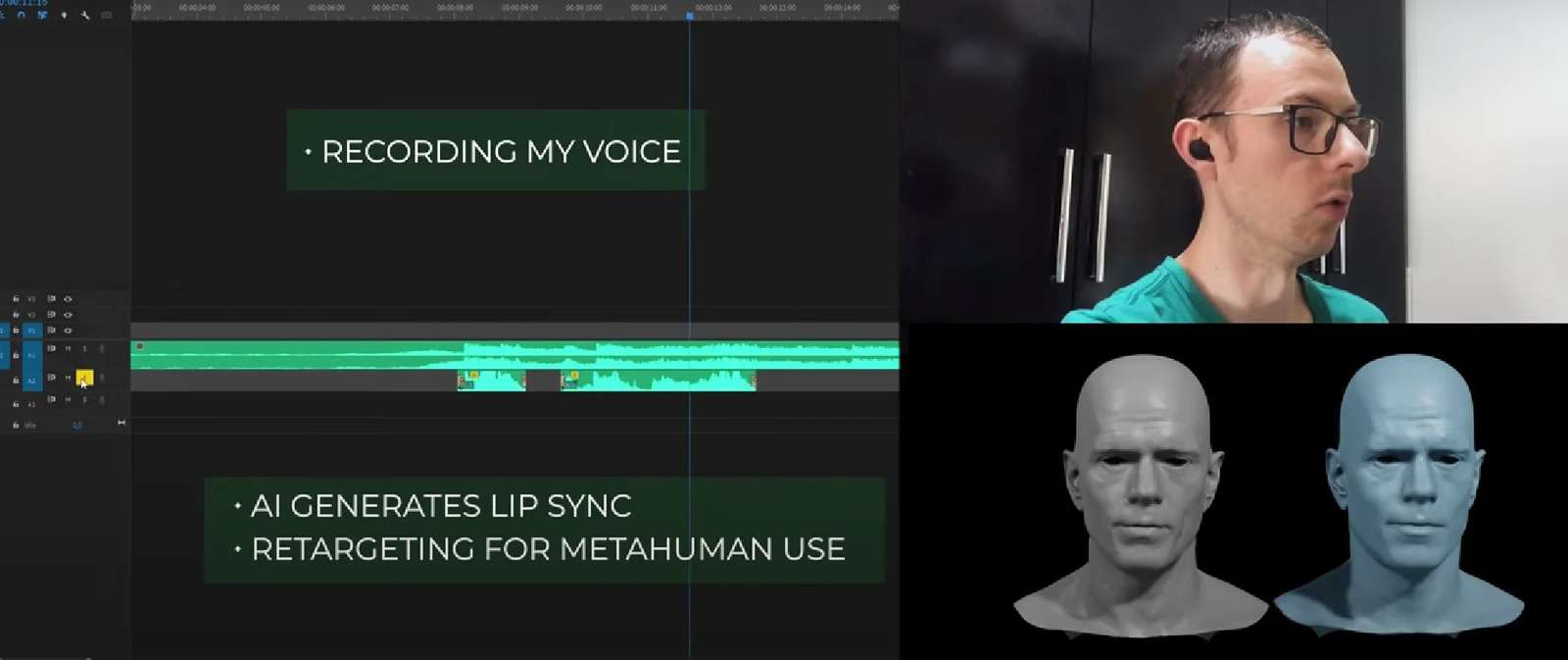
- The project involved recording his vocals, which the AI application transformed into facial animations for a digital character.
- NVIDIA Omniverse significantly speeds up the animation workflow, allowing artists to focus more on creativity.
- Without Omniverse, rendering animations could take hundreds of hours, but it enables real-time rendering.
- Artists can enhance their work with NVIDIA's optimised hardware, software drivers, and AI features.
Brazil-based 3D generalist and freelance video editor, Anderson Rohr, has created a lip-synced cover of ‘Bad Moon Rising,’ the 1960s anthem from Creedence Clearwater Revival. He created this using NVIDIA Omniverse and its AI-powered Audio2Face application.
To make the video, Rohr used the NVIDIA Studio system with GeForce RTX 3090 GPU. For this project, Rohr recorded himself singing and then opened the file in Audio2Face. The application on Omniverse uses instantly generated expressive facial animations for the digital human with only an audio source or a voice-over track.
He then manually animated the brows, eyes, and neck of the character and changed the lighting for the scene. For Rohr, the NVIDIA Omniverse speeds up the workflow and helps achieve more natural digital humans. With the work done fast and so many new horizons, artists can spend more time on the creative process.
Without the Omniverse, animations can take as long as 300 hours to render. Rohr also faced software incompatibilities that slowed his work. With Omniverse and its connectors for software applications, renderings are achieved in real-time.
Artists can supercharge their creations with Omniverse, NVIDIA Studio – its optimized RTX-accelerated hardware and software drivers, and AI and simulation features.
Spotted an error? Tell our editors. Read our editorial standards and corrections.