Key takeaways
- Launch Daksha Gen 2 humanoid robot for industrial deployment at AI Impact Summit 2026 in New Delhi.
- Establish 24,000-square-foot robotics manufacturing and research facility in Kalamassery, Kerala.
- Integrate indigenous AI and autonomous mobility for enhanced operational efficiency in various sectors.
- Attract international interest, with deployments in UAE, Saudi Arabia, and growing traction in the US.
- Highlight India's capabilities in developing advanced humanoid robotics from scratch for global markets.
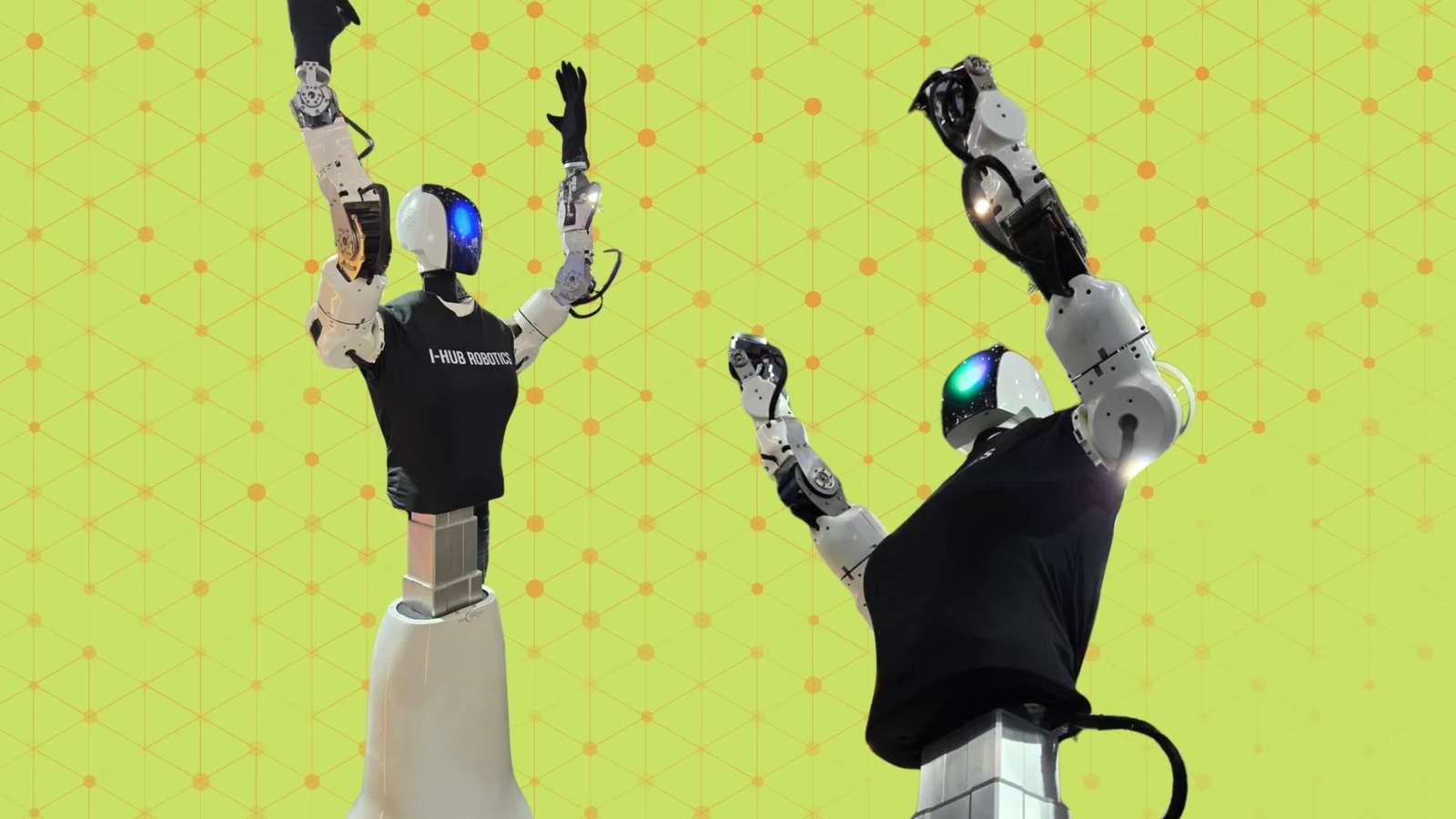
Kerala-based robotics startup iHUB Robotics has launched its Daksha Generation 2 humanoid robot at the AI Impact Summit 2026 in New Delhi. The company introduced the humanoid robot for industrial-scale deployment across enterprise and strategic sectors.
The company claims to have designed and developed the robot entirely in India. The company said the robot integrates mechanical architecture, autonomous mobility and indigenous AI systems.
Daksha Generation 2 can lift up to 22 kg and offer a linear vertical reach of up to eight feet. The robot navigates autonomously across operational areas exceeding 2,00,000 square feet.
The system runs on the Vikeka Decision Core AI System, developed by iHUB Robotics in India. The company said it built the humanoid for industrial, logistics, defence and enterprise applications.
Athil Krishna, Founder and CEO of iHUB, said, “Daksha Generation 2 reflects India’s capability to build advanced humanoid robotics entirely from scratch. We are building core robotics and AI technology in India, for global deployment.”
The startup has deployed robotic systems in the UAE and Saudi Arabia. The company said it is also seeing commercial traction in the United States. The firm is receiving interest in industrial deployment from seven countries. It is also advancing work in defence robotics as part of its strategic plans.
To scale production, the company is establishing a 24,000-square-foot humanoid robotics manufacturing and research facility in Kalamassery, Kerala. The facility will support humanoid manufacturing, AI system development and robotics hardware engineering.
The centre will also focus on physical AI research and training infrastructure. The company said it aims to position India as a global hub for embodied AI technologies.
Recently, Addverb also launched Elixis-W humanoid, expanding its portfolio beyond autonomous mobile robots and collaborative arms. In an exclusive interview with AIM, Sangeet Kumar, Co-founder and CEO of Addverb, revealed that while it is rolling out a wheeled humanoid, a legged version is also ready.