
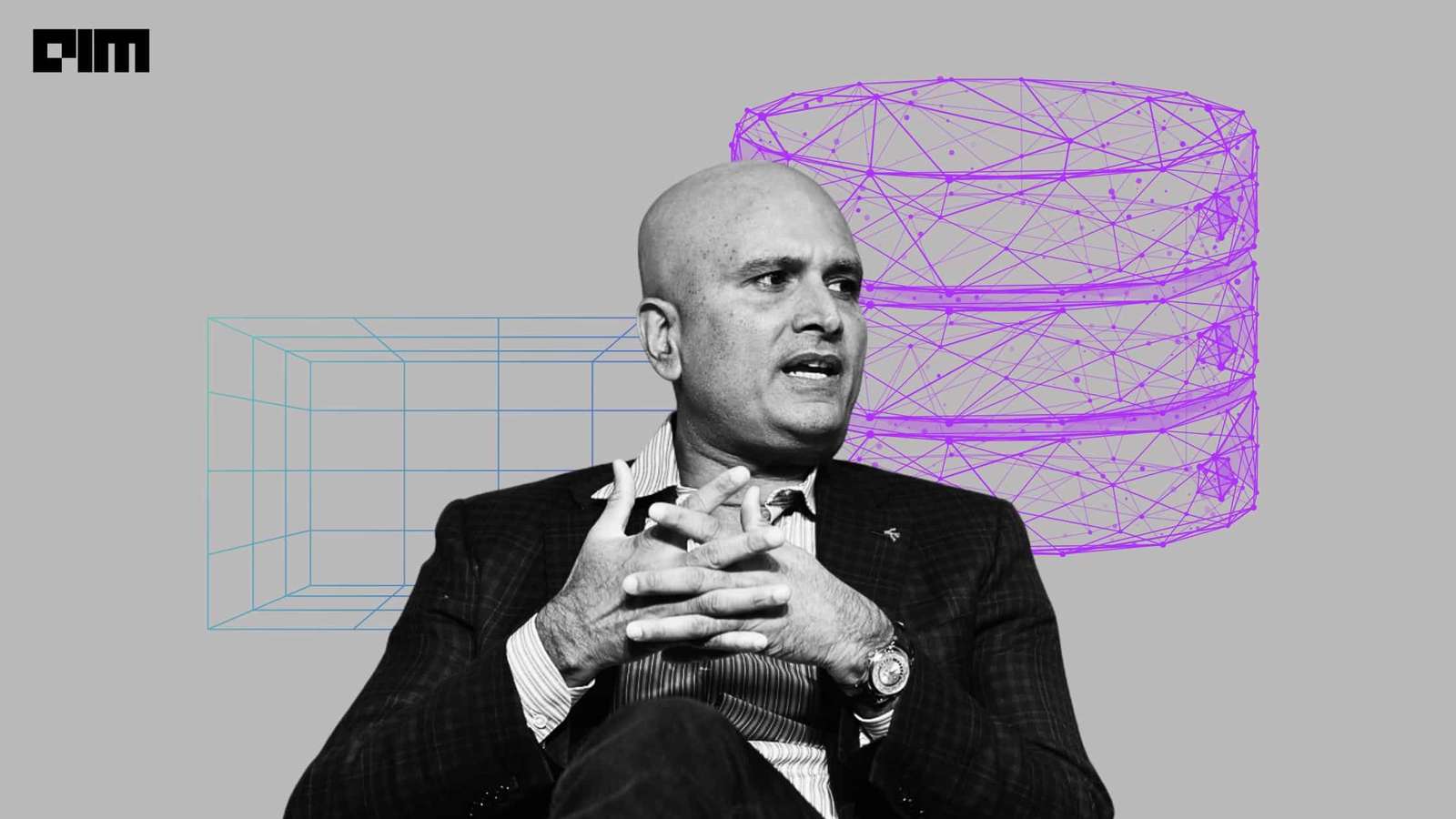
SingleStore CEO Raj Verma has pushed back against Databricks’ claim that it is among the first to unify transactional and analytical databases, arguing that SingleStore has been delivering that capability to enterprise customers for years.
“We agree with Ali Ghodsi at Databricks that unifying transactional and analytical databases is the way to go,” Verma wrote in a LinkedIn post. “But it’s a stretch to say they are the first ones to solve it.”
Verma also criticised what he described as Databricks’ approach to openness, saying the company was promoting a ‘lock-in’ architecture disguised as open source.
He added that the market would ultimately decide the winner based on execution and performance. “Performance is what matters,” Verma wrote. “Let the best solution win.”
The comments came a day after Databricks unveiled Lakebase, its serverless PostgreSQL database, and Lakehouse//RT, a real-time analytics engine, at its Data + AI Summit 2026.
Databricks CEO Ali Ghodsi argued during his keynote that enterprises continue to maintain separate systems for transactional and analytical workloads and called for a unified architecture.
In a blog post titled ‘Welcome to the Party, Databricks’, SingleStore said Databricks’ vision validates a category it has been building since 2019.
“When Ghodsi says customers want one data copy, fewer pipelines, lower latency, and analytics on fresh operational data, he is describing exactly why SingleStore exists,” the company wrote.
SingleStore argued that Databricks’ Lakehouse Transactional and Analytical Processing (LTAP) architecture relies on two separate engines—a transactional layer powered by Lakebase and an analytical layer powered by the Lakehouse platform—sharing a common storage layer.
“Sharing a storage layer is not the same as a unified query engine,” the company said. “SingleStore runs transactions, analytics, ingestion, search, and application-serving workloads in one distributed SQL engine.”
The database vendor also questioned Databricks’ reliance on PostgreSQL compatibility for transactional workloads, arguing that modern AI applications and agents require systems designed for horizontal scalability.
“Handling 10,000 concurrent agent sessions while simultaneously running analytical joins on live operational data was not on the original design brief,” SingleStore wrote. “Agents need broad operational context at low latency, under high concurrency, from a system that scales horizontally when load spikes.”
SingleStore further challenged the benchmarks presented for Lakehouse//RT, arguing that the headline latency figures were based on TPC-H Q6, a benchmark involving a single-table scan and aggregation rather than complex joins.
‘The millisecond headline is Q6. The joint performance claim is relative and unverifiable," the company said. “Neither, together, proves that Lakehouse//RT handles concurrent writes, operational reads, analytical joins, and agent/application load in one engine.”
The company maintained that enterprises are looking for a platform capable of handling transactions, analytics, search and application serving on a single data foundation.
“Databricks validated the problem. SingleStore built the database that solves it,” the company said.
- Dispatch Network Raises ₹5 Cr Pre-Seed Led by Antler India to Build AI-Powered Delivery Network
- Coforge Launches BridgeCX With Pega, Mastercard for Customer Personalisation
- HCLTech Launches AI Agents to Support Mainframe Operations
- MIT Researchers Show LLMs Can Read and Edit Neural Network Weights Without Retraining
- Anthropic Posts $17 Bn in Q3 Revenue, Swings to Operating Loss
- OpenAI Signs Four Agreements With Abu Dhabi Across Government, Energy And Investment