

Zoho Corporation has announced the launch of Nathu La, an indigenously designed server, as it moves deeper into owning its full technology stack from hardware to applications.
The company said the server delivers equivalent performance with 12-18% lower power consumption and 20-30% lower total cost of ownership, a shift it believes will directly reduce AI inference costs.
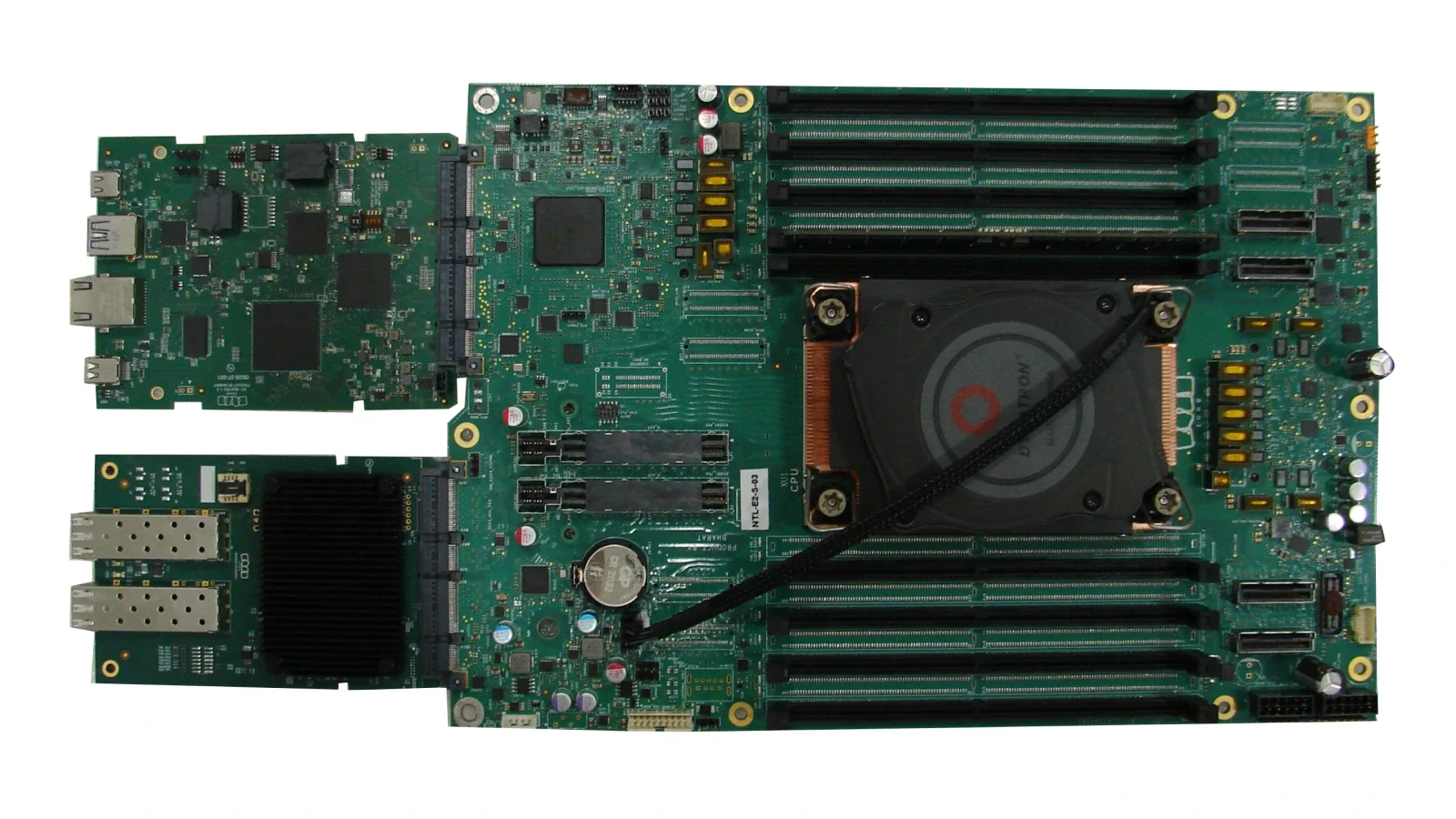

The server has been developed at Zoho’s Nagpur facility over more than five years, marking one of the few instances of an Indian software company building a homegrown server platform with domestic intellectual property.
Nathu La is based on Intel Xeon 6 processors and was built in collaboration with Intel’s engineering teams.
The launch comes at a time when India’s digital infrastructure is expanding rapidly but continues to rely heavily on imported server technology, often involving licensing costs and external dependencies. Zoho’s move positions it as an outlier attempting to localise the foundational layer of computing infrastructure.
“We are proud to build a server system that is truly designed in India and taking a step towards creating sovereign technology,” said Shailesh Davey, CEO of Zoho Corp. He added that the initiative reflects the company’s long-term focus on building complex systems using talent from smaller towns, backed by sustained R&D investments.
Nathu La is designed for workloads including virtualisation, high performance computing, AI inference and storage. The company said the system includes customised power delivery subsystems, an in-house data centre secure control module, and modular chassis options that allow deployment flexibility across environments.
Several components, including the DC-SCM and network interface cards, have been designed internally and assembled through Indian electronics manufacturing partners.
Zoho has filed over five patents related to thermal management and cost-optimised server architecture as part of the project.
The hardware push is tied closely to Zoho’s broader strategy of controlling its entire stack. The company plans to run its own applications on Nathu La servers across its data centres, allowing tighter integration between software and infrastructure. This, Zoho argues, will improve performance, reduce operational costs and strengthen data governance for global customers.
“With AI advancements, inference costs are rising rapidly,” Davey said. “With our strategy of using contextual, right-sized models, running on our own platform, on our own servers, in our own data centres, we are compounding the benefits accrued from owning and operating our entire technology stack.”
Zoho’s design philosophy for Nathu La draws from the Open Compute Project, focusing on modularity, thermal efficiency and easier maintenance. The company claims these choices will help bring down both energy consumption and long-term infrastructure costs across its data centre footprint.
The effort also reflects a policy and market shift. In 2023, the Indian government introduced import restrictions on compute devices including servers, underscoring the need for domestic capability in core infrastructure technologies. Zoho had begun work on the project earlier, setting up a small R&D team in Nagpur in 2020.
Alongside the hardware development, Zoho has been investing in building engineering talent outside traditional tech hubs. Its SETU programme in Nagpur, aimed at training students in electronics system design and manufacturing, has trained over 300 students so far. Some of them have worked directly on the Nathu La project.
The company said the initiative is designed to counter the erosion of foundational engineering skills in an era of AI-assisted development, with a focus on hands-on problem solving and first-principles thinking.

Your reaction
Discussion
What's your take on this story?
No comments yet — be the first to share your view.