
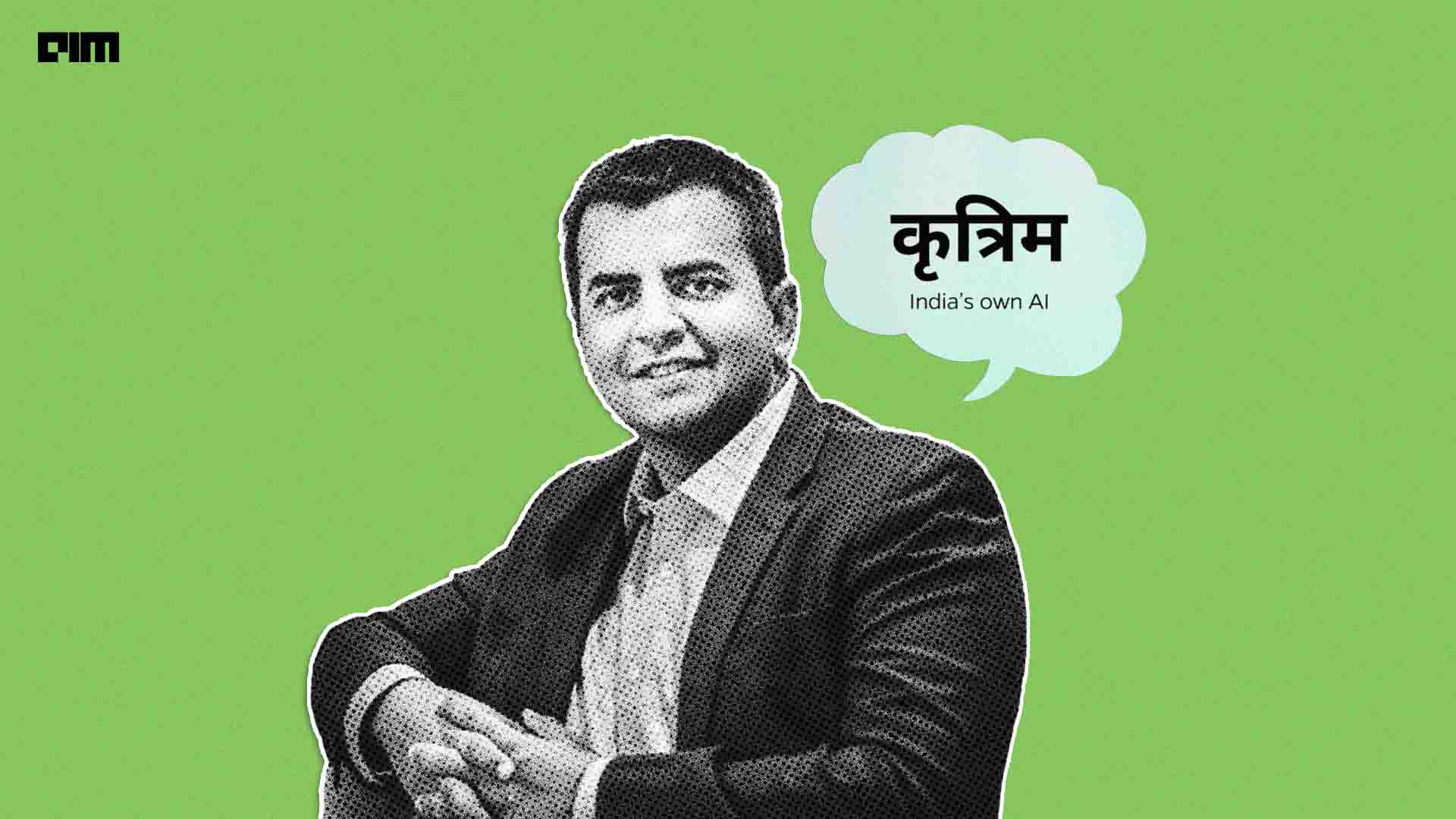
Ola Krutrim’s chief executive and influential Indian AI leader, Bhavish Aggarwal, is unhappy. LinkedIn has taken down his post, in which he called the networking platform's usage of non-binary gender pronouns like they/them “pronoun illness” and hoped it would not reach India.
According to the billionaire IIT-Bombay alumni, “pronoun illness” is being taught by "big city schools" and is increasingly appearing in CVs—which he clearly is not a fan of. He believes India “needs to know where to draw the line in following the West blindly!”
He did not stop there. “Most of us in India have no clue about the politics of this pronoun illness. People do it because it’s expected in our corporate culture, especially MNCs. Better to send this illness back where it came from. Our culture has always respected all. No need for new pronouns,” he added.
Aggarwal’s commentary revealed a deep-seated resistance to what he perceives as blind westernisation. Soon enough, he received widespread criticism from people debunking his old-school ideologies and LinkedIn eventually removed his post.
The lack of inclusivity and unconscious bias in the tech ecosystem aren't new. Yet, it's troubling and kind of embarrassing that at a time when tech giants worldwide are ramping up their DE&I initiatives, Aggarwal choses to disparage the use of pronouns – a bare minimum.
To break it down, pronouns such as "he/him”, "she/her”, and "they/them” are used in language to refer to someone in place of their name. Traditionally linked to male and female genders, these pronouns are evolving with greater awareness of gender diversity. Many opt for pronouns that accurately represent their identity, using "they/them" as a gender-neutral option. Using chosen pronouns respects and validates personal identities, enhancing inclusivity.
"Recognising the importance of using correct pronouns isn't just about respecting individual identities; it's a crucial step towards fostering inclusivity and acceptance within society, " Ruku Arora, director – enterprise business solutions (EBS) at Walmart Global Tech, told AIM. Arora identifies as queer.
Pride Month is Rainbow Washing for Ola
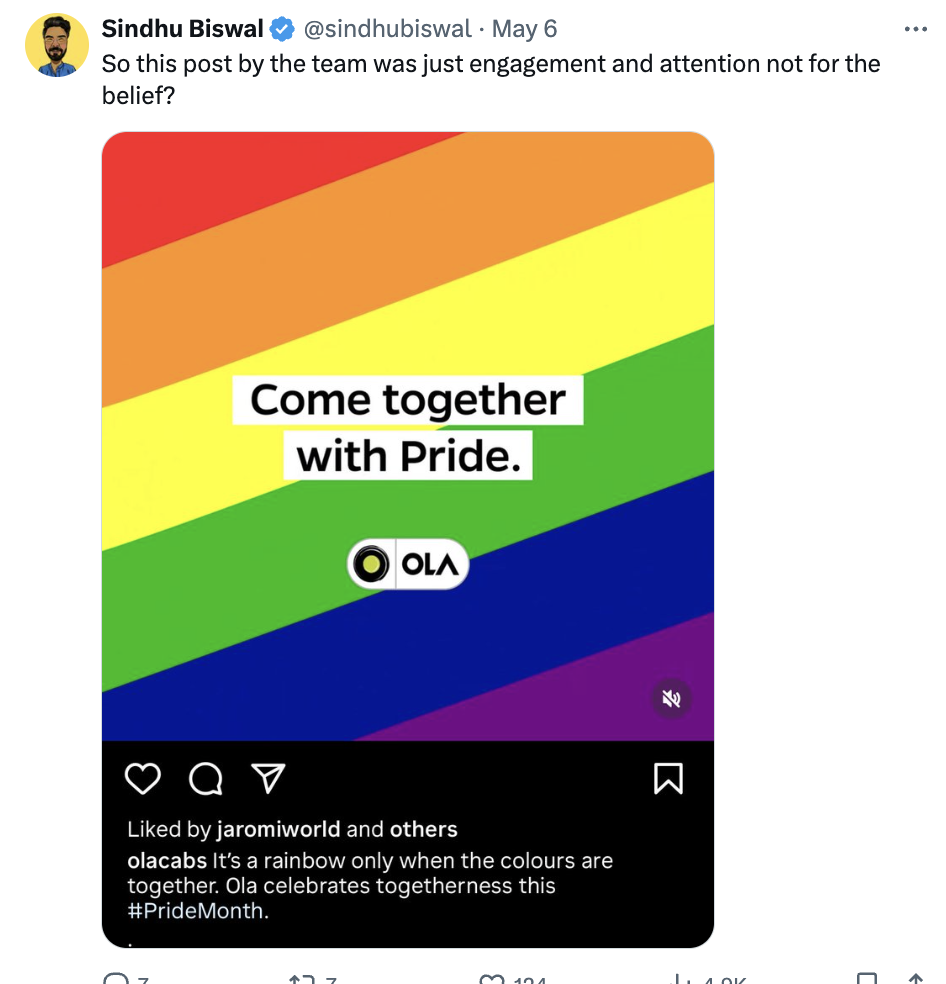
In 2024, labelling this aspect an 'illness' feels like a regressive step back by a century. The “illness” is actually inclusivity. This brings us to the question: Is rainbow washing during the Pride Month only a marketing gimmick for companies like Ola in India?
“It's disgusting how Ola had put up a Pride Month post last year in June, and now the CEO himself has spewed so much hate against the community. We don't want your performative pride posts. Really fearing for the safety of the LGBTQI+ employees working at Ola,” shared Ayden, a non-binary senior copywriter at DViO Digital.
However, this is not the first time when Ola’s work culture has come under scrutiny. Several employees have left the company, citing the bad work-life balance policies. “Being a very aggressive company, it is not everyone’s cup of tea and finding the right people is invaluable,” Aggarwal said during an interview almost 12 years ago. It looks like there has been no major shift since then.
Two years ago, a Bloomberg report stated that an employee of Ola Electric, its EV arm, was asked to run laps around the facility as punishment for a minor oversight!
The CEO, who takes pride in his “anger and frustration”, is known for fostering a toxic work environment through destructive criticism, abusive language, unrealistic deadlines, late-night meetings, and an impatient and hostile management style.
In a previous interview, Aggarwal, who described himself as a “straight shooter”, said, "I have a purpose and passion. Sometimes, in the journey of a business, people don't align with it, and those separations are not as one wants. That sometimes leads to bitterness, and sometimes, the bitterness gets amplified."
However, Ola does not shy away from celebrating Pride with much pomp and show every June.
The Importance of Pronouns
Using the right pronoun is the minimum respect that one can ensure to the queer community. Contrary to its creator’s beliefs, when we turned to Krutrim AI for clarity, the Indic LLM chatbot was quick to explain the situation.

“The use of gender-appropriate pronouns is important as it encourages people to be more conscious and respectful of others’ preferences. Changing one’s attitude to using gender pronouns is a two-step process – the first is to accept and acknowledge the stated gender preference, and the second is to practise using the preferred pronoun in interactions,” Ketty Avashia, executive director on the enterprise functions technology team at Wells Fargo India & the Philippines, told AIM.
Avashia, who identifies as a trans man, faced a lack of support for non-conforming identities in a culture that did not accept diversity, leading to social isolation in his early days.
“Pawns” of the “West”
“Rich of you to call my post unsafe! This is exactly why we need to build our own tech and AI in India. Else we’ll just be pawns in others’ political objectives,” said Aggarwal in a followup post about LinkedIn removing his content.
Aggarwal is leading the development of Krutrim, touted as “India’s first full-stack AI” solution. However, he wants to make it more relevant to India’s culture and heritage.
Contrary to his opinions, non-binary and trans folks have been recognised in “our” literature since ages, from mediaeval Bhakti literature to the Ramayana and Mahabharata.
“Bhavish Aggarwal, you are totally justified in being angry if your preferred pronouns are he/him and AI is using they. For a lot of people, though, who are on the gender spectrum (yes gender is a spectrum) or are nonbinary or simply do not want to reveal their gender, people prefer they/them.
“Besides, it's a standard practice that if the gender of a person is not known, we tend to use ‘they’ nowadays. Also, please note this is not a political ideology. Trans, non-binary and people who do not identify with traditional genders have existed (on record) for thousands of years and are documented well in our literature,” noted Tanuj Kumar Kukreti, product manager at Eko.
Many saints in the Bhakti movement in India, which emphasised love and devotion to God over ritualism, expressed themselves in ways that blurred traditional gender lines. Poets like Basava and Akka Mahadevi questioned and defied the gender norms of their times. So, to break the bubble—it is not new.
“You did call pronouns as illness and it's discriminatory to trans people. India has always been accepting of all cultures and Indian languages do have gender neutral pronouns. If you aren't aware of it, do better and learn. Calling it a political stance and western agenda to hide transphobia will do nothing,” commented Farhana M, engineering recruiter at Atlassian.
An LLM's performance relies heavily on the quality of the dataset used during its training. If the dataset is biassed and contains systematic distortions, lacks diversity, or misrepresents certain groups or facts, the LLM will inevitably inherit and potentially amplify these biases in its outputs.
“Diversity, or the lack thereof, in technology, isn’t merely a social issue; it profoundly impacts the functionality and accessibility of products. The tech world’s homogeneity often leads to products and services that fail to consider the diverse needs of their user base,” Brenda Darden Wilkerson, global chief executive officer, AnitaB.org, told AIM.
Krutrim is not an exception. The question is if personal biases like those of Aggarwal gets into the system, it will not make India the AI hub of innovation he wants to build.
Read more: The Struggles and Triumphs of Trans Inclusion in Indian Tech

Your reaction
Discussion
What's your take on this story?
No comments yet — be the first to share your view.