
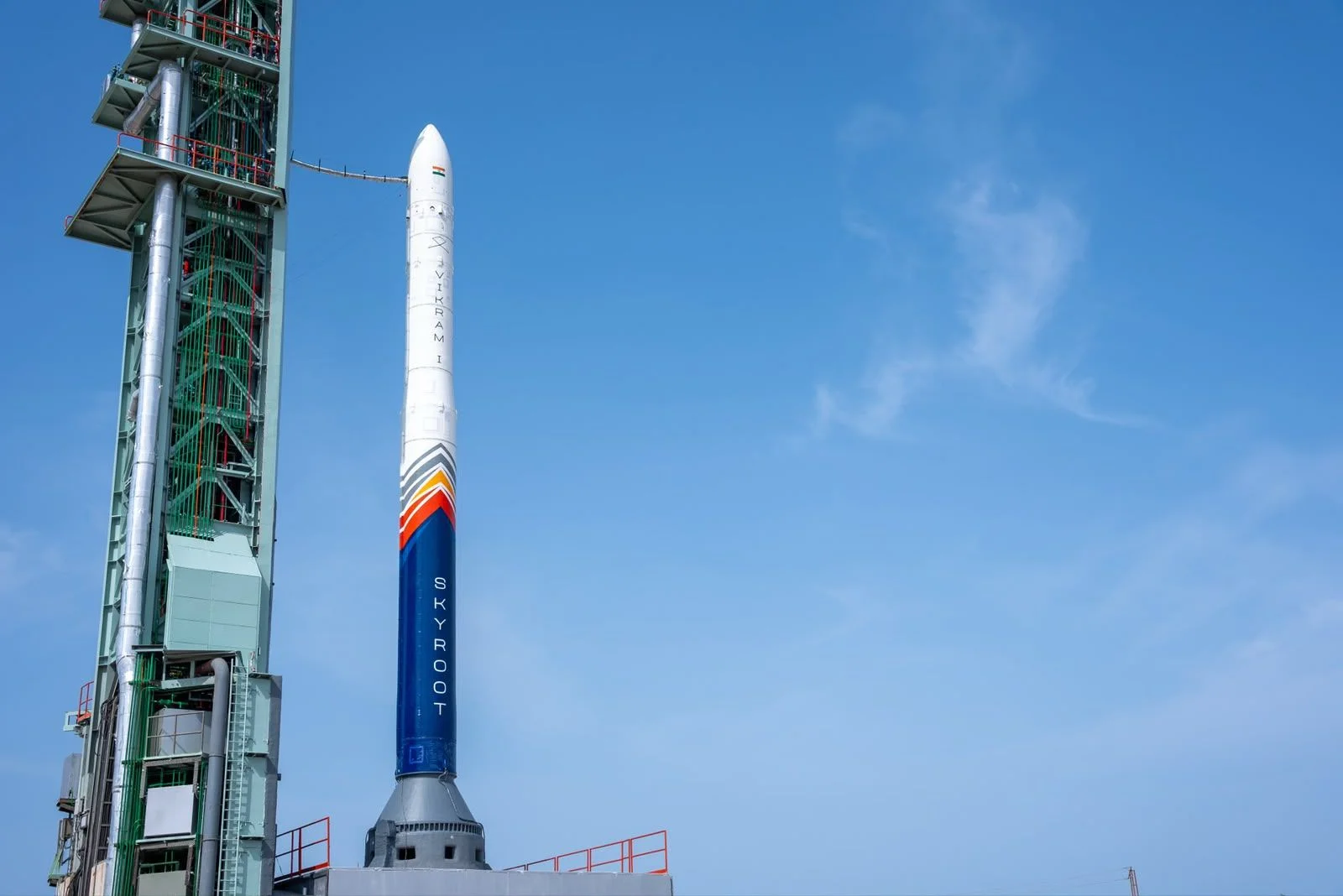
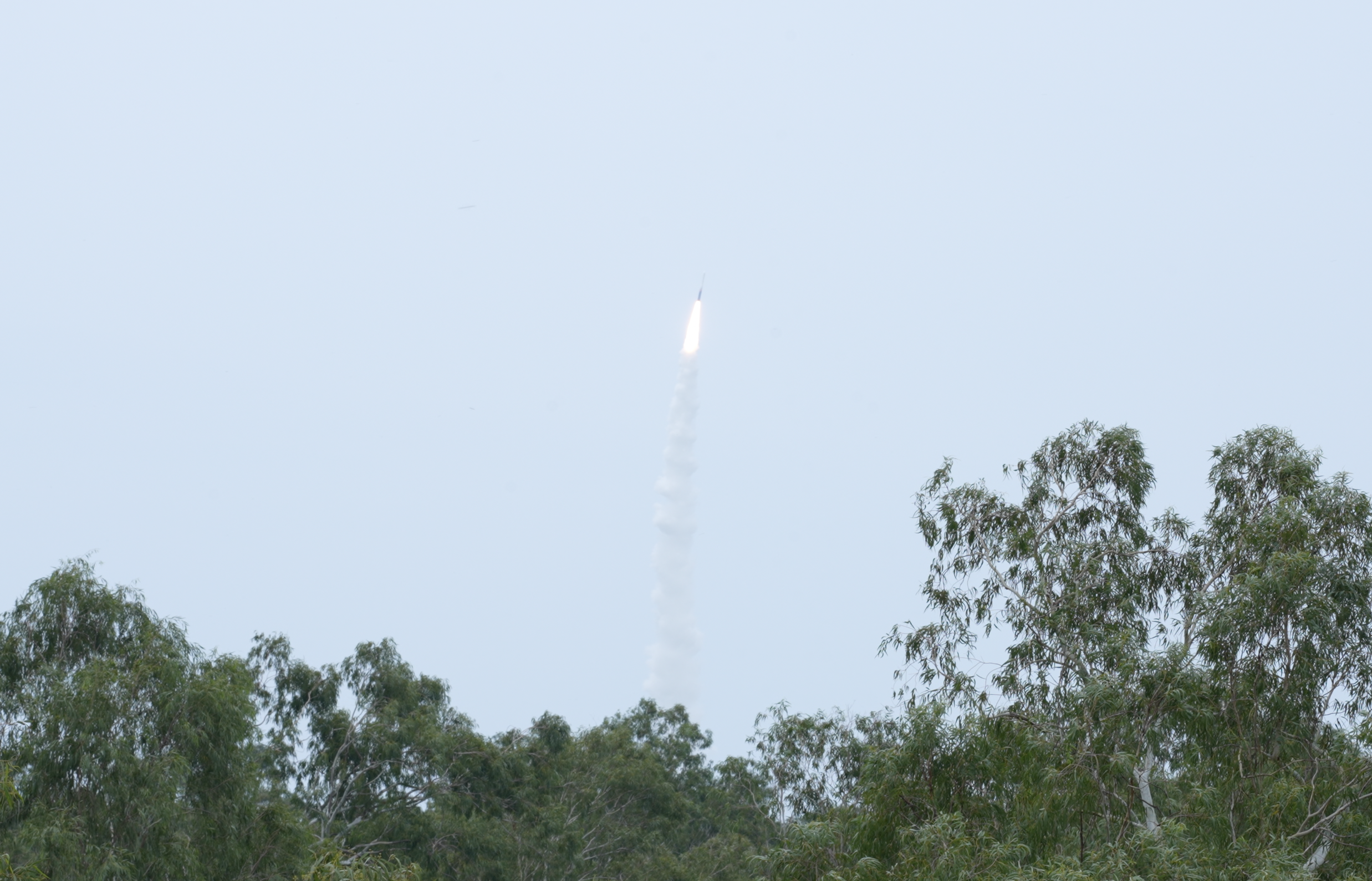
The 104 seconds it took Vikram-1 to leave the launch pad and reach space were enough to signal that something fundamental had changed.
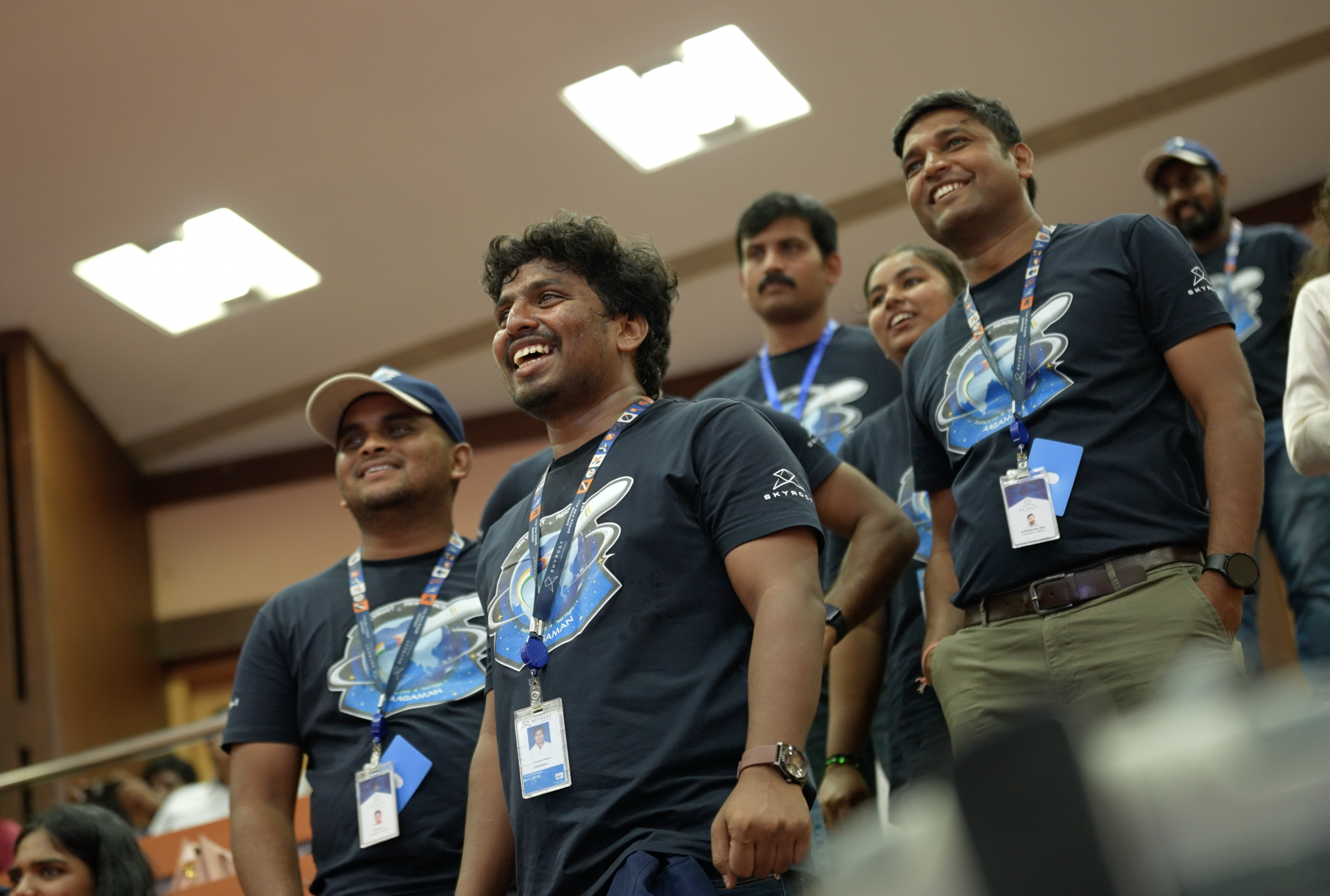
As Skyroot Aerospace’s rocket lifted off from the First Launch Pad at the Satish Dhawan Space Centre at Sriharikota in Andhra Pradesh, it cleared the launch tower, pitched smoothly into its planned trajectory and disappeared into the clouds. Seconds later, applause rippled through the viewing gallery. Engineers embraced. Cameras shot into the air. Months, and, in many ways, years, of anticipation gave way to relief.
The rocket would go on to complete its planned orbital mission. But on the ground, as AIM witnessed firsthand, the conversation had already moved beyond the launch itself.
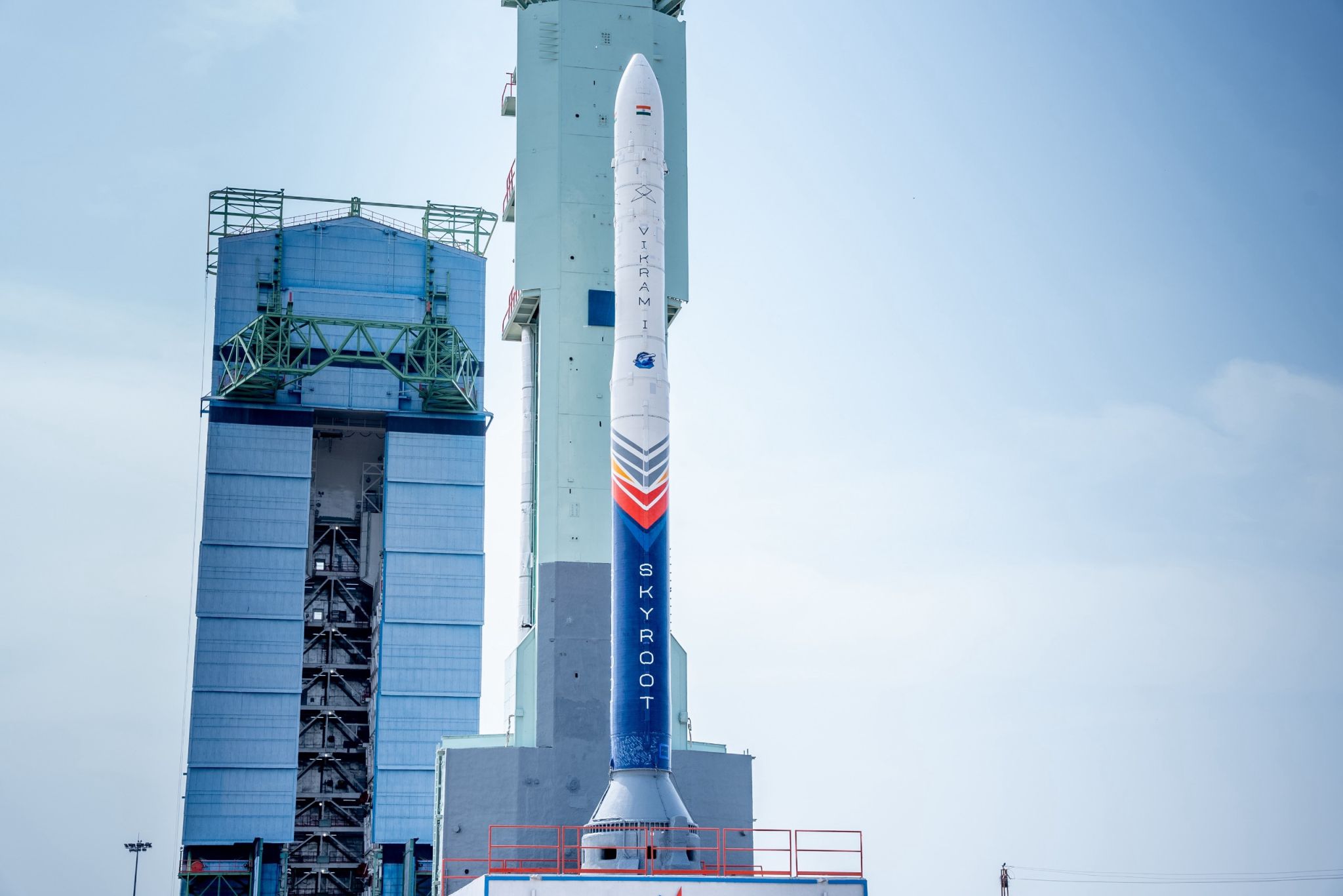
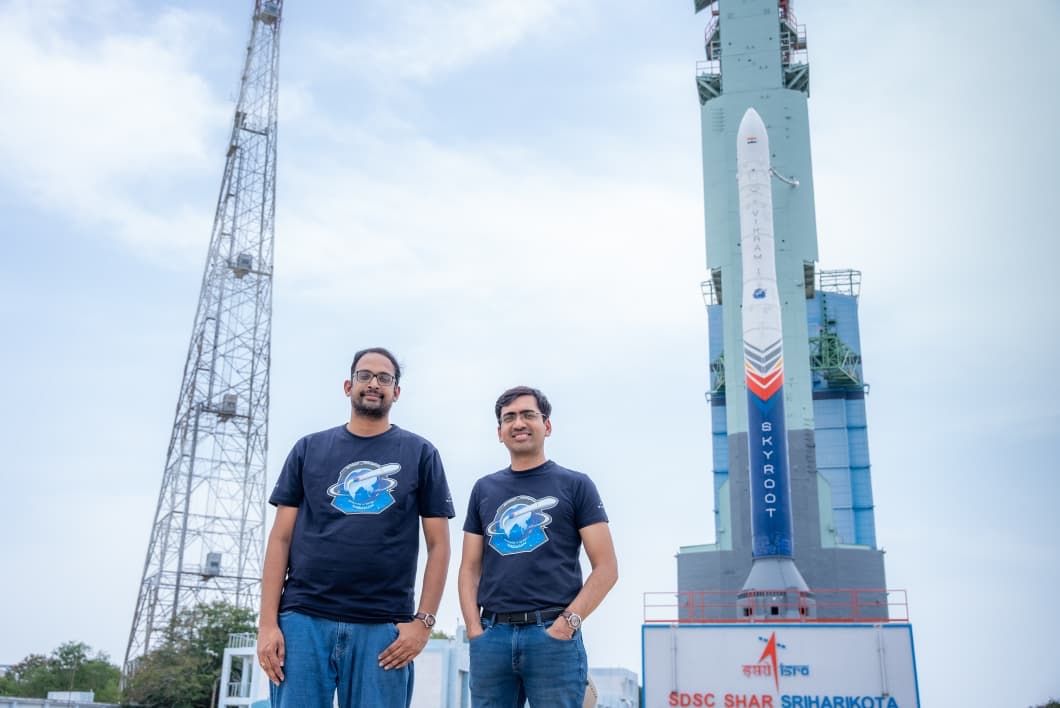
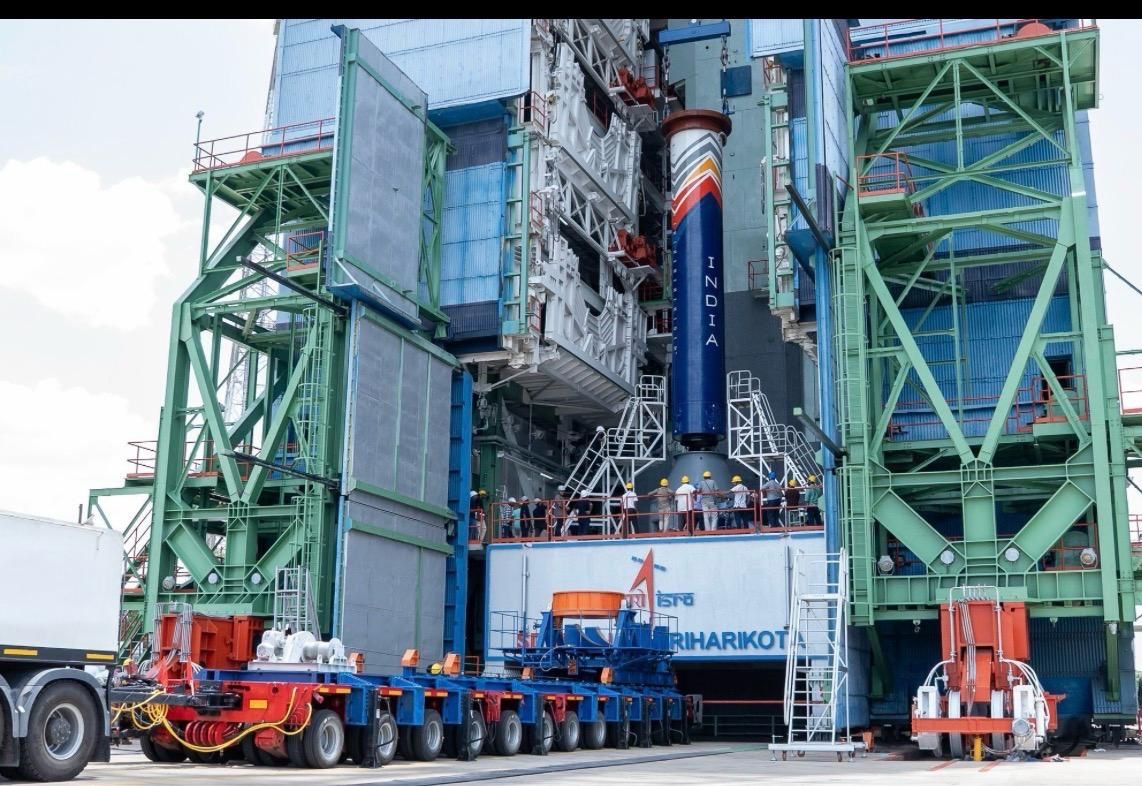
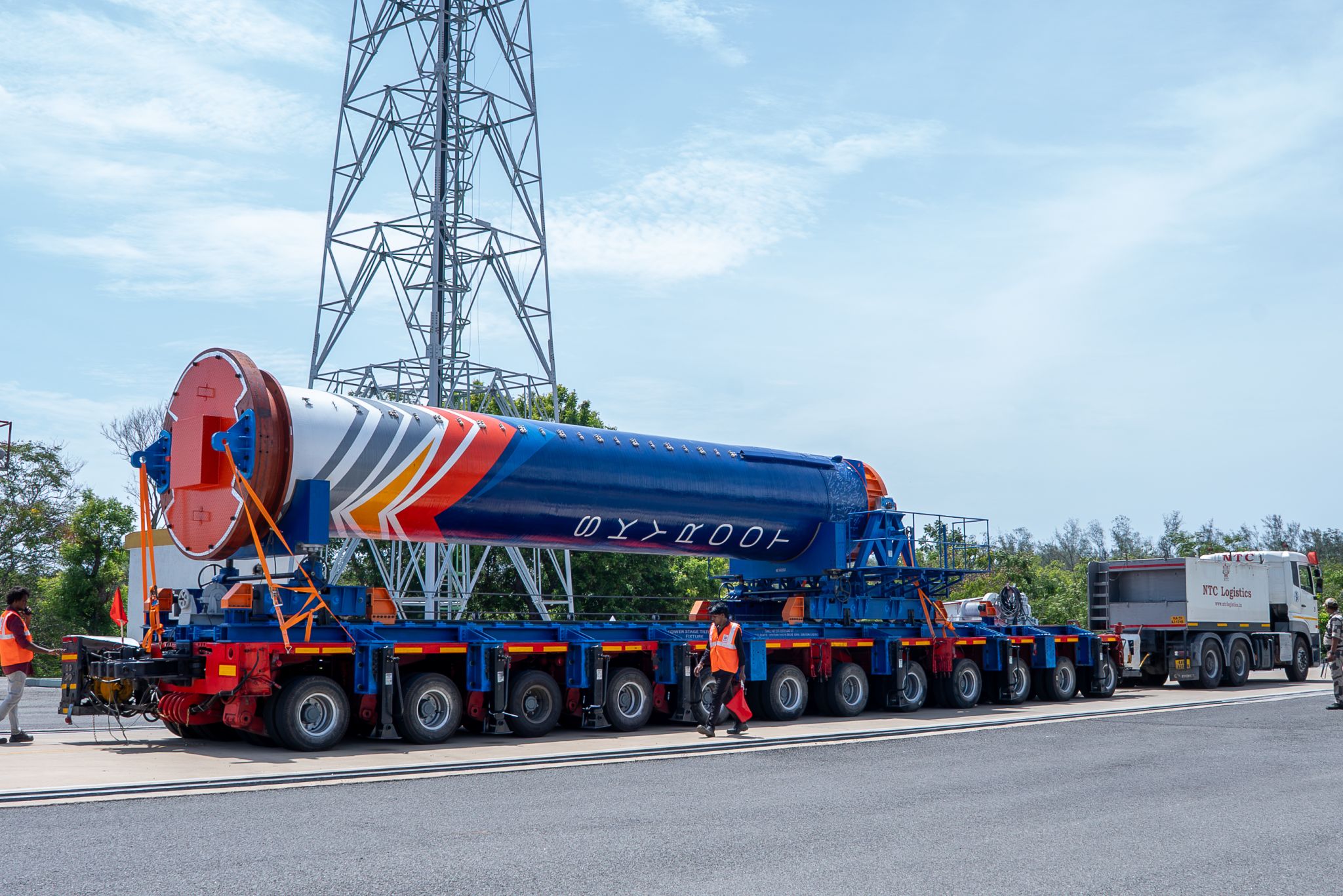
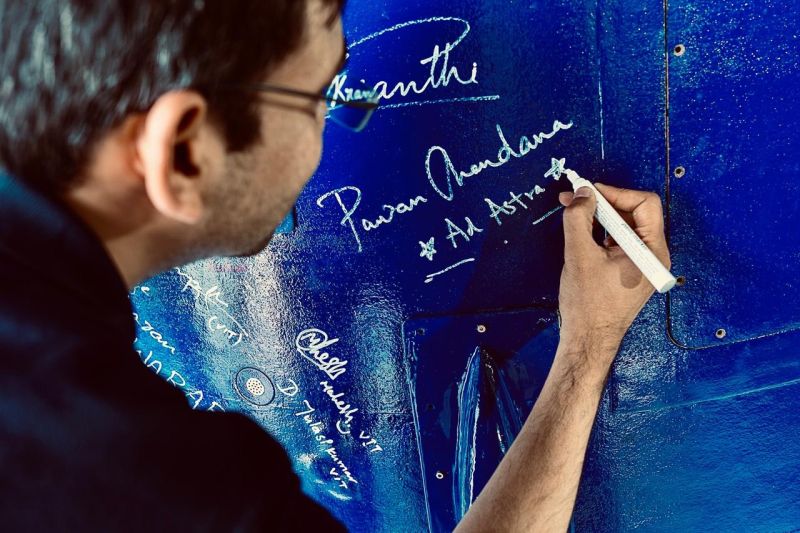
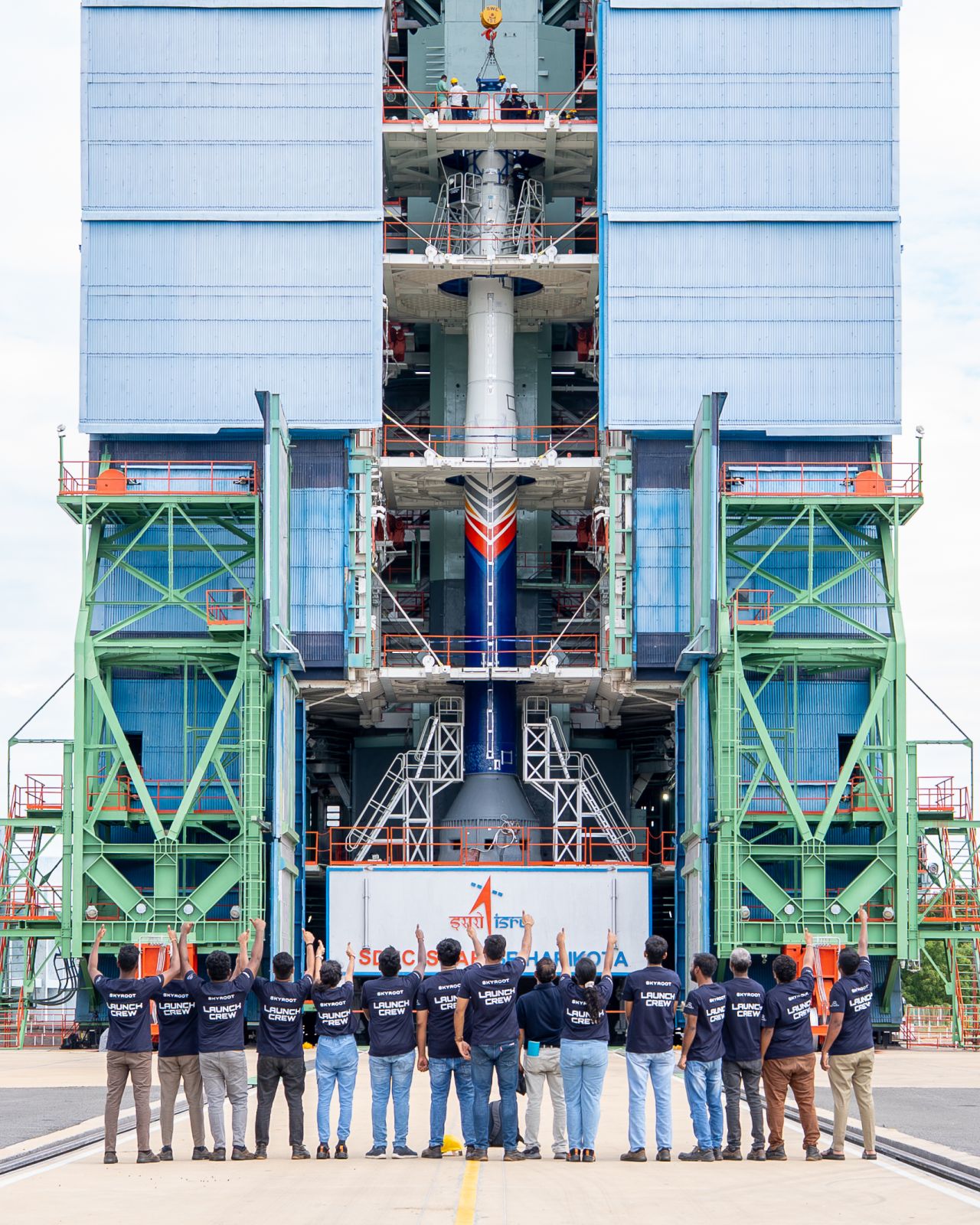
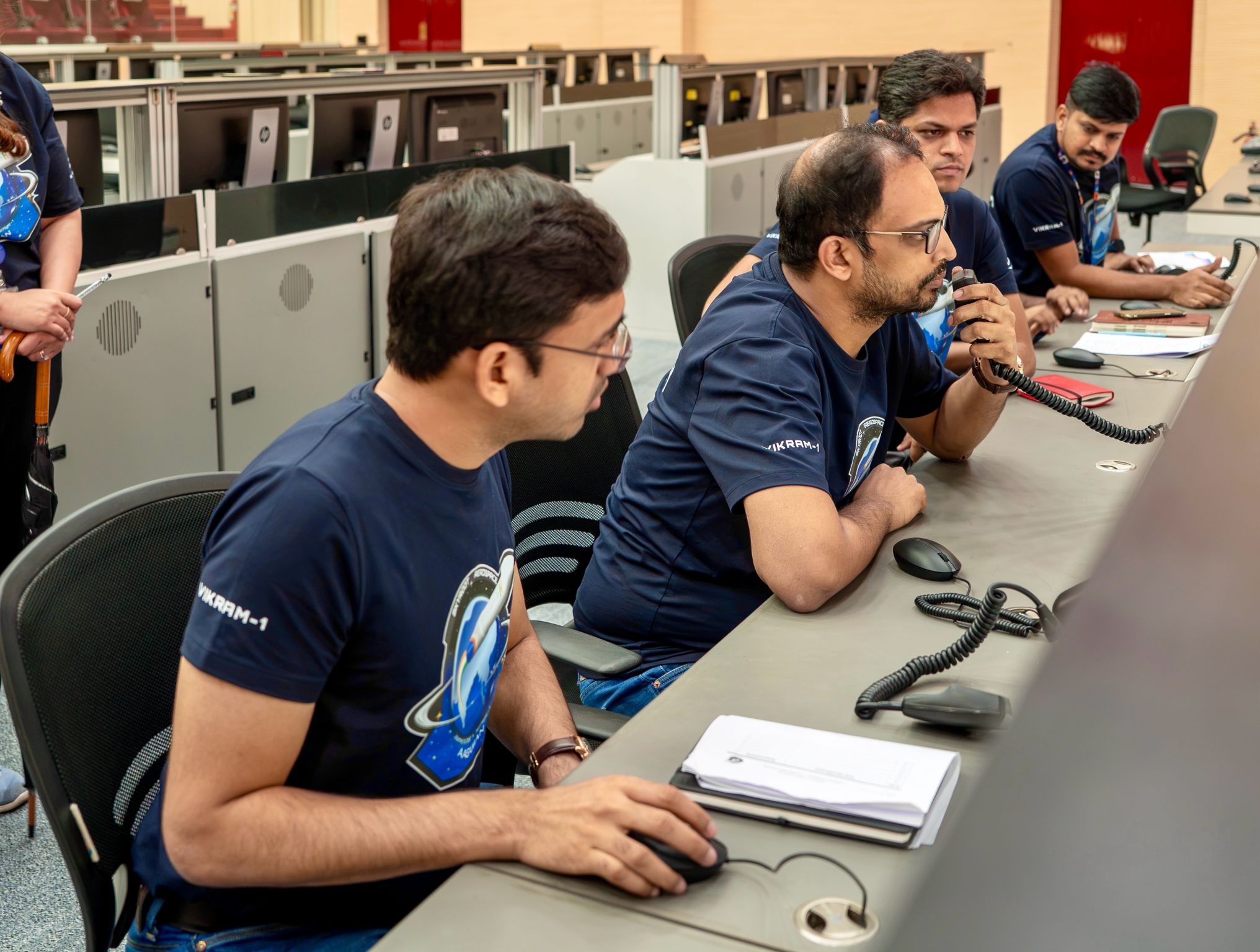
For India’s space leadership, Vikram-1 was never just about flying the country’s first privately developed orbital launch vehicle. It was about demonstrating that India’s private space ecosystem can build world-class launch systems, compete globally and inspire the next generation of engineers.
The mission also showcased several indigenous technologies. Vikram-1 (named after Vikram Ambalal Sarabhai) became India’s first all-carbon composite orbital rocket, and flew with a 100% 3D-printed engine on an orbital vehicle. It also had a liquid Orbital Adjustment Module that successfully inserted the vehicle into its planned orbit.
All Eyes on T-0
On the morning of July 18, by sunrise, Sriharikota had already settled into launch mode.
Inside the mission control centre, engineers monitored countdown screens while thousands of students, policymakers, startup founders and space enthusiasts filled the viewing gallery.
Overnight rain had left thick clouds hanging above the Satish Dhawan Space Centre, forcing teams to carefully study wind profiles before loading the final trajectory into Vikram-1’s mission computer. Every system underwent one final round of checks because, as Skyroot’s engineers repeatedly reminded viewers during the livestream, the rocket must “inject the payload with the correct velocity, the right flight path and the precise orientation”.
The company used the hours leading up to liftoff to tell the story behind the vehicle. Viewers were taken through years of static-fire tests, stage-separation trials, and avionics simulations that culminated in Mission Aagaman. Engineers explained why Vikram-1 was built with carbon composite structures, why its upper stage relied on a restartable liquid engine and why every subsystem had been tested repeatedly before reaching the launch pad.
The few minutes of flight represented only the visible conclusion of years of engineering.
As the countdown entered its final phase, even routine procedures carried enormous significance. Vikram-1 switched from ground power to onboard batteries. Engineers verified the vehicle’s orientation, confirmed the thrust vector control system and activated the automatic launch sequence (ALS) ahead of the scheduled 11.30 am liftoff.
As the countdown entered its final minutes, anticipation briefly gave way to uncertainty. With the ALS already underway, Vikram-1 successfully switched from external to onboard power, and the engineers completed critical health checks, including the actuator null checks that verified the rocket’s steering system.
Just then, a planned hold briefly paused the countdown at T-minus five minutes after the navigation team requested additional time, briefly heightening the tension. Controllers described it as a planned hold while engineers completed the required checks before reinitiating the ALS. Minutes later, they announced a revised liftoff time of 12.05 pm and resumed the countdown.
Throughout the broadcast, the presenters kept returning to one recurring message: Vikram-1 was not expected to prove everything in a single mission. “Today essentially is a chance to see how the vehicle really performs and gather as much data as we possibly can,” one of the hosts said. “It’s important to note that this is one of the first several flights before we get into routine commercial operations.”
As the final seconds approached, the cameras alternated between the launch pad, the control centre and the crowd gathered outside. The commentary became noticeably quieter.
“In just a few moments, you’ll be watching a private Indian rocket attempt to reach orbit for the first time from the first launchpad and from Indian soil.”
The Applause Wasn’t the Point
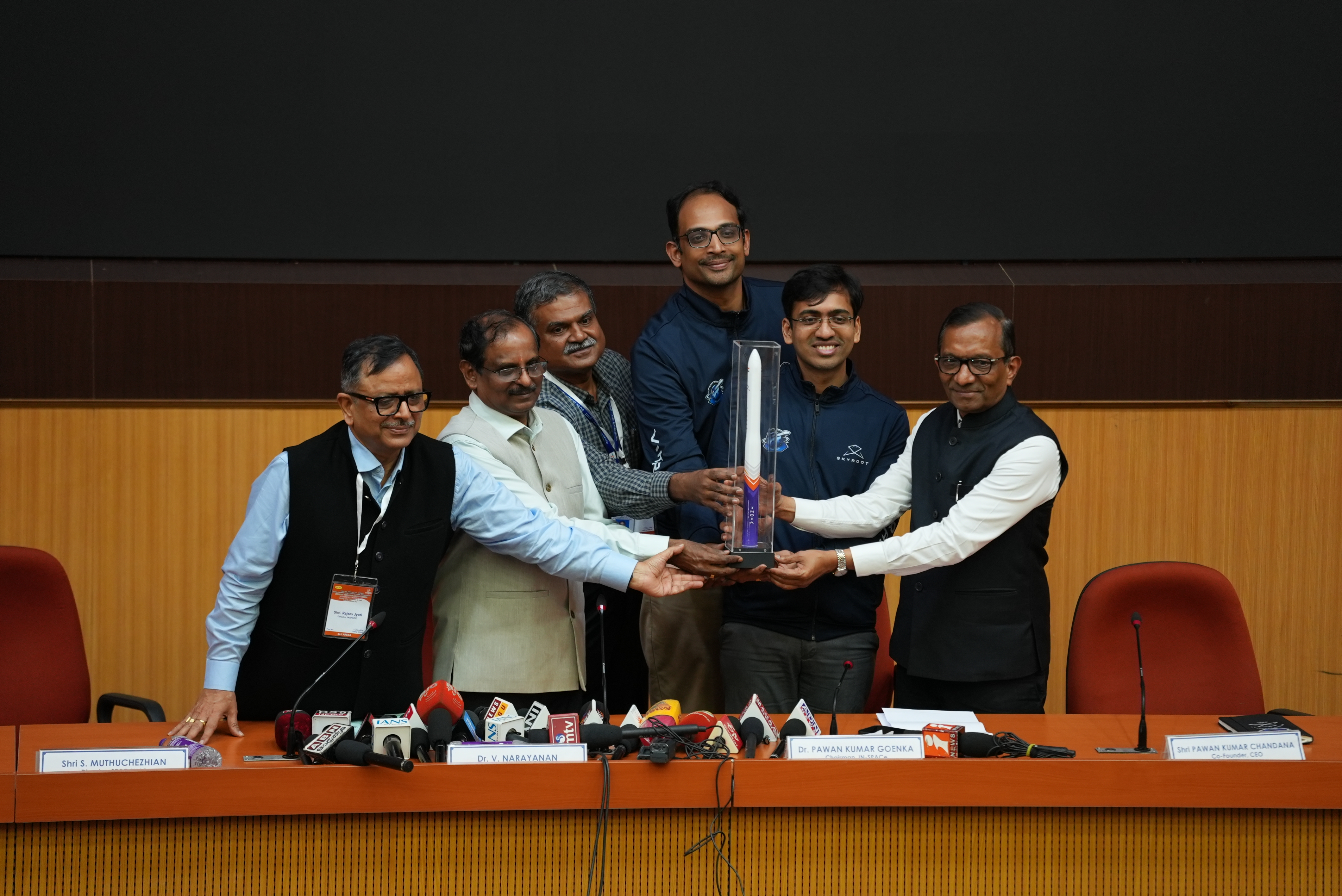
Minutes after the successful launch, Pawan Goenka, Chairman of IN-SPACe, was already looking beyond the celebrations.
“I am very elated and relieved,” he told AIM. “All the work was done by the Skyroot team but we were watching very carefully because what happened today means a lot. Not just for Skyroot but for the whole of India and the space sector and what it does.”
Goenka credited the young team’s engineering discipline rather than luck for the outcome. Yet he was equally clear that a single successful mission does not establish a commercial launch business.
“The Skyroot launch has happened three and a half years after the suborbital launch in spite of the best efforts put in by the team and everybody has to realise that the space is long in India. It’s not a T20; it’s a test match. And therefore, they cannot take any shortcuts.”
His message extended well beyond Skyroot. If startups follow rigorous engineering processes, conduct thorough reviews, and fix problems as they arise, he said, they stand every chance of succeeding on their first attempt. If they don’t, even five attempts may not be enough.
“The success didn’t just happen. It was earned by the Skyroot team in the way they did design, development, reviews, and corrected whatever went wrong.” The statement reflects a shift in India’s private space narrative. The question of whether private companies can build rockets has now been answered. The next challenge is proving they can launch them repeatedly, reliably and on schedule.
Goenka believes that reliability will determine whether international customers choose India. He pointed out that while Vikram-1’s launch was impressive, it has to be repeated two or three times before the global market sees it as anything more than an isolated success.
“Competitive offer in terms of price means nothing till the time you can prove that you are reliable, and you can deliver on the promised time. And that is what Skyroot has to prove in our next three or four launches.”
https://youtu.be/dhZp-bSxrJM?si=01SChv-5EAEpL5zI
Beyond One Rocket
Mission Aagaman, meaning ‘arrival’ in Sanskrit, was never intended to be the destination. It marks the beginning of India’s private orbital launch capability rather than its conclusion. That sentiment echoed strongly throughout Sriharikota.
V Narayanan, Chairman of ISRO, framed the achievement as one that belongs to the country’s wider space ecosystem rather than for a single company. He said his responsibility was to ensure the country’s entire space ecosystem continues to grow, not just ISRO itself.
Narayanan dismissed the notion that a stronger private launch ecosystem would reduce ISRO’s scientific ambitions. Instead, he suggested the two would advance together.
“ISRO is already concentrating on the deeper development activities,” he told AIM, adding that the success of private missions “brings a lot of scientific temper, gives confidence to the youngsters to work in this area.”
Linking the launch to India’s long-term development goals, he said that as the country works towards Viksit Bharat 2047, it must “grow multiple areas”, foster scientific temper among young people and create more job opportunities, adding that missions like Vikram-1 directly contribute to that goal.
The excitement at Sriharikota, especially among visiting students from various schools and colleges, reflected that wider impact. “I think it is a great moment, so let us make our country a developed country by this type of great success,” he added.

What of the Payloads?
For startups riding aboard Vikram-1, the mission was as much about proving hardware as about reaching orbit.
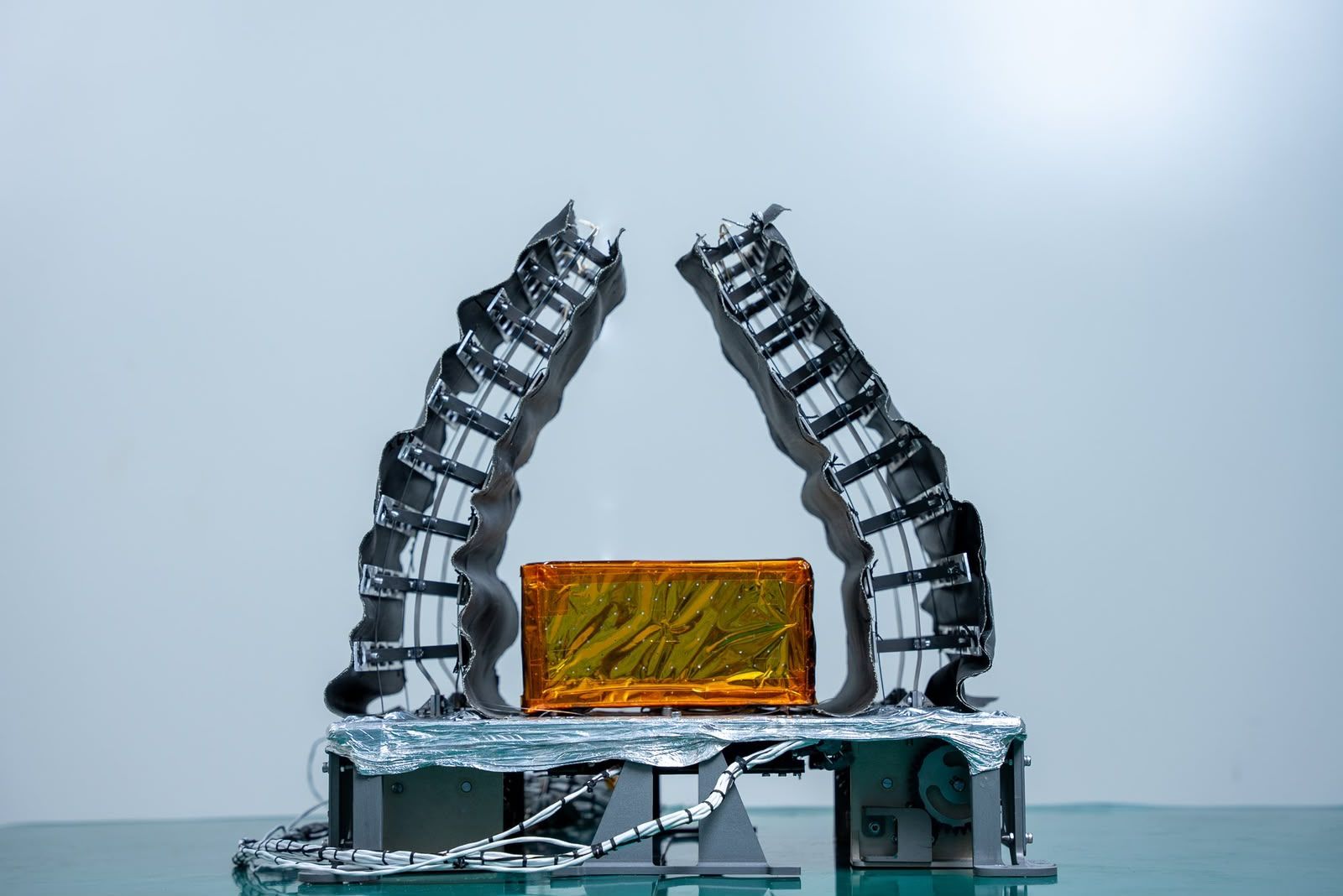
Among them was Bengaluru-based Cosmoserve Space, whose ‘Mission Embrace’ payload attempted what the company describes as the world’s first demonstration of soft robotic capture technology in space.
Co-Founder and CEO Chiranjeevi Phanindra Banala told AIM, “Getting a launch opportunity to send our systems to space and test them is very rare for a young company like ours. Mission Aagaman gave Mission Embrace that opportunity.”
Although the payload’s robotic petals did not deploy because of what the company believes were unusual settling conditions in space, Banala said the core systems, including the actuation system and onboard software, performed exactly as expected. The company now plans architectural changes before its next demonstration.
Perhaps more importantly, he said, the mission dramatically reduced the cost of validating new space technologies.
“If we were to build an entire satellite to test the system, it would cost $3–5 million. But through this mission, the test data was obtained at less than $100,000, a 50x lower cost. That is the beauty of this mission,” Banala added.
If Skyroot establishes a reliable launch cadence over the coming years, startups may no longer have to wait years for flight opportunities before taking technologies to market.
“As a dynamic startup, we need more platforms to demonstrate our technologies. If Skyroot proves reliable over the next few flights, it gives companies like ours a great opportunity to complete our technology demonstrations and commercialise our services faster.”
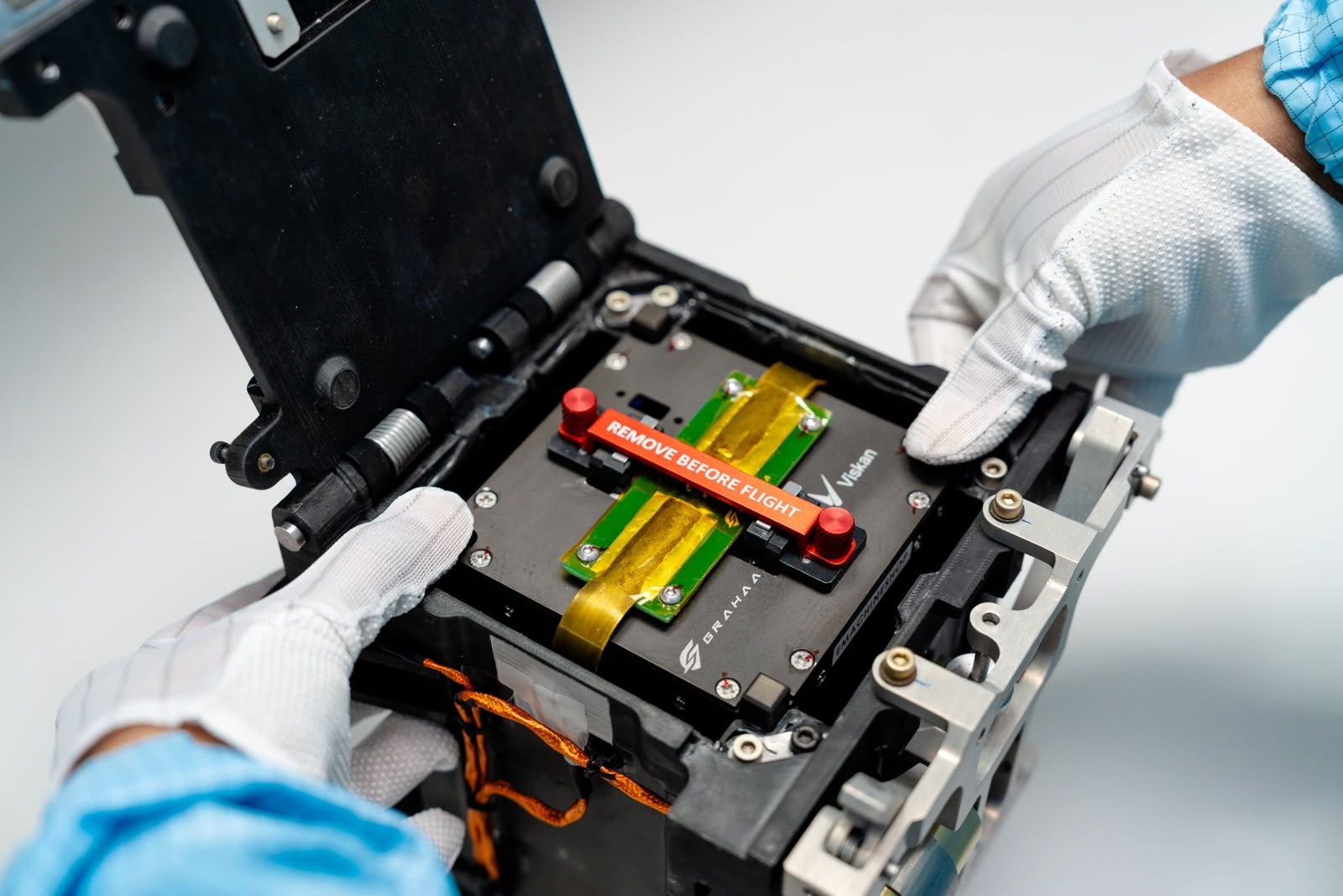
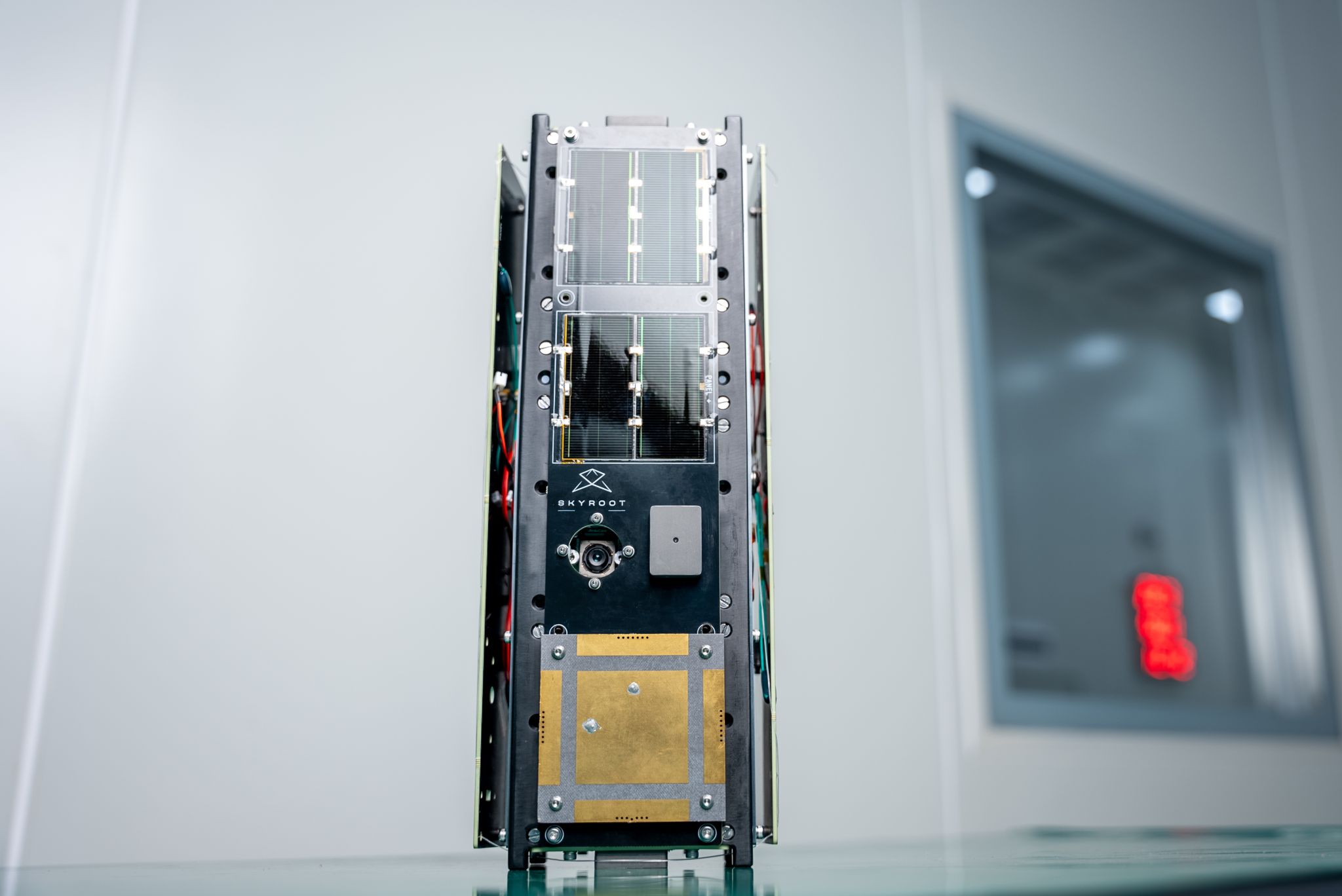
Additionally, space startup Grahaa Space also announced that its nanosatellite ‘SOLARIS’ has successfully achieved its mission objectives. During its orbital operations, it transmitted telemetry signals, confirming the spacecraft’s successful operation in orbit. This has been confirmed by multiple reports from the global community during respective passes.
The mission also achieved its key objective of validating the performance of our spacecraft systems and subsystems under actual space conditions and transmitting the payload data.
The company mentioned in a LinkedIn post, “As they say, through Sadhana, one can achieve Siddhi. And we have experienced this firsthand through ‘Mission SIDDHI’.”
Orbit is Only the Beginning
The next milestones are already taking shape.
Goenka pointed to India’s first privately owned communication satellite in geostationary orbit, satellite constellations under development and more private launch providers preparing to enter the market.
“We also have Agnikul that is getting ready for its launch,” he added, saying that multiple research, applications and data initiatives are also underway as India works towards its space economy ambitions.
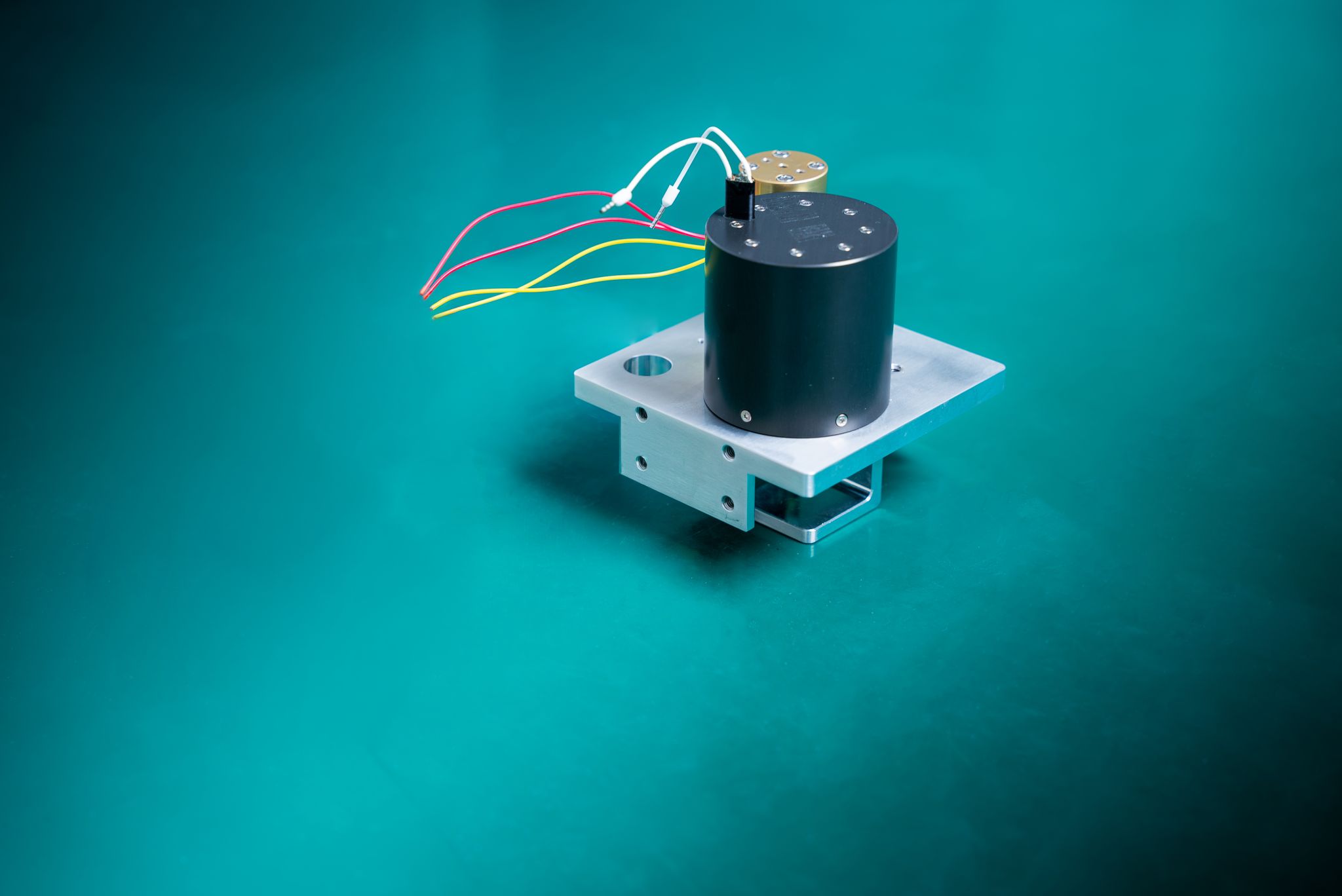
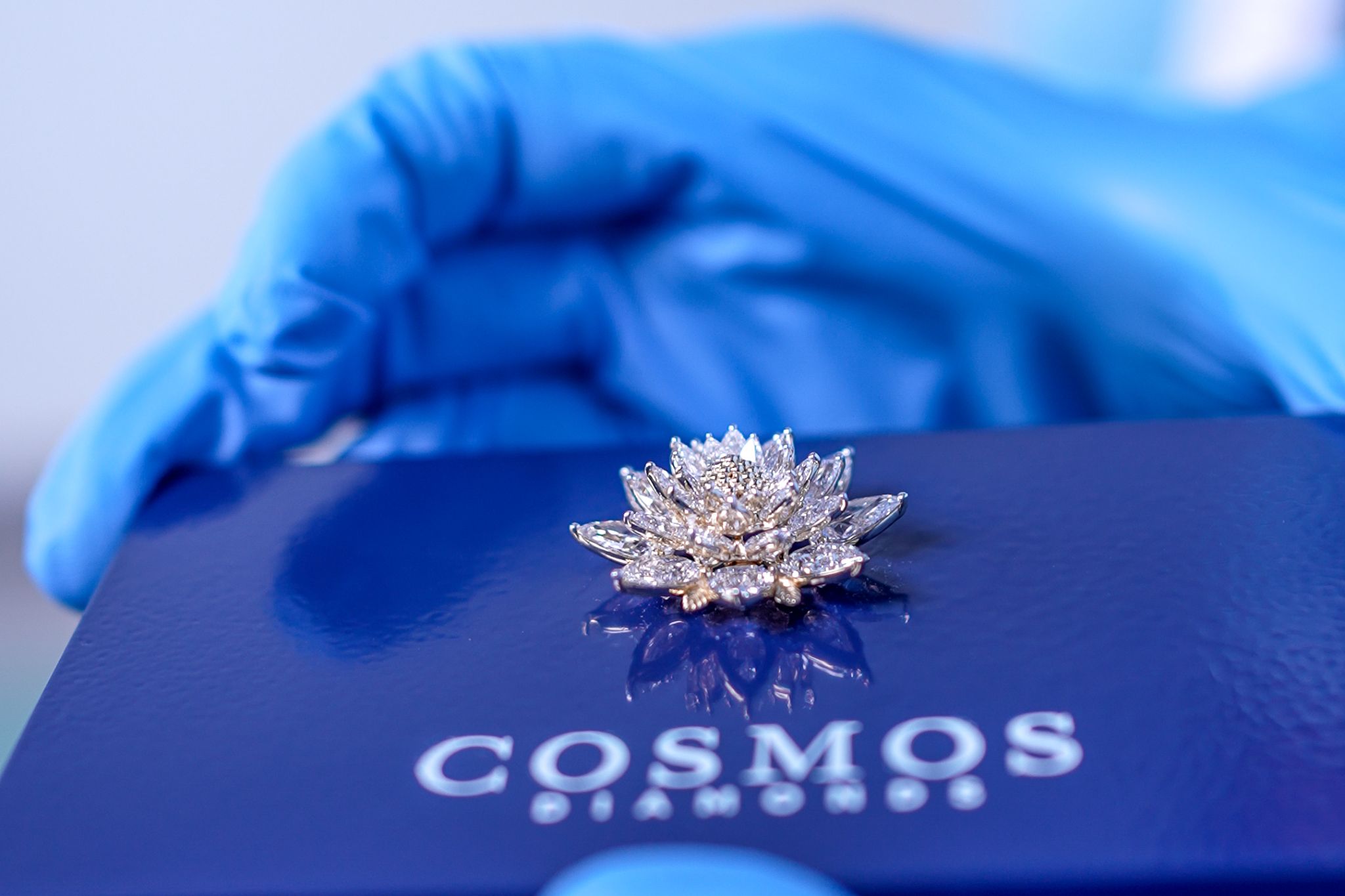
Vikram-1 itself carried several experimental and customer payloads, ranging from technology demonstrations to satellites and in-orbit experiments from Indian and international organisations.
Back at the launch viewing area, the excitement lingered long after the rocket had vanished into the sky. Students, engineers, and visitors continued to replay videos on their phones while discussing what they had just witnessed.
For those who watched from Sriharikota, the launch itself lasted only minutes. Whether those few minutes become the foundation of India’s private launch industry, however, will be decided by the years that follow.

Your reaction
Discussion
What's your take on this story?
No comments yet — be the first to share your view.