
Satellites can capture vast amounts of information, from images of crop health and flood zones to signals for defence and communications. Yet much of that data still struggles to make its way back to Earth.
In many cases, satellites must wait until they pass over a ground station before transmitting information, creating delays that can stretch from minutes to hours. As the number of satellites in orbit rises and companies begin talking about orbital data centres and space-based computing, the bottleneck is no longer collecting data, but moving it.
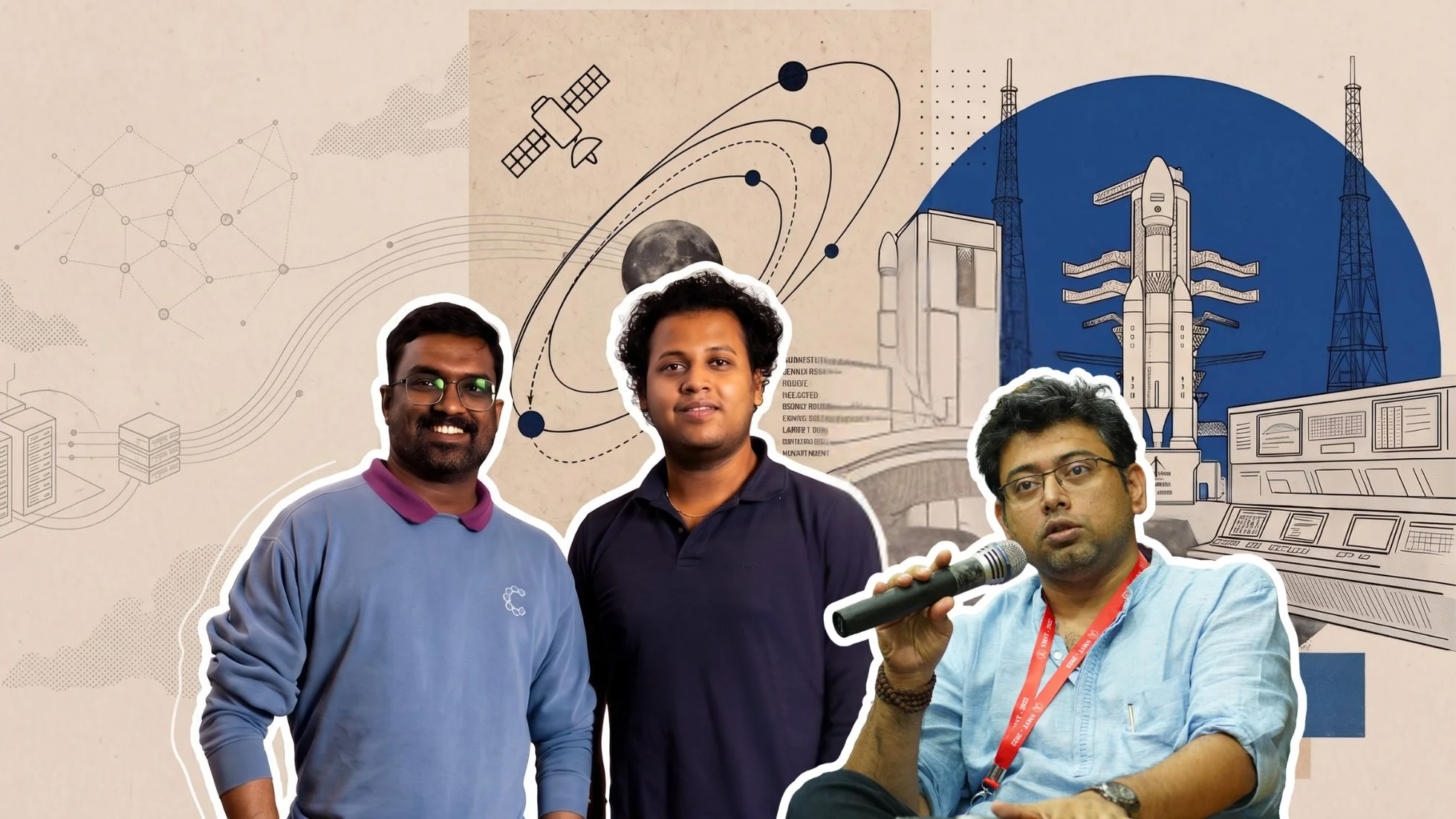
This is the problem that Bengaluru-based space tech startup QOSMIC wants to solve. Founded in 2025 by Shreyaans Jain (CEO), Rohit Ramakrishnan (CTO), and Aloke Kumar (Associate Professor at the Indian Institute of Science (IISc) as Faculty Advisor), QOSMIC is building laser-based communication systems that transfer data between satellites and Earth at speeds far beyond those of conventional radio-frequency networks.
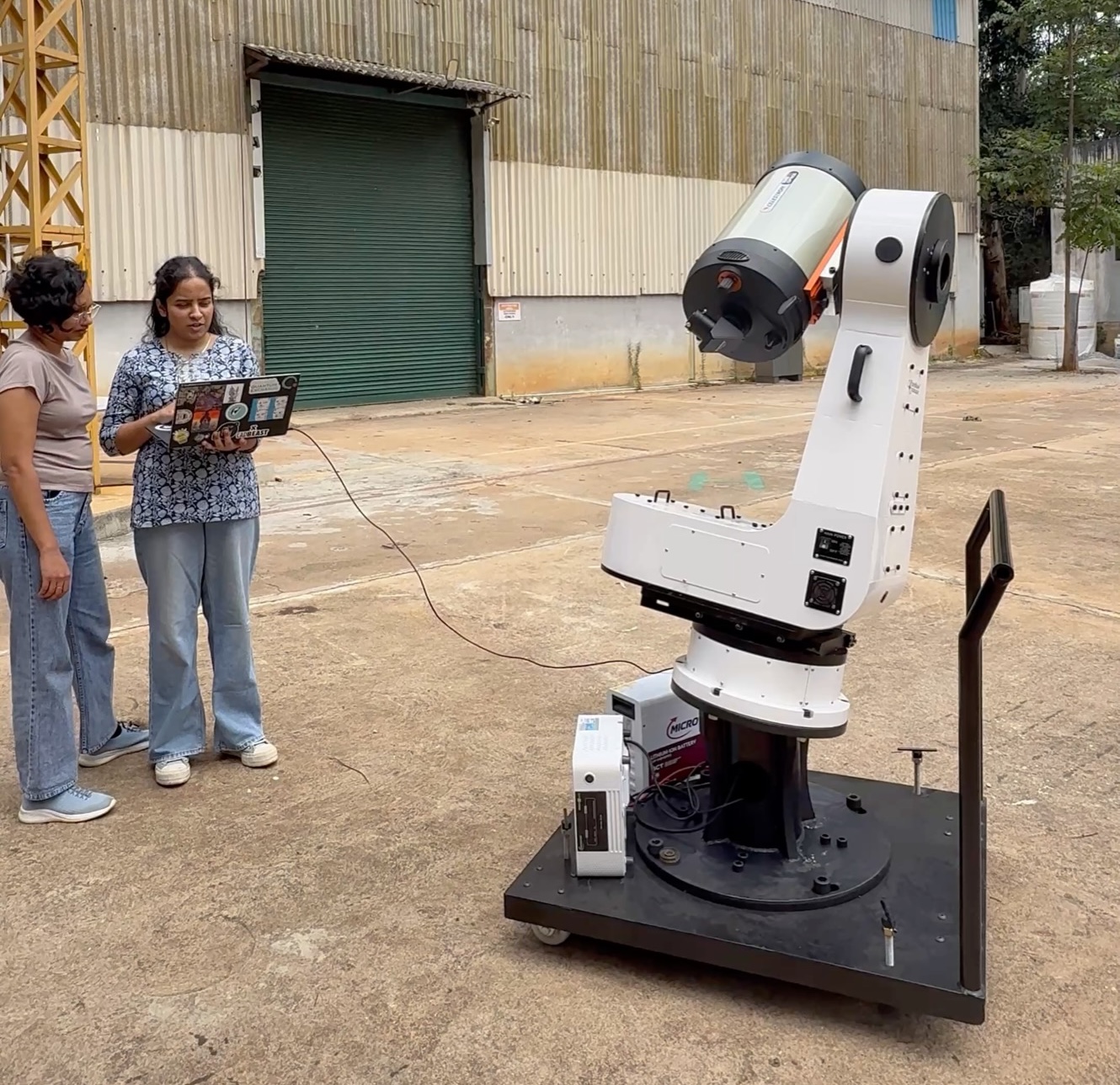
The company develops optical ground stations and optical communication terminals for satellites, creating an end-to-end communications layer for what its founders believe will become the next phase of the space economy.
“The next decade of the space economy will be defined by data,” Jain says. “Satellites are becoming exponentially more capable, but the infrastructure connecting them to Earth has not kept pace.”
When There is a Traffic Jam in Space
Jain believes the industry is undergoing a transition “from an endeavour to an economy”, where communications infrastructure will become as important as launch vehicles and satellites.
“The number of satellites that are going to be in the sky are just going to be massive,” Jain tells AIM.
The founders argue that while spacecrafts have evolved rapidly, ground communications have not. “Over the past 100 years, the ground station infrastructure has remained largely the same,” Jain describes. “It has always been radio frequency.”
Traditional radio-frequency ground stations typically offer data rates measured in hundreds of megabits per second. Optical communications can deliver speeds in the tens of gigabits per second, according to Jain. The technology also removes many of the spectrum licensing constraints that satellite operators face today.
The shift matters because satellites increasingly generate more information than they can transmit.
“A single Earth-observation satellite can image an entire country in one pass, then delete most of it, because the radio link is too narrow to send it down before the next orbit,” the company mentioned in a statement.
That gap has created an opportunity for companies building the infrastructure layer beneath the space economy.
The Laser Race
QOSMIC is not the first company pursuing optical communications. Europe has long led the field. German company Tesat also developed laser communication terminals that supported missions for the European Space Agency during the 2000s and 2010s.
More recently, companies such as Mynaric in Germany built commercial laser communication systems before Rocket Lab acquired the company in 2025. SpaceX has also integrated optical inter-satellite links into its Starlink constellation, enabling satellites to exchange data through laser beams in orbit.
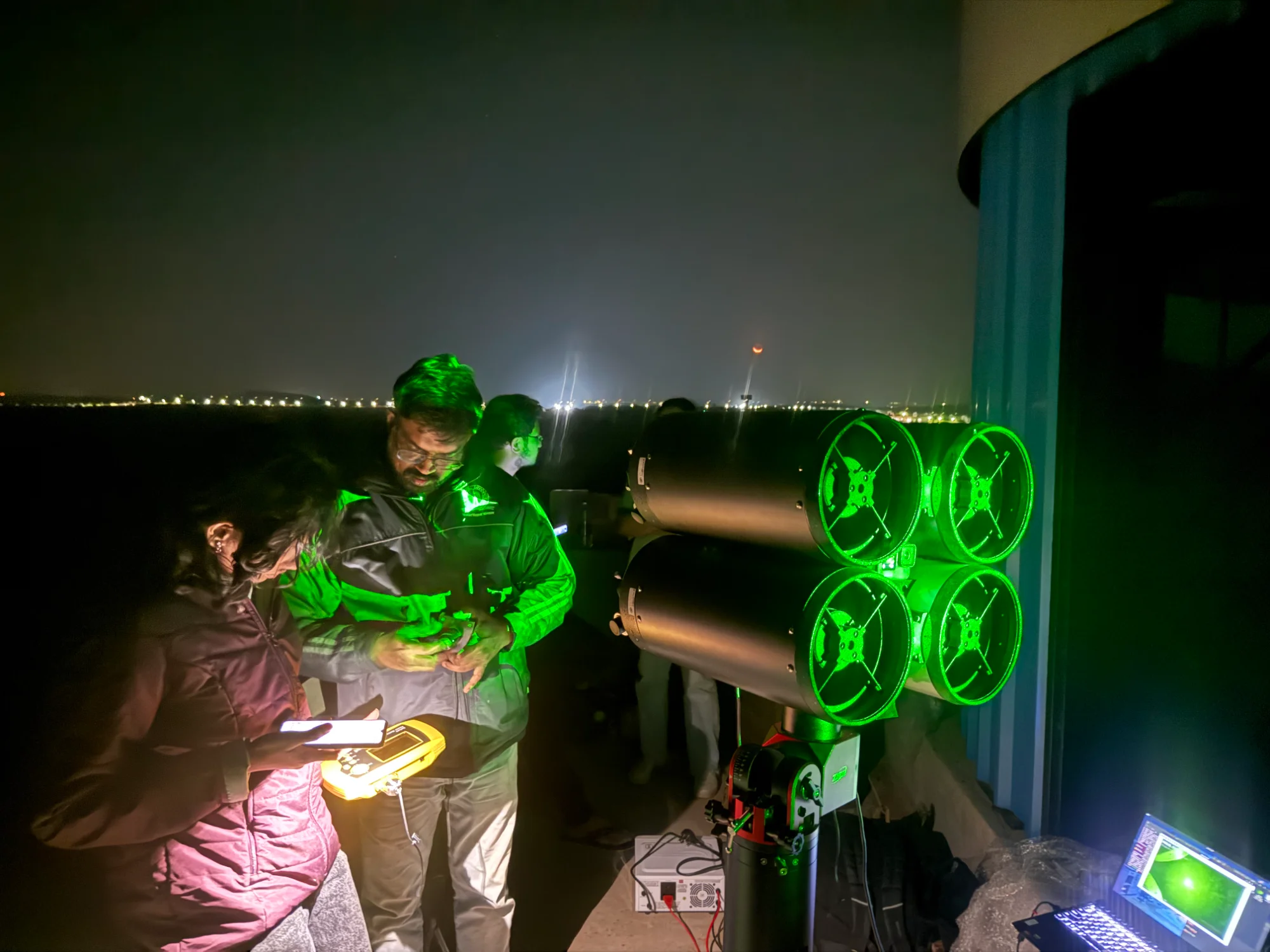
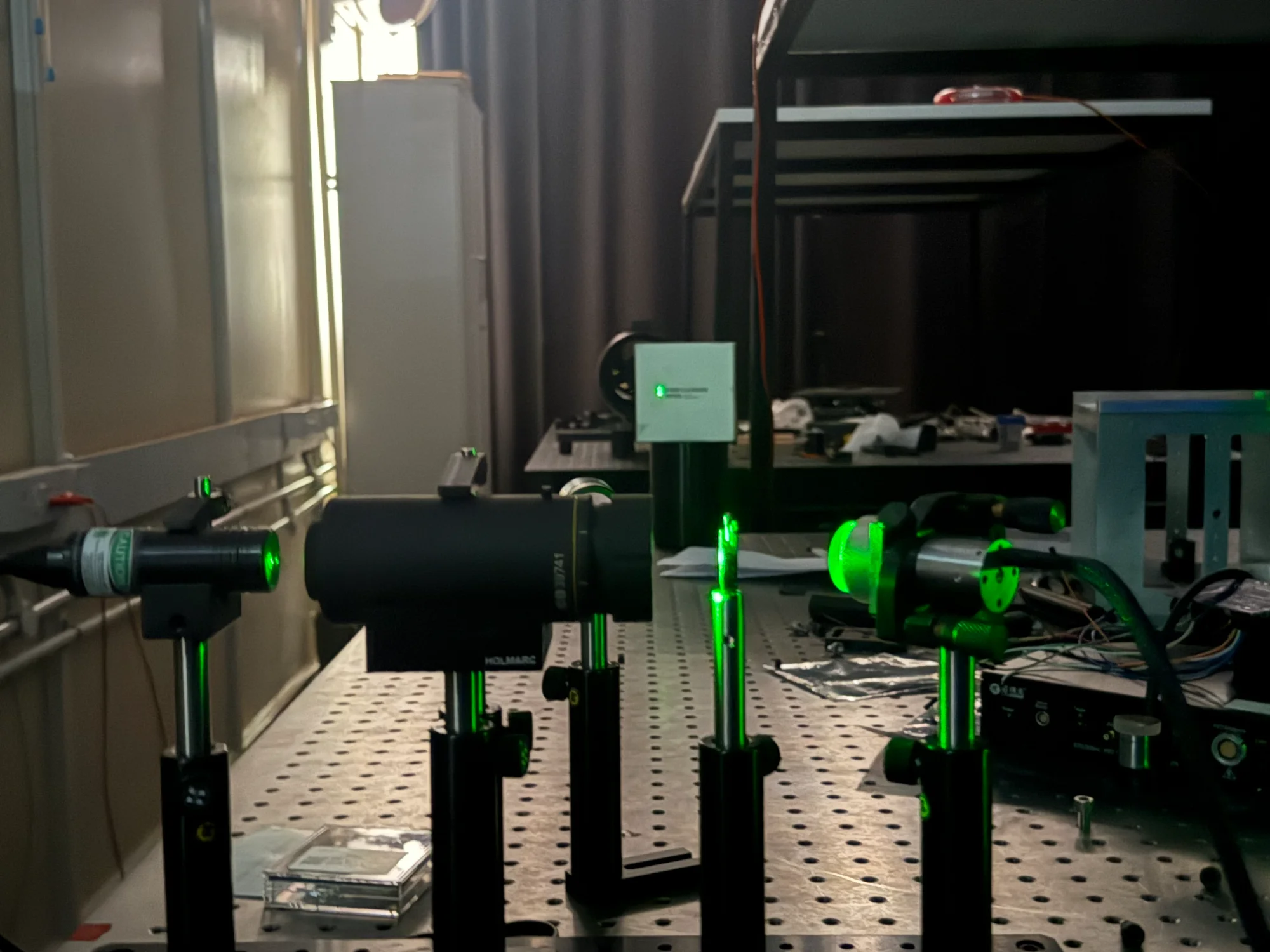
The company has already validated its optical communication stack at Technology Readiness Level 6 (TRL 6). According to Jain, QOSMIC first demonstrated the system over a one-kilometre link before scaling it to 10 kilometres. The next target is a 20–25 kilometre demonstration, which he says would simulate the atmospheric conditions involved in satellite-to-ground communications.
Jain also acknowledges that global competitors have already reached more advanced technology readiness levels.
“Our global competitors stand at a very decent level,” he mentions in the interview. “They have achieved a TRL 8 to 9 now.”
India’s importance lies elsewhere. The country has emerged as one of the world’s fastest-growing space markets. Satellite operators, launch companies and space infrastructure startups continue to appear across the ecosystem. Yet, India still lacks a domestic optical communications network capable of supporting future orbital computing and data-intensive applications.
QOSMIC wants to fill that gap. The company recently announced a partnership with Hyderabad-based space tech startup TakeMe2Space, working in orbital data centres. This partnership will build an indigenous optical inter-satellite link network that aims to reduce satellite data delays from hours to seconds.
The first optical communications terminal is scheduled for launch in 2027.
Building Where Nobody Else is
The company’s challenge extends beyond technology. Jain says India lacks much of the supply chain required for advanced optical systems. Components such as precision mirrors, telescopes and high-speed sensors often come from Europe, the United States and parts of Asia.
“The primary challenge that we face is in optics. In India, there is no good optics manufacturing or optics industrial base,” he notes.
Talent presents another hurdle. “Nobody in India is doing this,” Jain says. “So you don’t even have a relevant workforce.”
To overcome those constraints, the company has relied heavily on research links with the IISc and support from ARTPARK. Many members of the startup’s team also come from IISc.
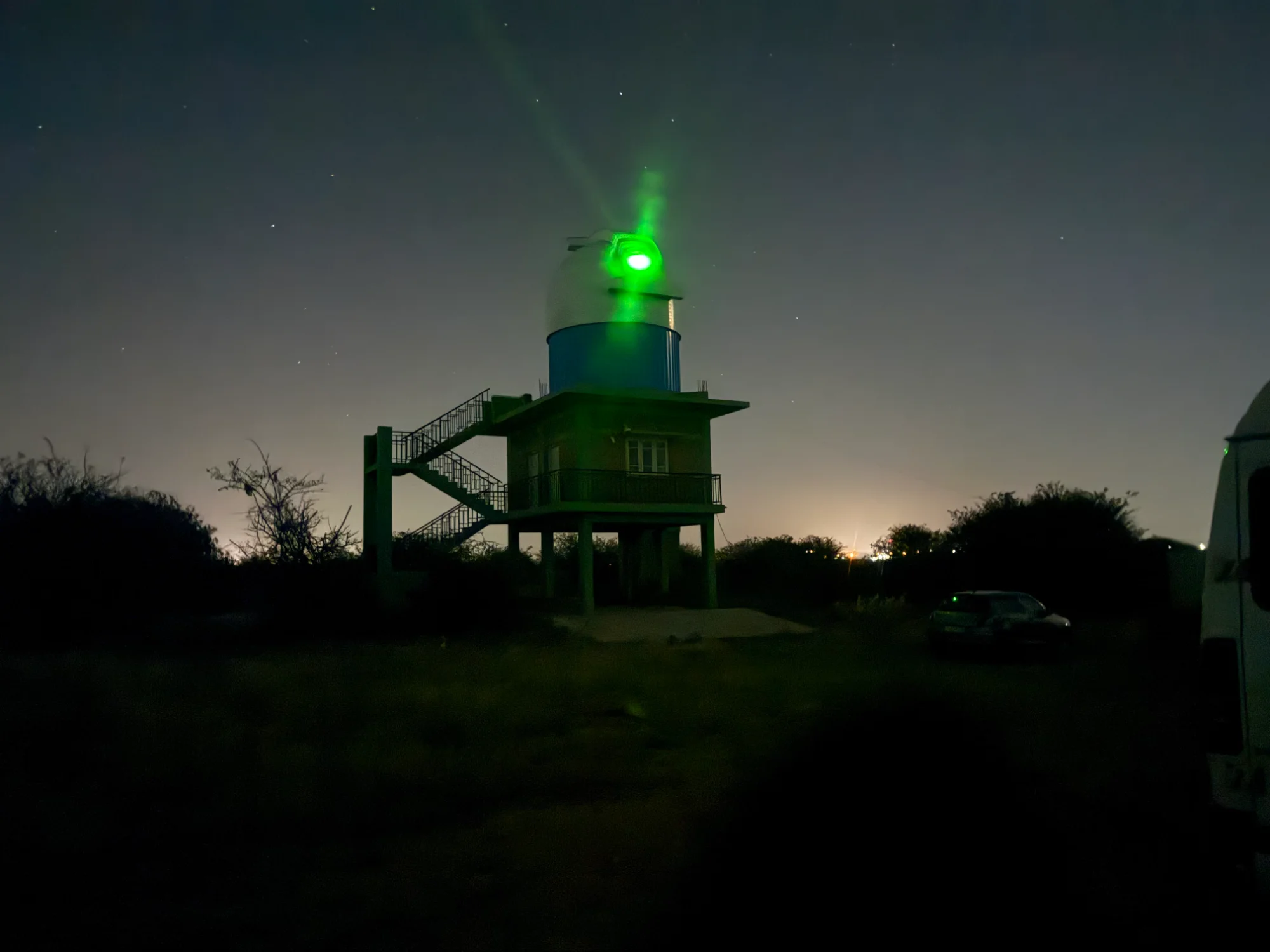
QOSMIC is currently setting up its first optical ground station in Challakere, Karnataka. The company plans to build additional stations in Australia and the United States—regions Jain describes as well-suited for optical communications because of favourable weather conditions.
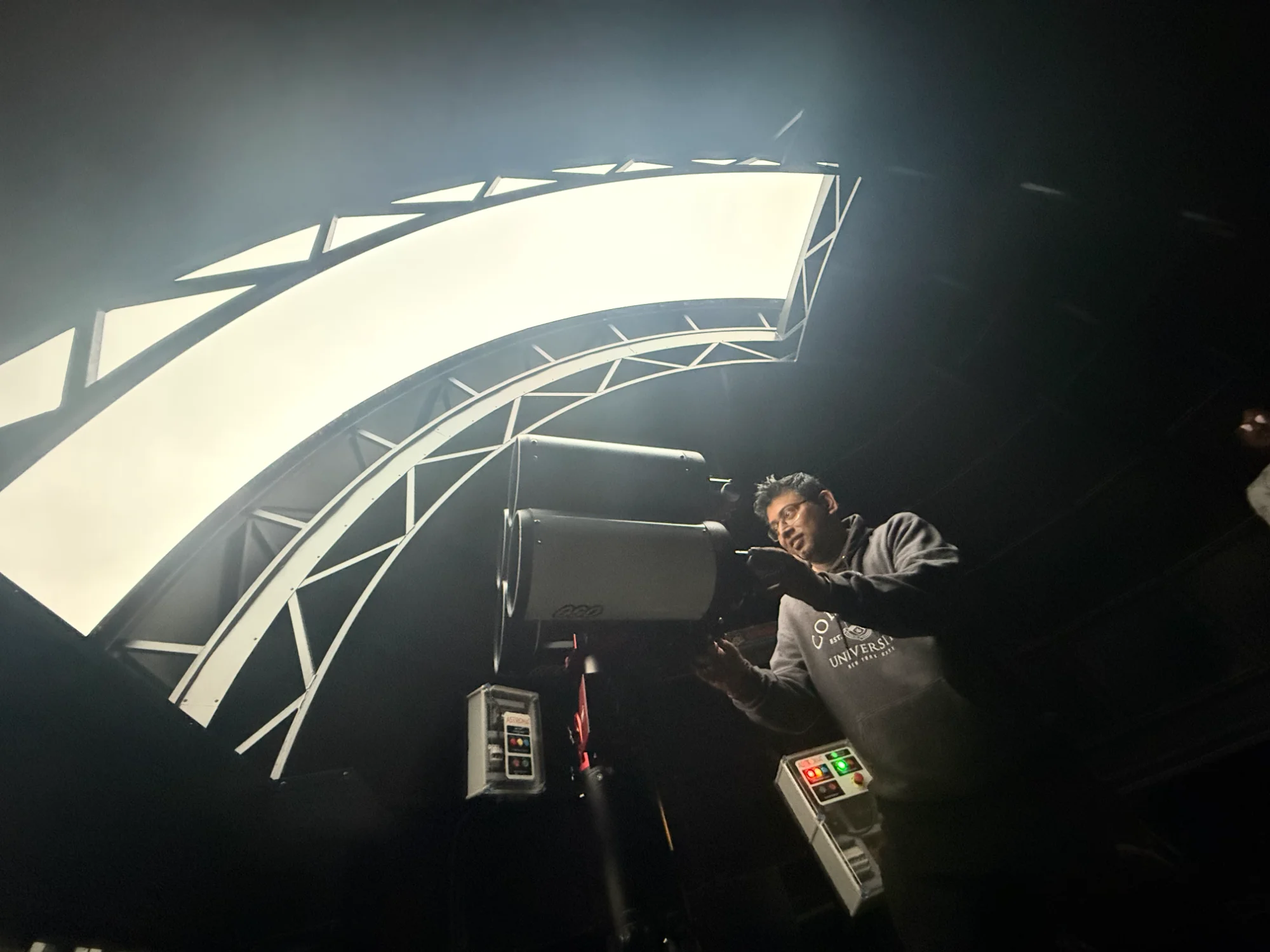
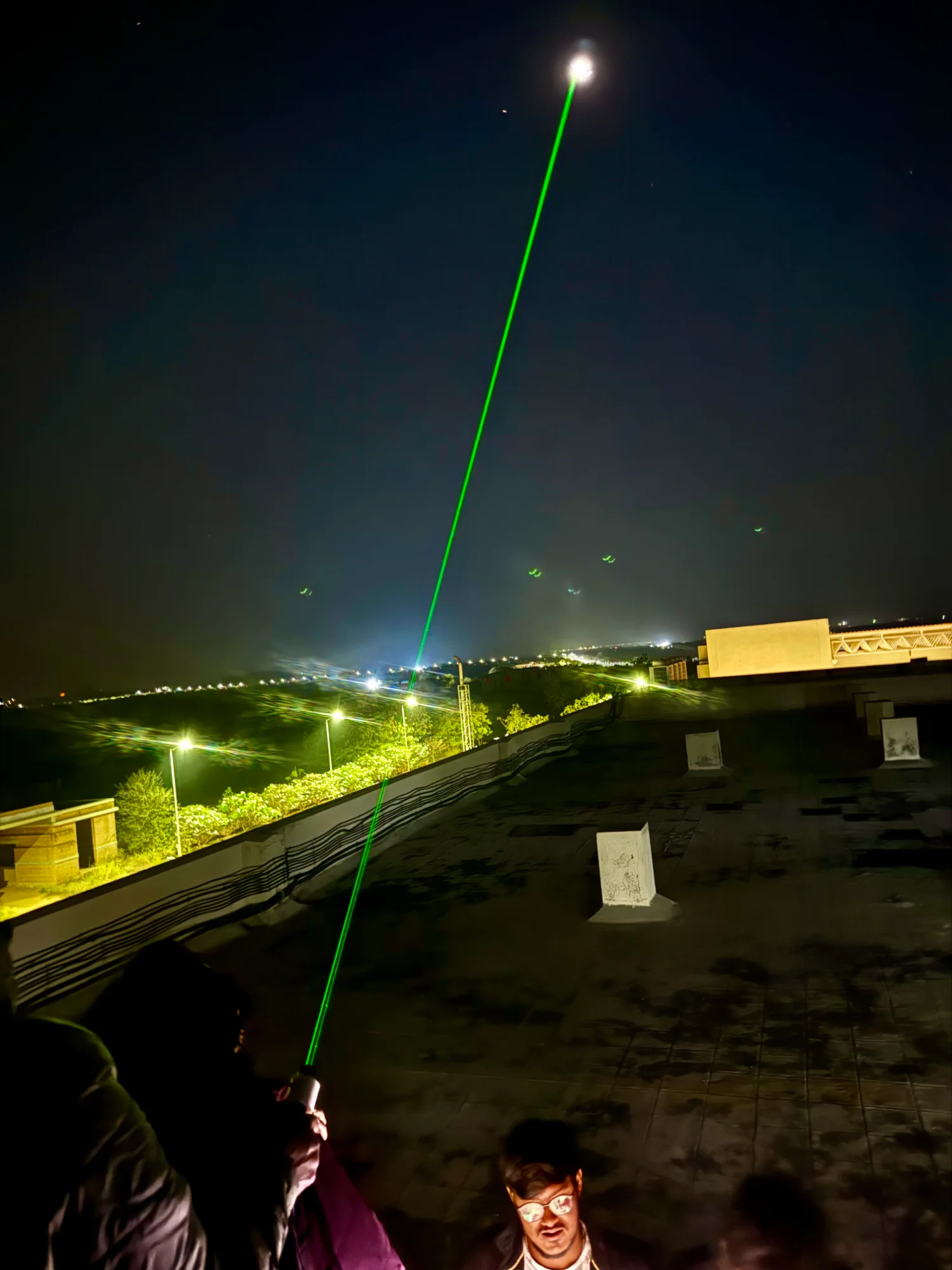
Unlike many space technologies, optical communications depend heavily on geography. Cloud cover can disrupt laser links, making clear-sky regions valuable. Jain argues that parts of India, including Karnataka, Rajasthan, Gujarat and Madhya Pradesh, offer favourable conditions for optical ground stations due to their relatively dry climates.
Despite the excitement around the ground centres, affordability remains a major challenge. Existing optical ground stations often cost between $1 million and $2 million, while QOSMIC aims to reduce that figure to between $150,000 and $250,000 through in-house engineering and manufacturing.
The founders themselves represent a broader trend in India’s deep tech ecosystem. All three returned from international careers to build the company in Bengaluru. Jain left a quantum computing PhD programme in the United States, while Ramakrishnan returned after working on satellite communication payloads in Singapore.
Betting on the Backbone
While the company initially focused on helping Earth-observation satellites transmit more data, Jain says the market has shifted rapidly. “Over the past six months, we have seen the market revolve drastically towards orbital data centres. And that is where our customers are coming from,” he says.
Investors have also begun taking notice. QOSMIC has just announced a $3.33 million seed funding round led by Accel and Prosus, with participation from South Park Commons, ARTPARK and angel investor Manish Jain.
The company plans to use the capital to scale manufacturing, expand its engineering team and deploy operational optical ground stations and satellite terminals. The funding arrives also as orbital data centres move from concept to commercial ambition.
Companies across the world are exploring ways to process data directly in space rather than transmitting everything back to Earth. For Jain, that trend validates a thesis that once proved difficult to explain to investors.
“I was turned down by almost everybody in the industry,” he says. “People don’t get it.” But today, he believes the market has changed.
The excitement around orbital computing has drawn attention to a question that receives far less attention than it does for rockets and satellites: how data moves between them. And as more of the world’s computing, sensing and communications infrastructure shifts into orbit, these data links may prove just as important as the spacecraft travelling on them.

Your reaction
Discussion
What's your take on this story?
No comments yet — be the first to share your view.