Key takeaways
- Digital zooming relies on algorithms that enhance image resolution through machine learning techniques.
- Image processing techniques like demosaicing, denoising, and super-resolution are essential for image reconstruction.
- Demosaicing algorithms excel in flat image areas but struggle with high-frequency textures and edges.
- Denoising algorithms effectively remove noise but can also smooth out important image details.

Problems With Current Image Processing
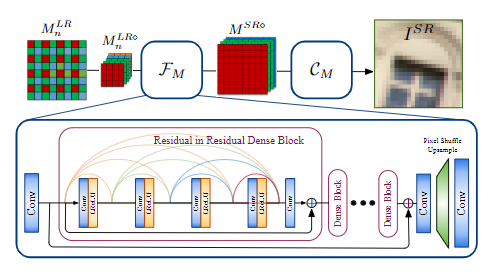
Photographers spend most of their time manipulating settings; for example, adjusting ISO sensitivity on their DSLR for a cleaner image. But, a typical phone user wants to have high-quality photos with a single touch. Localized alignment issues demand the algorithm to be smart enough to perfectly estimate the motion due to unsteady hand movement, moving people and other factors as discussed above. The complexity involved in interpolating randomly distributed data; random because the movements are random. So, the data is both dense and scanty and, this irregular spread of data on the grid makes super-resolution more elusive. Usually, up scaling involves methods like nearest-neighbours, bi-linear or bi-cubic interpolation. These up scaling filters with linear interpolation methods have their limitations in reconstructing images involving complexity and end up with over-smoothening of the edges. The sensors of the digital cameras are covered with filters which sometimes produce incomplete color sampling of images and eventually loss of resolution. Then there is noise in the original image which aggravates as pixel density becomes larger. In the existing solutions, the image is first demosaiced to obtain a full color image. Then SR is performed to further enhance the resolution. However, demosaicing will introduce artifacts when the resolution is limited (such as color aliases, zippering and moire artifacts),and these artifacts will be magnified by the SR process.