
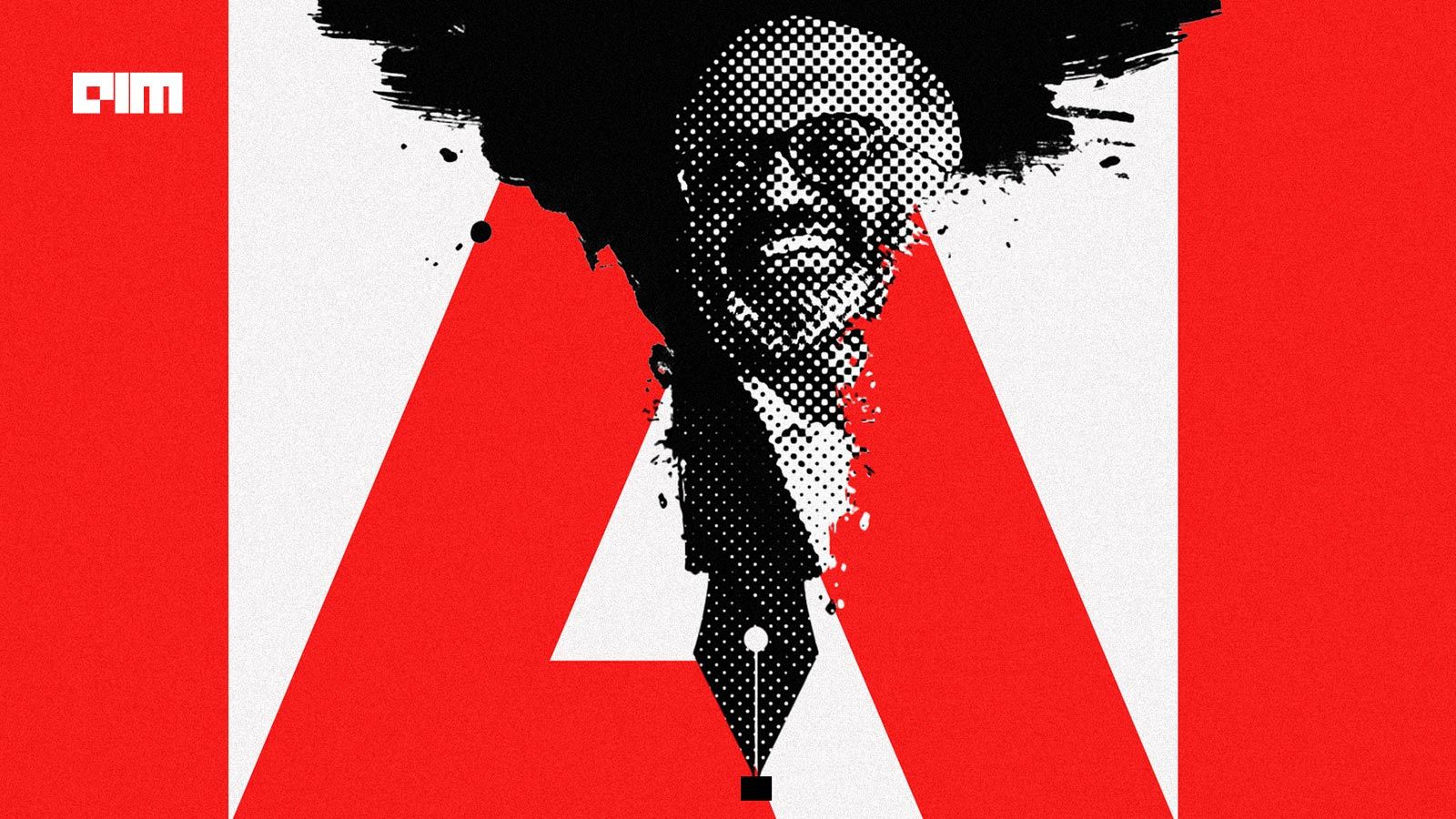
For nearly two decades, Shantanu Narayen defined Adobe’s modern identity. Joining in 1998 as a Vice President and General Manager, and becoming CEO in 2007, he led the company through one of the most significant shifts in enterprise software. When Narayen took over, the company was still rooted in boxed software, selling creative tools as one-off purchases.
By the time he announced his departure, Adobe had become a $24 billion subscription powerhouse. Its Creative Cloud model was widely regarded as one of the most successful transformations in enterprise software history. Its tools are still so deeply embedded in creative workflows that Photoshop has effectively become a verb.
“What attracted me to Adobe 28 years ago was our leadership in creating new market categories, world-class products, a relentless desire to innovate in every functional area of the company and the people I met during the interview process,” Narayen wrote in an internal memo to employees following his decision to step down.
As Narayen prepares to move out of the CEO role while remaining Chairman, Adobe finds itself at another inflexion point, arguably more complex and less predictable than the last. The company reported quarterly sales of $6.4 billion and claimed annual recurring revenue from its suite of AI-first products had more than tripled year-on-year.
Yet, the stock price slid following the earnings announcement and has dropped nearly 40% over the past year, indicating rising unease among investors about whether it can retain its central position in an AI-driven creative economy.
This is not merely a leadership transition. It is a moment that raises a more fundamental question: what is Adobe in a world where creativity begins not with tools, but with prompts?
The Narayen Era
Narayen’s legacy rests on a single, decisive bet: that software would move from ownership to access. Between 2011 and 2013, Adobe executed this launch through the launch of Creative Cloud, which essentially altered the company’s economics. Recurring revenue replaced cyclical upgrades, user retention deepened, and the company gained unprecedented visibility into customer behaviour.
Srinivas Padmanabhuni, CTO of AIEnsured, a deep-tech company specialising in AI validation, governance, and testing, frames it as a defining industry moment: “He led one of the most consequential transitions in enterprise software, moving from boxed products and perpetual licenses to the Creative Cloud subscription model… That shift created predictable recurring revenue, deepened user retention, and became a reference point for SaaS businesses across the industry.”
On Narayen’s watch, Adobe’s stock jumped more than sixfold, compared with roughly 350% growth in the S&P 500 over that period. Its workforce expanded from around 7,000 to more than 30,000 employees. Its flagship tools—Adobe Photoshop, Adobe Illustrator, and Adobe Premiere Pro—remained industry standards, deeply embedded across both creative and enterprise workflows.
Yet, that success rested on a specific assumption: that creative work begins inside tools.
The AI Rupture
The emergence of generative AI has introduced a more fundamental challenge to Adobe than any prior technological shift. When tools such as Midjourney and OpenAI’s DALL·E entered the mainstream, they didn’t merely introduce new features; they questioned the very need for sophisticated design software altogether.
If high-quality visuals can be produced through simple text prompts, the relevance of complex image-editing platforms starts looking uncertain. Products like Adobe Acrobat now compete with AI systems such as ChatGPT or Anthropic’s Claude, which can interpret and analyse documents with increasing sophistication.
Sanchit Vir Gogia, Founder & CEO, Greyhound Research, says, “Creation is shifting upstream. People are increasingly starting with prompts, not blank canvases. They generate first drafts using AI systems that sit outside Adobe’s environment.”
This inversion matters because it relocates value. If ideation and first drafts happen elsewhere, Adobe risks becoming a secondary layer—essential, but no longer central.
Adobe’s Answer
Adobe’s response has followed two parallel paths.
On one side, it has developed its own AI ecosystem, most notably Firefly, a text-to-image model positioned as a “commercially safe” alternative to rivals like Stable Diffusion and Midjourney—both of which have faced scrutiny over how their models are trained. On the other, it has embedded AI capabilities across its existing suite, aiming to make tools like Photoshop and InDesign more intelligent rather than replacing them entirely.
Even so, the approach has encountered friction. Firefly’s strict guardrails, designed to minimise legal risk, limit creative flexibility, often rejecting prompts that competing tools would allow. At the same time, Adobe’s in-house models have struggled to match the performance of leading alternatives, including newer entrants like Google’s Nano Banana. In response, Adobe has increasingly opened its ecosystem to third-party AI models—an acknowledgement that competing head-on across every front may not be its strongest play.
Notably, Adobe shares are down 23% this year, part of a broader selloff in software sparked by concerns about the impact of AI.
Not Just a Strategy, a Structural Shift
Adobe’s transition to AI marks a far deeper shift than its move to SaaS. It is less a business model change and more a reinvention of how software itself is used.
The company is evolving from a tools provider into a system governing how content is created, managed, and deployed in an AI-driven environment—a far more complex ambition than subscriptions ever were, Gogia explains.
That complexity is compounded by a classic Innovator’s Dilemma. As Padmanabhuni puts it: “Adobe must integrate AI capabilities like Firefly deeply into its products without making existing workflows redundant or unnecessarily complex.” Over-integration risks bloated tools; under-integration risks user migration to simpler AI-first platforms.
Adobe Firefly is only one piece of a broader push towards the content supply chain. The real test is whether Adobe can move beyond tools into orchestration.
At the same time, AI is expanding Adobe’s market while eroding its pricing power. “If output quality converges, sustaining premium pricing becomes harder to justify,” Padmanabhuni notes. Adobe’s shift to credit-based pricing reflects this tension, tying revenue to usage rather than licences.
Adobe’s Next Test: Tools to Orchestration
The most significant threat facing Adobe may not be direct competition, but disintermediation. As AI agents grow more capable, users may stop engaging with software altogether. Instead, they will define goals as agents execute tasks across systems.
In such a reality, the most valuable layer is not the tool, but the coordinator.
“The biggest structural risk facing Adobe is… the possibility of being bypassed altogether,” Gogia warns. If Adobe does not control this orchestration layer, it risks fading into the background—still functional, but no longer owning the user relationship. And with that, pricing power often erodes.
Even so, Adobe retains a powerful moat through deep enterprise integration. Creative workflows in large organisations extend far beyond design, encompassing approvals, compliance, and marketing systems—areas where Adobe remains deeply embedded.
“Adobe’s strongest advantage is not just technical capability, it is data provenance and legal positioning,” Padmanabhuni highlights. Tools like Adobe Firefly, trained on licensed datasets, offer commercially safe outputs, crucial for enterprises where “legal risk is often a harder constraint than model quality.”
This results in a position that is defensible, though largely protective.
AI-native tools prioritise speed and simplicity, while Adobe’s ecosystem prioritises depth, control, and integration. For now, this distinction sustains a divide between rapid ideation and enterprise-grade execution—but it may not hold indefinitely.
The rise of autonomous creativity is accelerating the shift. “AI agents will take over most of the execution layer… generating and testing variations at scale,” Padmanabhuni foresees. Human roles will evolve towards judgment and direction rather than manual creation.
The Road Ahead
Adobe’s position today is neither secure nor precarious; it is transitional.
It remains deeply embedded in enterprise workflows, supported by strong technology and a trusted brand. But the centre of gravity in creativity is shifting, and Adobe is no longer guaranteed to sit at its core.
If it succeeds in becoming the orchestration layer—the system that governs how creative work is generated, managed, and deployed—it could define the next era of digital creativity.
If it fails, it will remain important, but peripheral.
Narayen’s tenure showed that Adobe can reinvent itself when necessary. The question now is whether it can do so again—this time in a world where creativity itself is being redefined.
Upon reaching out, Adobe did not wish to participate in the story.

Your reaction
Discussion
What's your take on this story?
No comments yet — be the first to share your view.