
On the trek to Kedarnath, thousands of pilgrims walk narrow mountain trails carrying bottles of water and packets of snacks. By the end of the day, many of those plastic wrappers and bottles are left scattered across steep hillsides or washed into nearby rivers.
The scale of the problem is staggering. In 2023 alone, nearly 56 lakh pilgrims visited the Char Dham circuit, leaving behind tens of thousands of pieces of plastic packaging every day along the trekking routes. Cleaning this waste is extremely challenging. The terrain is steep, the altitude exceeds 3,200 metres, and many locations are accessible only by foot or mule. Traditional waste management systems struggle to operate in such conditions.
For Abhay Deshpande, the founder of Recykal, an Indian clean-tech startup, scenes like this represent not an environmental crisis, but a data problem.
“There was no visibility into where waste was generated, where it moved, and where it ended up,” he says. “The industry was completely dark.”
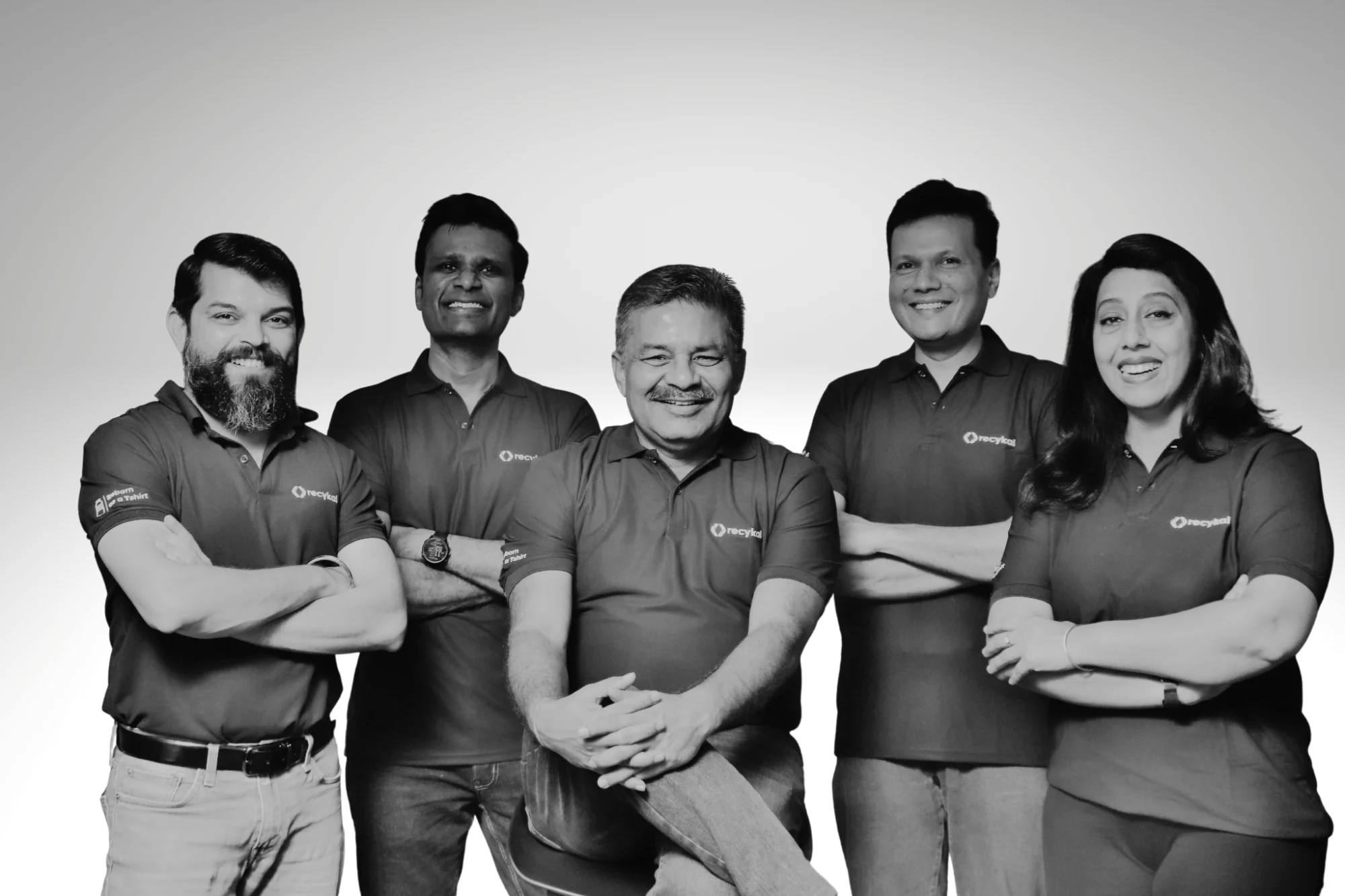
Over the past decade, Recykal has worked to bring visibility to this problem through technology, using AI, digital traceability systems, and marketplace platforms to formalise one of the most fragmented sectors of the Indian economy.
The Founder’s Curiosity
Deshpande is not new to entrepreneurship. Recykal is his third startup, launched after he exited his previous venture in 2016. At the time, sectors like logistics, hospitality, and food delivery were being reshaped by technology, with digital platforms rapidly transforming industries that were once considered difficult to disrupt. Waste management, however, remained largely untouched.
“We wanted to solve a real problem, something impactful,” he says. “Waste management looked like an opportunity because the industry was extremely fragmented and had almost no reliable data.”
Instead of immediately launching a product, Deshpande and his co-founders, including Vikram Prabakar, a former Oracle enterprise technology leader, spent nearly two years studying the ecosystem. They met recyclers, waste collectors, aggregators, regulators, and municipal authorities across the country to understand how waste actually moved through the system.
“You cannot build this business sitting in an office,” Deshpande says. “You have to walk the ground and understand the behaviour of every stakeholder.”
Building the Technology Backbone of Recycling
Recykal began with a relatively simple premise: if waste could be tracked digitally, it could be managed more efficiently and transparently. But the founders soon realised that solving India’s waste problem required more than a single product.
“The waste ecosystem has many vantage points, you can be a recycler, a collector, or a logistics player,” explains Prabakar, who is also the Chief Product and Technology Officer. “Instead of operating as one participant, we decided to build an ecosystem platform connecting all stakeholders.”
Initially, the company experimented with models that connected households directly to recycling channels. However, the team soon discovered that the economics of collecting waste from homes at scale were difficult to sustain. Reverse logistics costs were high, and the diversity of waste streams added operational complexity.
The strategy evolved accordingly. Rather than operating as a waste collector itself, Recykal focused on building digital infrastructure for the recycling ecosystem. It created a circular marketplace that connects recyclers with waste aggregators and suppliers across the country. It also developed enterprise platforms that help brands track compliance with Extended Producer Responsibility (EPR) regulations, allowing companies to monitor how much of their packaging waste is actually recycled.
Technology, particularly AI, has become central to these systems. Recykal uses computer vision models to identify and classify waste materials, price-prediction engines to forecast recycling market trends, and analytics layers to trace waste movement across complex supply chains.
One of the biggest hurdles in building these systems was the lack of reliable data. When the company started, no comprehensive datasets on waste materials or supply flows existed. As a result, the team had to build its own data foundation, collecting millions of images and data points over several years to train machine learning models.
“When we started, there were no datasets available,” Prabakar says. “So we had to create our own—millions of images and data points to train our models.”
The Business Model
Today, Recykal operates through three major revenue streams that together form a digital infrastructure layer for the circular economy.
The first is its circular marketplace, a digital platform where waste suppliers, aggregators, and recyclers transact. By connecting fragmented supply chains across the country, the marketplace helps recyclers source materials more reliably while enabling aggregators to find better buyers.
The second revenue stream is the company’s EPR Loop platform, which allows brands and producers to meet regulatory compliance requirements. Through the platform, companies can purchase verified recycling credits, track their waste management obligations, and access traceability data.
The third, and most ambitious, initiative is the Digital Deposit Refund System (DDRS) infrastructure. In this model, consumers pay a small deposit when purchasing packaged goods, which is refunded when the container is returned for recycling. Recykal develops the technology and operational infrastructure required to run these systems at scale.
To date, the company has raised approximately $50 million in funding, attracting investors including Morgan Stanley Infrastructure Partners and several strategic backers. Notably, Deshpande says most of this capital came through inbound investor interest rather than aggressive fundraising efforts.
“The problem we are solving is huge, and investors recognise that,” he says.
Turning Waste into Value
India’s waste economy remains largely informal, with much of the recycling ecosystem operating outside structured data systems. The country generates approximately 65 million metric tonnes of waste each year, yet only 18.46% of it is treated, leaving a vast gap in recycling infrastructure.
At the same time, the global circular economy is expanding rapidly. Analysts estimate the market could reach $4.5 trillion by 2030, driven by regulatory pressure, sustainability commitments, and resource scarcity.
Within India alone, the circular economy could grow into a $218 billion market by 2030, and potentially reach $500 billion if the country’s recycling rates match global averages.
Recykal has positioned itself as a digital backbone for this emerging sector. Its platform connects more than 650 brands, over 675 recyclers and co-processors, and more than 5,000 waste aggregators and service providers today, creating one of the largest integrated digital networks in India’s recycling ecosystem.
Competition and the Real Moat
On paper, building a compliance or marketplace platform may not appear difficult. But waste management presents challenges that extend far beyond software.
“This is not a pure technology business like a messaging app,” Deshpande explains. “Waste has to be physically collected, transported, and recycled.”
The company’s competitive advantage, therefore, lies in a combination of factors: years of domain expertise, relationships with stakeholders across the ecosystem, and the massive datasets it has accumulated over time. Prabakar describes Recykal’s moat as a layered combination of technology infrastructure, data intelligence, and deep market integration.
The company has grown into a 600-person team, and Deshpande believes the people are its greatest strength.
Despite technological innovation, the most difficult challenge remains behavioural change. Waste management systems involve multiple stakeholders—consumers and corporations to government authorities, and informal waste workers—each with entrenched habits.
“Changing the behaviour of people is the hardest problem,” Deshpande says. Yet, the company believes a powerful solution lies in financial incentives.
Turning Trash Into Cash
Recykal’s DRS is designed to transform waste into something valuable. Consumers pay a small deposit when purchasing packaged products and receive it back when they return the empty container for recycling.
The concept has already proven successful globally. More than 50 countries have implemented DRS, with recycling rates often exceeding 90%.
In India, Recykal has piloted the system in the Char Dham pilgrimage corridor in Uttarakhand, a region that sees millions of visitors every year. The results demonstrate the power of behavioural incentives.
Over three years, the initiative collected and recycled more than 20 lakh plastic bottles, created 110 new jobs, and increased incomes for workers in the informal waste sector by 37.5%. The programme also reduced the government’s waste management burden, saving approximately ₹3.73 crore in operational costs.
For Deshpande, the experiment demonstrates how technology and behavioural economics can work together to transform waste systems.
“If a bottle has a deposit value attached to it, people will not throw it away,” he says. “Trash becomes cash.”
The Next Phase
Recykal’s long-term vision is to channelise at least 10% of India’s total waste into the circular economy using its digital platforms and infrastructure.
International expansion is already underway, particularly in countries facing waste management challenges similar to those in India. The company is exploring partnerships across Southeast Asia and other emerging markets where digital traceability and deposit systems could significantly improve recycling rates.
Yet, the founders measure success differently from most startups.
“Every tonne of waste that reaches the right destination instead of a landfill is an impact,” Deshpande says.
Recykal may fundamentally reshape how a billion people think about waste, and prove that even the most overlooked industries can be transformed with the right combination of data, technology, and human behaviour.

Your reaction
Discussion
What's your take on this story?
No comments yet — be the first to share your view.