
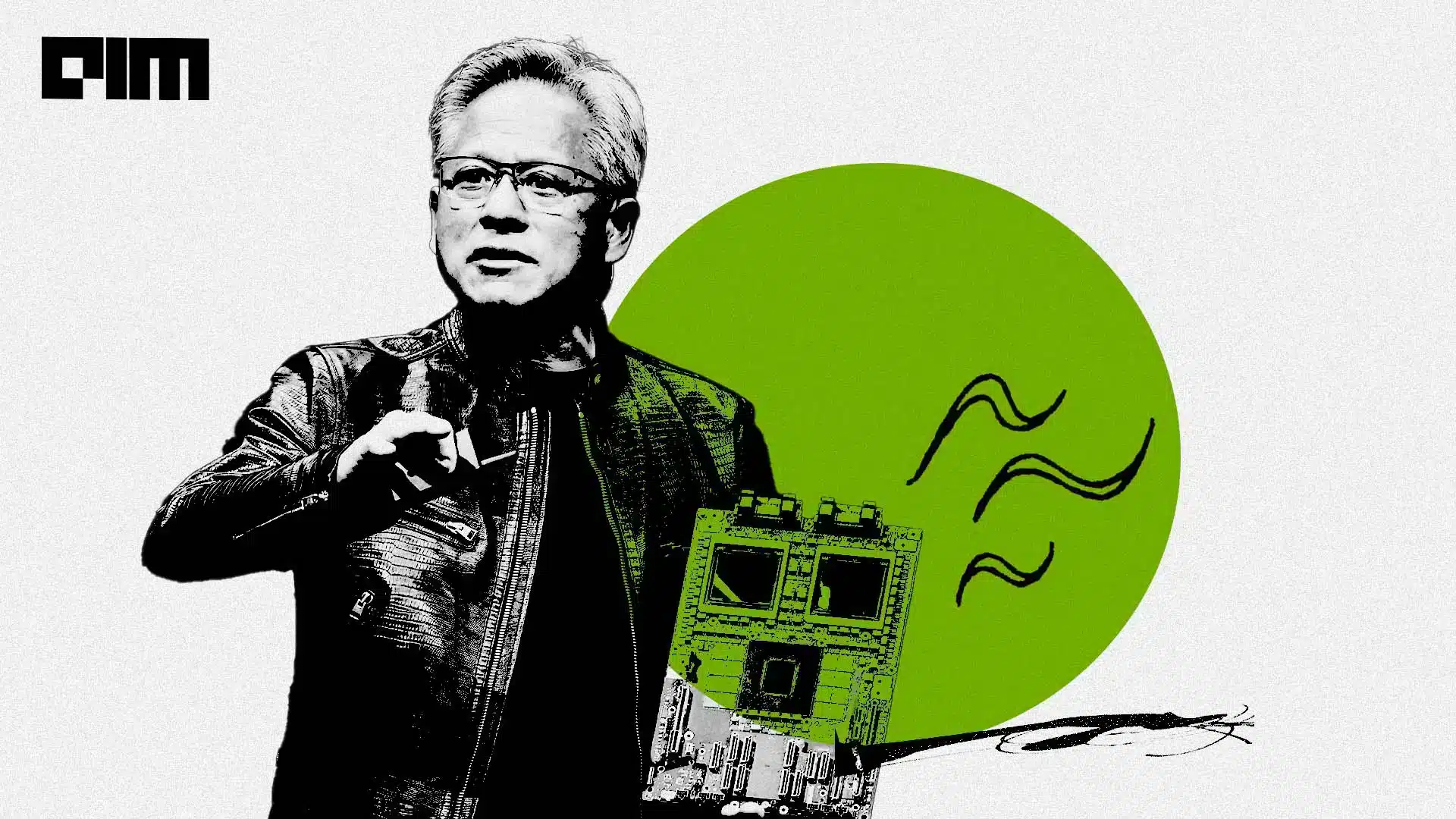
The rising RAM and memory prices are widely thought to be the result of AI demand. NVIDIA’s earnings provide the strongest confirmation yet of that theory. The chipmaker admits memory costs are hurting its own margins, even as it plans price increases and locks up years of future supply.
The giant’s latest Q2 FY27 earnings have exposed a new pressure point in the AI boom. Memory costs are rising fast enough to cut into the chipmaker’s margins. The company expects memory prices to rise further next year. It also expects supply to remain a bottleneck through at least fiscal year 2028.
The warning came as NVIDIA reported $96.2 billion in revenue, which was a 106% rise from a year earlier. Data centre revenue reached $89 billion, up 117%.
NVIDIA expects $108 billion in Q3 revenue, with the forecast excluding data centre compute revenue from China. It also expects fiscal 2028 revenue to grow about 70%.
Increasing Memory Bill
CFO Colette Kress said in the earnings call that NVIDIA is seeing “extreme pricing conditions in memory”. She said the increase has exceeded earlier expectations and warned that prices are heading higher next year. That pressure will push gross margins from 75% in Q2 to 74% in Q3, and further bottom out at 71–72% in Q4.
NVIDIA also expects margins to settle at 72–73% in fiscal year 2028. The company plans price increases from the first quarter. That suggests the memory crunch is already reaching customers buying NVIDIA’s AI systems.
NVIDIA’s regulatory filing shows how seriously it is taking the issue. Its supply and capacity commitments rose from $119 billion to $279 billion in one quarter. Those commitments mainly cover memory and manufacturing facilities, spanning current and future data centre systems.
NVIDIA plans $92 billion in supply and capacity commitments for the rest of FY27 and another $87 billion in the next fiscal year. A further $88 billion is scheduled for fiscal year 2029, making the three-year total reach $267 billion.
That spending surge matters because NVIDIA is not operating alone. It is working to secure memory capacity as demand from AI infrastructure continues to strain the supply chain. The company has deep relationships with all three major memory makers—SK Hynix, Micron, and Samsung—and is working with them to increase capacity for its product roadmap.
Investors are also starting to see the memory shortage as a potential boost for the companies supplying NVIDIA. Futurum Equities Chief Market Strategist Shay Boloor wrote on X, “If NVIDIA is telling you memory is getting tighter for longer, then it becomes much harder to justify Micron and SK Hynix still trading below 6x earnings.”
NVIDIA’s Supply Problem is Everyone’s Problem
The unusual part of NVIDIA’s warning is its pricing power. Even NVIDIA cannot fully absorb the higher memory bill. It expects to raise prices while margins fall in the near term.
That makes the memory shortage more than a component-cost story. It has become a constraint on the speed and cost of the AI build-out.
CEO Jensen Huang described the wider problem bluntly. “Our entire supply chain is challenged,” he said. Suppliers are running flat out. New capacity is coming online gradually. NVIDIA currently has enough supply to cover about 70% of the demand for next year.
That gap explains why NVIDIA can forecast 70% revenue growth while calling its outlook supply constrained. Huang said demand is much higher than the company can currently fulfil. NVIDIA is working upstream with suppliers to improve capacity and yields.
The consequences could be significant for the technology industry. NVIDIA’s customers already face rising costs for power, land, cooling, and data centre construction. Memory is now joining that list. Unlike some infrastructure constraints, memory prices can affect products across the supply chain.
The timing also matters. NVIDIA expects memory supply to remain a bottleneck through at least FY28. That extends the problem well beyond the current quarter. Industry forecasts suggest pressure could persist as AI infrastructure spending continues.
Adding AI to the Mix
Kress offered a direct explanation for the shortage. “Memory scarcity today is being driven in large part by the AI build-out itself,” she said, adding that tighter supply reflects the demand surge driving NVIDIA’s growth.
This is more than another memory price cycle. Counterpoint says suppliers are shifting capital, wafer capacity, and technology towards high-bandwidth memory (HBM) and server memory, where demand and profits are higher. That leaves less capacity for conventional DRAM used in PCs, phones and other devices.
SemiAnalysis estimates HBM consumes roughly 2.5–3x the wafers of conventional DRAM for the same number of memory bits, increasing the pressure on conventional supply.
Recent industry forecasts point to further price pressure. Market research firm TrendForce expects conventional DRAM contract prices to rise 13–18% in the third quarter. It also expects NAND prices to increase 10–15%. The firm says AI server demand continues to keep memory supply tight.
TrendForce also expects suppliers to continue prioritising AI and server applications. That reduces the supply available for PC and smartphone memory. It expects higher memory costs to flow through to notebook and smartphone prices.
Industry estimates also point to HBM taking a larger share of DRAM production. TrendForce expects HBM wafer input to reach about 30% of overall DRAM input by the end of 2027. That would increase the pressure on conventional DRAM capacity.
NVIDIA’s filing adds another layer. The company said its commitments have secured the supply for several years. The largest AI chip supplier is therefore reserving future production at scale.
The effect could spread beyond AI servers. If suppliers prioritise HBM and server memory, consumer electronics makers may face tighter availability. PC makers could pass higher memory costs to customers. The same pressure could reach smartphones, storage products, and other devices.
Counterpoint Research estimates memory now accounts for more than 25% of a typical notebook’s bill of materials, up from about 15% previously.
The result is a new paradox at the heart of the AI boom. The same demand driving NVIDIA’s growth is also making one of its key inputs more expensive.
NVIDIA is responding by securing hundreds of billions of dollars in future supply commitments. It is also raising prices and accepting lower margins in the short term. Then what remains for everyone else if NVIDIA locks up memory at this scale to keep the AI build-out moving?

Your reaction
Discussion
What's your take on this story?
No comments yet — be the first to share your view.