

The hardest factory jobs are still too easy for humans. Behind assembly lines and conveyor belts, much of the work still relies on human hands. Tasks that require adjustment, touch, or judgement remain difficult for machines.
This gap between expectation and reality continues to shape how industries approach automation. Robots can lift and place, but they lack the intuitive sense that humans naturally possess.
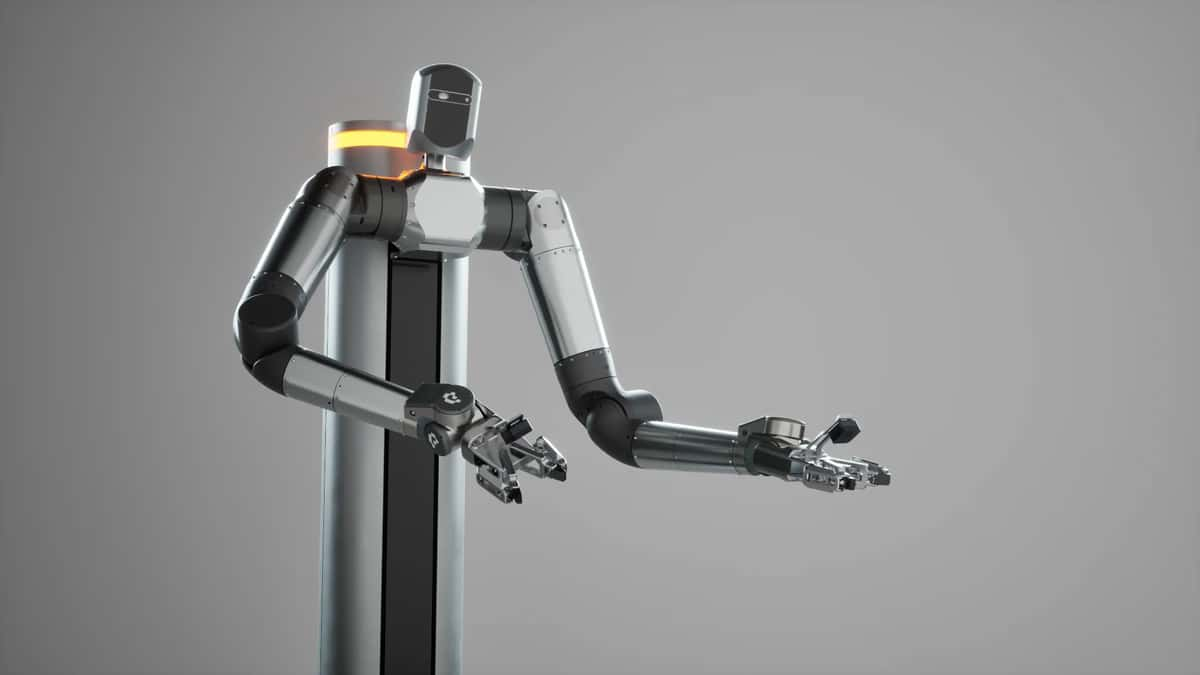
Perceptyne, an Indian robotics startup based out of Hyderabad, is building industrial robots that aim to address these gaps. The company says its systems focus on targeting tasks that existing robots struggle to perform.
“We are building dexterous, intelligent, affordable and vertically integrated robots for industrial automation,” Mrutyunjaya Nadiminti, Co-Founder, CBO, and Co-CTO of Perceptyne, tells AIM in an interaction.
“Usually, the perception among the general public is that industries are highly automated. But the moment you step into some of these automation lines, you will quickly realise that that’s not the case.”
The company positions its robots as a response to persistent manual work in manufacturing. Despite assumptions of full automation, many processes across sectors such as electronics and automotive remain human-led.
Where Robots Still Fall Short
Most industrial robots today operate in controlled environments and handle repetitive pick-and-place tasks. These systems struggle when conditions vary or when fine motor control is required.
“What’s easy for humans is difficult for today’s robots, and we want to change that,” Nadiminti says.
Factories often depend on manual labour for tasks such as inserting components, aligning parts, and handling delicate assemblies. These tasks require sensing and adaptability that machines lack at present.
Gokul NA, Founder of CynLr, a Bengaluru-based robotics startup focusing on dexterity and perception, explains to AIM that even basic human actions remain difficult for machines because robots are not designed to respond to force.
He points out that human intuition is highly underestimated. “Robots and their kinematics are built to chase position, not a pattern of force,” he says. “When I put a cap on a pen, I chase the feeling followed by that click. This is not how robots function today.”
Robots also depend heavily on structured setups.
Companies often invest in custom fixtures to ensure consistency, which raises costs and limits flexibility. As product variations increase, rigid automation systems become harder to justify. Manufacturing lines now handle multiple models within short cycles, making adaptability essential.
“Today, with so many models coming up, you can no longer say that this line is dedicated to this model only,” Nadiminti describes.
This lack of adaptability remains a core limitation across industrial robotics, according to Gokul. He says robots still struggle to handle even minor variations in real-world environments.
“Unless the variations in the environment are restricted to 0.2 mm of change, robots don't scale,” he explains, adding that most systems were designed for “blind, record and playback actions” rather than adapting to changing conditions.
For CynLr, the problem is less about mechanical precision and more about how robots interpret their environment. “Perception is the control,” Gokul says. “From a motion control point of view, robots are 20mm precise—the problem is adaptiveness.”
He argues that failures often stem from incorrect decisions rather than poor execution, pointing to gaps in perception systems.
Perceptyne’s approach combines multiple sensing methods with coordinated control. The company highlights vision, force, and touch sensing as core to its systems. The robots are built to handle variation in object orientation and placement. They also target tasks that require force feedback, such as insertion and assembly.
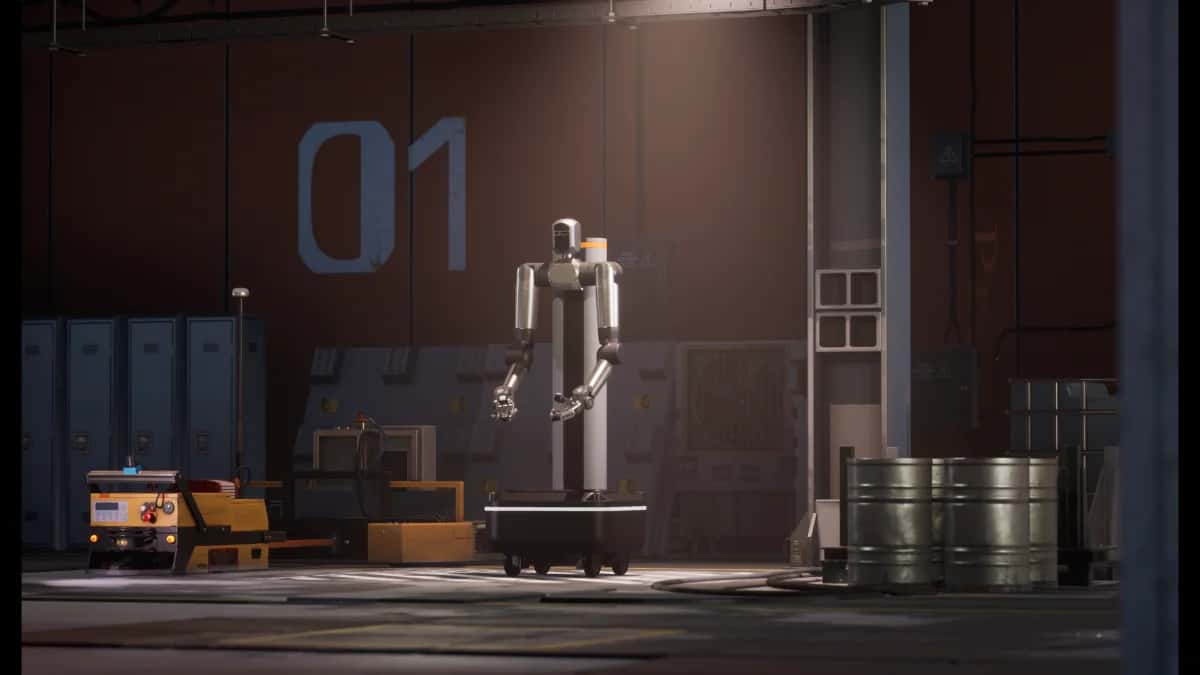
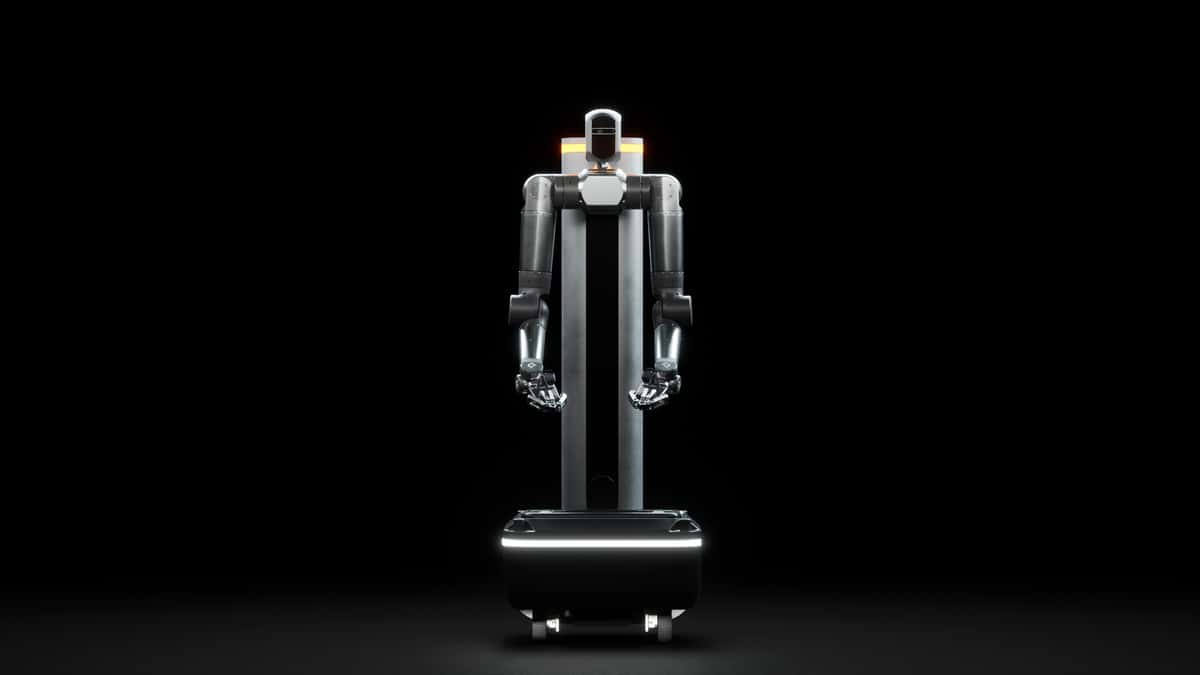
Another feature is dual-arm coordination. This allows robots to handle larger or complex objects using both arms simultaneously. The company also works on tactile sensing to improve grip and reduce errors during manipulation.
These capabilities aim to reduce reliance on fixed setups and enable robots to function in less controlled environments.
India’s Automation Gap
India’s manufacturing sector still uses fewer robots compared to global benchmarks, despite recent growth.
According to the International Federation of Robotics (IFR), India installed 9,120 industrial robots in 2024, a 7% year-on-year increase. The country is now the sixth-largest installer globally.
However, the total operational stock stands at 52,570 robots, far below leading economies where deployments range from three lakh to over two million units.
The gap becomes clearer when compared with other countries. Nations such as South Korea and Singapore use significantly more robots per worker. “India is in a two-digit range, so there is certainly a long way [to go],” Nadiminti adds.
According to IFR’s World Robotics 2025 report, over 5.42 lakh industrial robots were installed worldwide in 2024, with nearly 74% of deployments concentrated in Asia alone. The market also remains highly concentrated, with five countries accounting for around 80% of global installations, leaving emerging economies like India with significant ground to cover.
The company links automation adoption to manufacturing output, noting that higher automation levels often correlate with stronger manufacturing economies.
Affordability remains a key barrier. Many firms hesitate to invest in automation without clear returns. “You can set up an automation system today, but if it doesn’t make sense from an ROI standpoint, it becomes more of an R&D project,” he points out.
However, not everyone sees cost as the primary challenge.
“Focusing just on a ‘low cost’ alternative is a futile effort. Cost is a factor of volume,” he says, adding that deeper innovation is needed in technology stacks and components.
Building Faster by Owning the Stack
Perceptyne claims to build most of its components in-house, including hardware, control systems, and software. This vertical integration allows faster iteration and lower costs. “It has actually helped us tremendously accelerate the entire design-test cycle,” Nadiminti adds.
Traditional automation setups often rely on multiple vendors, which slows development. The startup claims this approach reduces system integration challenges. By controlling the full stack, Perceptyne focuses on solving application-level problems instead of integration issues.
Cost reduction is another outcome. The company estimates it can reduce system costs by around 40% compared to imported setups.
Founded in 2022, the company has developed a dual-arm robot with mobility and sensing capabilities. It is currently in customer pilots and early testing deployments. The next phase focuses on scaling deployments and improving capabilities. The company also plans to use operational data to refine its systems.
It wants to train robots using short periods of teleoperation. “Our goal is to collect as little data as possible and yet achieve a very good autonomy,” Nadiminti claims.
The broader goal is to close the gap between human and machine capability in industrial settings. “What’s easy for humans is also easy for robots, given that you can put the right capabilities,” he adds.
The path to human-like robotics, however, may not be immediate. Gokul notes that machines will first replace repetitive effort before matching human intuition. “Machines in the next five to 10 years will displace manhours before they could replace manual labour,” he says.
He adds that waiting for robots to fully replicate human intuition could slow progress, and factories may need to rethink processes around software-driven, flexible systems.
- From Humanoid Robots to Telecom Trials, 12 Major Announcements at NVIDIA GTC Berlin 2026
- Anyone Can Make a Robot Move, Few Can Make It Stop
- After ISRO’s PSLV Failure, TakeMe2Space Looks to SpaceX for Reliable Launch
- Why AI Agents are the Next Frontier in Quantum Security
- Physical AI Squeezes Labour Market, And Low-Skilled Immigrant Jobs May Be First to Fall
- Rocket Math Isn’t Mathing: Why India’s Space Launches are Expensive