$32 Billion Later, Google Wants to Secure Every Cloud, Not Just Its Own
By Smruthi Nadig ·
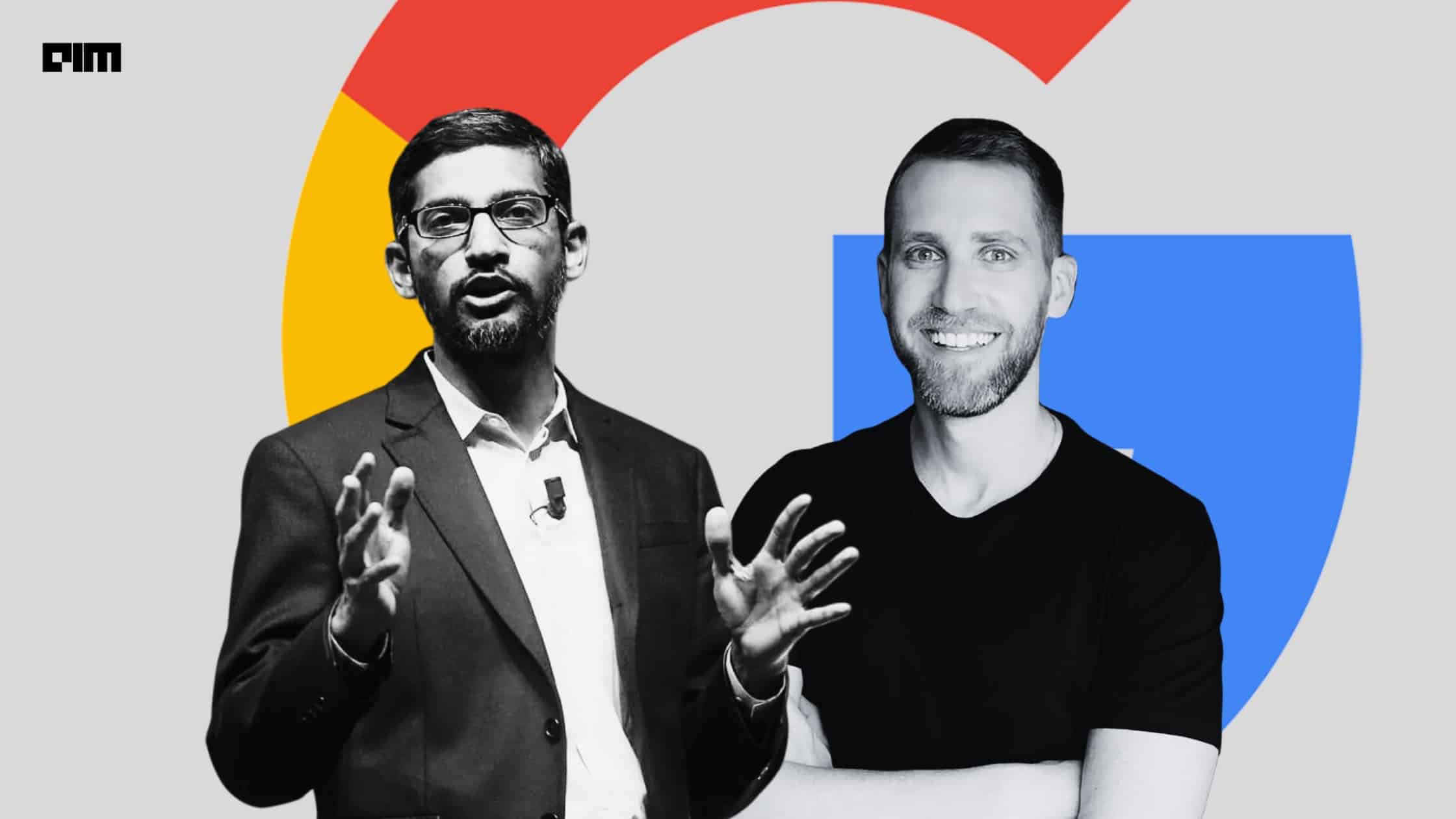
Google Cloud’s acquisition of Wiz for approximately $32 billion in March 2026 signals a shift from cloud-first to AI-native, multicloud-first security, where visibility, automation, and control must operate across increasingly fragmented environments.
At a time when enterprises are juggling multiple cloud providers, AI agents, and distributed infrastructure, the acquisition positions Google not just as a cloud vendor but as a security orchestrator across ecosystems. The implications of this shift will play out over the next two years, as Google attempts to close long-standing gaps in multicloud security, AI governance, and enterprise adoption.
Fragmentation and Visibility
The rationale behind the acquisition becomes clear when looking at how enterprise infrastructure is evolving. Organisations are no longer operating in a single cloud environment. Instead, they are managing workloads across AWS, Azure, Google Cloud, and an expanding layer of AI tooling, agent platforms, data pipelines, and model ecosystems.
As Francis deSouza, COO of Google Cloud and President of Security Products, explained to AIM during a media roundtable at the Google Cloud Next 2026 event, the cybersecurity landscape is undergoing fundamental change. He noted that enterprises were facing “new actors on the threat landscape” and “new techniques of attack”, driven by AI systems operating at machine speed. In such a scenario, traditional, reactive security approaches are no longer sufficient.
DeSouza argued that enterprises must adopt “an AI-driven, agentic defence strategy” to keep pace, emphasising that organisations now need to “fight AI with AI”. This framing underscores the urgency behind Google’s move: security is no longer a layer—it is becoming a real-time, autonomous system embedded into infrastructure.
Wiz’s core value lies in its ability to unify visibility across fragmented systems. Its platform connects code, cloud infrastructure, and runtime environments into a single security graph, allowing organisations to understand how vulnerabilities propagate across layers.
As Yinon Costica, Co-founder and VP of Product at Wiz, described in the keynote, the cloud security provider was built to “unify code, cloud and runtime context” and now extends this to AI environments, where “security must move at machine speed.” The platform’s AI application protection model focuses on visibility, proactive risk detection, secure-by-design development, and automated response.
This emphasis on visibility is critical. Costica noted during the roundtable that “visibility always has been the challenge for security”, particularly as AI introduces new components across the stack. Without a unified view, organisations struggle to prioritise risks or enforce consistent controls.
Integration, Enterprise Stack, and Multicloud Strategy
The acquisition is not just about adding a product; it is about reshaping Google Cloud’s enterprise offering into a vertically integrated AI and security platform.
Thomas Kurian, CEO of Google Cloud, told AIM during another media roundtable that Google is “the only hyperscaler with our own chips and our own frontier models”, enabling it to “optimise the whole stack” from compute to AI agents. This vertical integration becomes more powerful when combined with Wiz’s horizontal visibility across multicloud environments.
At the same time, Kurian emphasises that Google’s architecture remains open, supporting “models from any players in the market” and multiple data platforms. This dual positioning is central to the acquisition strategy. It allows Google to embed its security layer across environments that it does not fully control.
In conversation with AIM, Muninder Sambi, VP of Product Management at Google Distributed Cloud, saidys that Google is not just offering models, but “a full, vertically stacked Google AI engine” that combines hardware, data, networking, and governance into a single system.
Importantly, he framed security and governance as inseparable from infrastructure, pointing to capabilities such as confidential compute, encrypted data in use, and auditability as core enterprise requirements.
He further emphasised that for many enterprises, particularly in regulated sectors, adoption hinges on sovereignty and control. As he explained, customers are increasingly prioritising environments where “your model, your data, your tools, your application [are] fully secure,” with strong guarantees around data residency, auditing, and policy enforcement. This reflects a broader shift: security is no longer just about protection, but about compliance, control, and trust at scale.
Sambi also noted that a structural challenge directly tied to the Wiz acquisition is that enterprises lack the ability to seamlessly build AI infrastructure in constrained environments. He pointed out that “building that in a sovereign environment… is really hard”, particularly when integrating models, infrastructure, and governance layers. Wiz’s ability to provide unified visibility and control across such environments helps address this gap.
In this context, Wiz becomes the connective tissue between Google’s infrastructure stack and the broader multicloud ecosystem. The acquisition directly targets key enterprise gaps: a lack of visibility, slow, manual security processes, and weak AI governance frameworks.
Wiz’s agent-based model—comprising autonomous systems for detection, triage, and response—addresses the growing need for automation. Costica described that these agents can identify risks, assign ownership, and deploy fixes in near real time, significantly reducing response cycles.
At the same time, Google’s broader AI infrastructure integrates governance and security from the ground up. DeSouza highlighted the need for “visibility, governance, and vulnerability management” to be built directly into enterprise platforms. This aligns with the company’s push to embed security into its Gemini-based AI ecosystem.
A critical aspect of the strategy is maintaining Wiz as a multicloud platform. Costica stated that Wiz will continue to support “any cloud out there,” enabling customers to enforce consistent security controls across environments. This is essential for enterprise adoption, even as it introduces an inherent tension: customers must trust a competitor to secure their cross-cloud footprint.
Automation, AI-Native Security, and Market Impact
Looking ahead, the next two years will likely determine whether this acquisition delivers on its promise.
The first shift will be towards full automation of the security lifecycle. Costica suggested that the industry is moving towards automating the entire attack chain for both attackers and defenders. Google’s integration of Wiz agents into its security operations stack indicates a push towards autonomous security systems that operate at machine speed.
The second shift is a deeper convergence between AI and security. DeSouza pointed out that Google’s advantage lies in aligning its defence tools with its AI models from day one, allowing it to stay ahead of emerging threats. This could create meaningful differentiation against competitors that rely on slower integration cycles.
The third is enterprise adoption at scale. Here again, Sambi noted that enterprises are increasingly evaluating not just performance but also cost, efficiency, and deployment flexibility, highlighting efforts to optimise GPU usage, reduce the cost per token, and support both connected and air-gapped environments. This suggests that Google’s success will depend on making its integrated security and AI stack both economically viable and operationally flexible.
DeSouza described the acquisition as an “accelerant,” enhancing both product capabilities and access to customers worldwide. However, the broader implication is more significant: Google is attempting to define the control layer for enterprise security in an AI-first world.