Key takeaways
- Highlight India's shift towards AI self-reliance through deployment and foundational models.
- Showcase BharatGen's development of a multilingual AI model supporting 22 languages.
- Emphasize collaboration among over 60 engineers from nine institutions for large-scale AI model development.
- Promote the integration of AI in sectors like public health, defense, and education.
- Encourage the combination of heritage preservation and modern technology in AI initiatives.
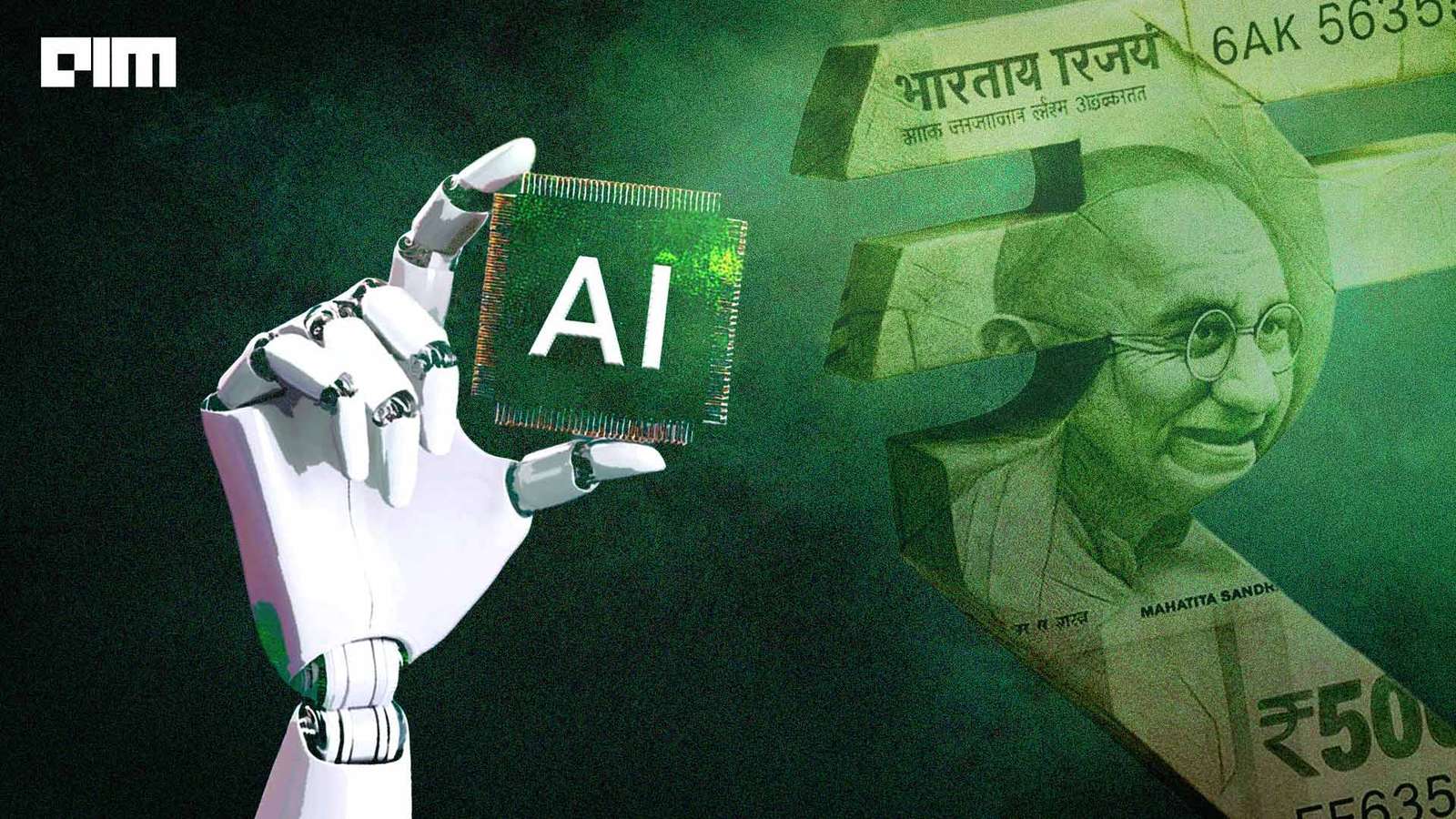
India’s AI self-reliance effort is moving beyond policy announcements into deployed systems, foundation models, and sector-specific platforms built on Indian data and infrastructure.
The companies below represent different layers of that stack.
Some are building large language models. Some are embedding AI into public health systems. Others are targeting defence, industry, labour markets, and voice infrastructure. Together, they show that sovereignty in AI now spans research, deployment, data ownership, and long-term capability building.
BharatGen
Founders: Rishi Bal, Ganesh Ramakrishnan
BharatGen is the IIT Bombay-led consortium that secured the largest GPU allocation under the IndiaAI Mission. Its flagship release, Param2 17B, is a 17-billion-parameter multilingual model built from scratch using a mixture of experts architecture and trained extensively on Indian data. The model supports 22 Indian languages and is designed to handle reasoning, mathematics, code, speech, text, and vision tasks. The long-term ambition is far larger. BharatGen is laying the groundwork for a trillion-parameter model as part of India’s foundational AI push.
Backed by government-supported compute and Bharat Data Sagar, the initiative positions itself as an ecosystem builder rather than a single company product. More than 60 engineers and researchers across nine academic institutions are working on large-scale model development.
Co-Founder Ganesh Ramakrishnan describes the philosophy as ‘Virasat bhi aur vikas bhi’, combining heritage preservation with modern development. Projects include Gyan Bharatam for conversational access to heritage literature, underwriting copilots in finance, governance query systems for state departments, and healthcare collaborations with hospitals.
“BharatGen is right at the top when it comes to India’s self-reliance goals under the IndiaAI Mission. I say that with confidence,” Ramakrishnan says. He argues that India has lacked exposure to platform-level model building at scale and that BharatGen is bridging the gap between academic research and real-world deployment. The effort extends beyond training models. It includes shaping inference engines, data-provenance systems, and observability frameworks to embed sovereignty across the full pipeline.
Genloop
CEO: Ayush Gupta
Genloop is building a trio of two-billion-parameter models under the IndiaAI Mission: Yukti, Varta, and Kavach. Yukti is the base model that reasons natively across 22 scheduled Indian languages. Varta is instruction-tuned and optimised for edge deployment in healthcare, agriculture, and governance use cases where connectivity and compute are limited. Kavach is positioned as India’s first guardrail LLM, designed to monitor and secure AI inputs and outputs for Indian consumers.
The company argues that Western public models are often expensive and linguistically misaligned for Indian markets. By developing domestic foundational models, Genloop says it is creating a local supply chain for AI and protecting 900 million users from unsafe or poorly adapted AI systems. Its focus is not only on model capability but also on cost efficiency and return on investment for Indian enterprises.
On the enterprise side, Genloop’s data analytics platform is already being used or piloted by companies, including Lenskart, Emeritus, Waaree Energies, and NetApp. For Lenskart, the platform is helping more stores achieve performance targets and drive topline growth. For NetApp, tasks such as creating customer support presentations that previously took four hours can now be completed in 30 seconds through conversational analytics. After design partnerships in late 2025, Genloop formally launched its enterprise go-to-market in January and is now expanding across sectors.
Soket AI Labs
CEO: Abhishek Upperwal
Soket AI Labs is building Project EKA, a 120-billion-parameter open-source language model trained from scratch on India-centric datasets. The model is being developed with a focus on defence, healthcare, and education sectors where data sensitivity and geopolitical risks are high. Soket frames sovereignty in strategic terms. Upperwal has argued that foreign models can embed biases and create national security vulnerabilities, especially in defence contexts.
The roadmap follows a phased scaling approach. The company has already released Pragna-1B and plans to scale to 7B in five to six months. It will then expand to 30B and ultimately reach 120B parameters by around the tenth month. Upperwal emphasises that this will not be a single leap but a gradual scaling process, validating architecture and data alignment at each stage before committing large compute resources. The 7B model is expected to be ready within months, providing a stepping stone towards larger releases.
Soket plans secure air-gapped deployments and on-device capabilities for defence use cases where cloud models are unsuitable. In education, it is working with AI centres of excellence to digitise archives and curriculum content and to collaborate with ministries and academic institutions.
The company is building in public under its COOM framework, publishing transparent updates and committing to energy-efficient training practices. Its approach combines open source principles with national security considerations.
ZenteiQ
Founder: Prof Sashikumaar Ganesan
ZenteiQ is building scientific AI infrastructure aimed at engineering and industrial intelligence rather than consumer language models. Its focus is on physics-aware AI systems that integrate directly into industrial workflows. The company argues that long-term sovereignty requires domestic ownership of AI systems used in advanced manufacturing, semiconductors, energy systems, aerospace, and deep tech industries.
Instead of generic chat models, ZenteiQ is developing domain native AI that reduces dependence on foreign engineering software and external AI black boxes. The platform supports thermal optimisation in electronics systems, acceleration of engineering simulations, energy and battery system modelling, and advanced industrial design intelligence. These are high-value sectors where design decisions influence national competitiveness.
The company reports enterprise validation and early revenue traction, with a roadmap for scalable domain-specific foundation models tailored to industrial contexts. The Founder, Prof Ganesan, says, “India’s AI sovereignty requires ownership not just of compute, but of foundational models tailored for its industrial future. ZenteiQ is building that layer, responsibly, strategically, and domestically.” By embedding AI inside real engineering decision-making, ZenteiQ positions itself as infrastructure for industrial independence rather than consumer-scale visibility.
Sarvam AI
Founders: Vivek Raghavan and Pratyush Kumar
Sarvam AI has experienced a significant shift in perception over the past year. After criticism of its earlier 24B-parameter Sarvam-M model, the company redirected its strategy toward deeply Indic applications. At the India AI Impact Summit, Sarvam launched two sovereign foundational models, Sarvam 30B and Sarvam 105B, signalling renewed ambition at the large model layer.
In parallel, the company moved into a rapid release cycle across the applied stack. Bulbul V3, its text-to-speech model, topped benchmarks in a blind study with over 20,000 votes across 11 languages.
Sarvam Vision reported 84.3% accuracy on messy documents across 22 Indic scripts, with word accuracy above 90% across major scripts. Instead of chasing English leaderboard benchmarks, Sarvam focused on Indian speech recognition with Saaras, OCR for complex forms, and multilingual synthesis.
The company has signed an MoU with the Odisha government to establish a sovereign AI park and previously partnered with Tamil Nadu. Its pivot reflects a broader lesson in sovereignty. Owning Indic speech, OCR, and document intelligence infrastructure may prove more valuable in the Indian context than competing head-to-head with global English models. Sarvam’s strategy now centres on depth within India rather than breadth across generic global benchmarks.
Shodh AI
CEO: Arastu Sharma
Shodh AI is building AI systems for science through autonomous laboratories and generative material intelligence. Under Project Skanda, developed in collaboration with NVIDIA, the company unveiled what it claims to be one of the world’s first mesoscale foundation models for energy storage. Unlike atomic-level chemistry models, Skanda focuses on the mesoscale structural architecture inside battery cells, which determines life, safety, and charging speed.
Shodh has trained its systems on more than 10 million physics-based simulations combined with in-house experimental data. A key part of its approach is the autonomous laboratory model, where AI decides which experiments to run, analyses results, and refines designs in a closed loop. This shifts materials discovery from manual trial and error to a data-driven process owned within India.
The company collaborates with DRDO, DST, Indian Railways, NVIDIA, and Google Cloud. Its AI-driven wet chemistry lab closes the loop between simulation and real-world validation. The long-term goal is to make AI-driven autonomous labs the standard method for discovering and scaling materials in India, strengthening energy security, advanced manufacturing, and technological resilience.
Wadhwani AI
Head - Shekar Sivasubramanian
Wadhwani AI is a not-for-profit institute building AI solutions embedded inside India’s public systems. Its work has been referenced in the Economic Survey of India 2025-26, reflecting its scale and policy relevance. The organisation focuses on healthcare, agriculture, and education, designing AI systems around real-world constraints, such as multilingual speech and low connectivity.
In tuberculosis care, the Cough Against TB application is deployed across 17 states and 103 districts, while AI-assisted line probe assay automation supports drug-resistant TB diagnosis across 97 laboratories. Its Clinical Decision Support System integrates with eSanjeevani, and diabetic retinopathy screening is deployed across 20 AIIMS centres. In education, its Oral Reading Fluency solution has completed more than 15 million assessments, benefiting 7.9 million children across tens of thousands of schools.
Kisan-e-Mitra, the PM Kisan grievance chatbot, has resolved over five million farmer grievances. Overall, Wadhwani AI’s systems have reached more than 190 million individuals through public systems. Its models are optimised for edge deployment and offline usage. By co-designing solutions with the government and embedding them directly into digital public infrastructure, Wadhwani AI positions sovereignty as population-scale public service delivery.
CoRover
CEO: Ankush Sabharwal
CoRover is building a conversational agentic AI platform powered by BharatGPT, an indigenous multilingual model family ranging from 0.5 billion to three billion parameters across 12 Indic languages. The company focuses on full-stack sovereign deployment, enabling enterprises and government institutions to build multilingual AI agents across chat, voice, video, and telephony channels.
At the India AI Summit, the company announced large-scale deployment of its multilingual AI platform powered by NVIDIA Nemotron Speech open models and libraries. This came alongside the launch of a new offline AI device—the BharatGPT DeskAI Appliance—built on NVIDIA’s Grace Blackwell architecture, Astra EdgeAI X.
It reports serving 50,000 plus enterprises and researchers and claims impact across more than one billion users. Clients include IRCTC, SEBI, LIC, NPCI, Bosch, and defence entities. CoRover argues that sovereignty requires control across models, datasets, and application layers rather than reliance on fragmented global APIs.
The company is launching BharatGPT DeskAI Appliance for on-premise deployment with offline capability and enhanced security. It claims that enterprises using its platform have achieved up to 10x revenue growth and 70% reduction in support costs through multilingual AI agents.
By combining generative AI with layered NLP and contextual systems, CoRover aims to reduce compute requirements while maintaining reliability for large-scale Indian deployments.
Gnani.ai
CEO: Ganesh Gopalan
Gnani.ai is building a full-stack sovereign voice intelligence ecosystem. At its core is Inya VoiceOS, India’s first five-billion-parameter voice-to-voice foundational AI model. It will sit alongside the company’s existing stack, which already powers voice AI agents, speech models and vertical-specific small language models for banks, insurers, non-banking financial companies, retailers and consumer businesses across India.
On top of this foundation, Gnani has built Inya.ai, a no-code agentic AI platform that allows enterprises to deploy voice and chat agents rapidly without in-house ML teams. It also offers HumanOS, which introduces multilingual digital humans combining voice and visual intelligence.
The company processes millions of conversations every month across BFSI, automotive, telecom, retail, and BPO sectors.
Enterprises report 4-6% improvement in collection rates within three months, nearly 2x increase in loan disbursals, 80% faster fraud detection using voice biometrics, and 30% increase in customer-experience scores. By building speech recognition, synthesis, security, and orchestration on a domestic stack, Gnani.ai positions voice as a core sovereignty layer for India’s AI ecosystem.
RevRag AI
CEO: Ashutosh Singh
RevRag AI focuses on embedding AI agents directly inside Indian BFSI applications rather than operating as an external chatbot layer. Its in-app agents handle multilingual onboarding, insurance sales, credit card journeys, MSME merchant onboarding, and wealth management workflows through SDK-level integrations inside live user journeys.
Clients include PhonePe, Mahindra Finance, Motilal Oswal, Razorpay, Kissht, Policybazaar, Open Financial, and Easebuzz. The platform reports 10-15% higher conversion rates and up to 70% lower support costs in production deployments. The majority of revenue comes from Indian BFSI customers, with over four production clients and more than 15 paid pilots.
RevRag argues that sovereignty in finance requires AI systems trained on Indian compliance rules, languages, and behavioural patterns rather than adapted global tools. By keeping data and intelligence within domestic workflows, it positions itself as core infrastructure for India’s financial services layer.
Vahan.ai
CEO: Madhav Krishna
Vahan AI applies conversational AI to India’s labour and gig economy. Its voice-first recruiter operates through phone calls and chat interfaces, making job discovery accessible to blue-collar and gig workers in multilingual, mobile-first environments.
The company has placed over one million people into jobs over its lifetime and enabled employment for more than four lakh workers in the past year alone. It works with local recruitment partners known as Vahan Leaders, helping them scale placements by up to 10 times using AI tools while retaining local trust and relationships.
Vahan builds domain-specific workforce intelligence around worker preferences, employer demand cycles, drop-off signals, and compliance workflows. Rather than building foundation models, it focuses on embedding AI into real employment pipelines at scale. Its concept of sovereignty stresses inclusive economic growth, ensuring AI value creation translates into livelihoods and income stability across hundreds of Indian cities.
Staqu Technologies
CEO: Atul Rai
Staqu Technologies is building AI infrastructure for public safety and enterprise intelligence. Founded in 2015 by Atul Rai along with Anurag Saini and Pankaj Kumar Sharma, the company was shaped by Rai’s early experiences growing up in eastern Uttar Pradesh, where crime and weak law enforcement were routine realities.
At the center of Staqu’s offering is JARVIS, an AI-powered audio and video analytics platform that converts live and recorded CCTV feeds into searchable, actionable intelligence. Instead of manually scanning hours of footage, police officers can query video using text prompts such as clothing attributes, vehicles, or behaviour patterns.
Staqu has worked with more than 11 state police forces and multiple intelligence agencies, helping reduce investigation time and enabling faster suspect identification. Its larger intelligence platform, YAKSH, unifies fragmented criminal records across images, videos, audio, and text to support multimodal analysis, gang mapping, and hotspot detection, while keeping human validation in the loop.
JARVIS is deployed on customer-owned infrastructure rather than its own cloud, with police deployments running in government data centres and enterprise deployments hosted on private clouds. The company emphasises encryption, layered authentication, and compliance standards to address privacy and accountability concerns.
NeuroDx
Founders: Siddharth Panwar, Kailash Sati & Dr. Puneet Agarwal
NeuroDx is building what it describes as a foundation AI model for brain health. It aims to transform how neurological and psychiatric disorders are diagnosed. Selected as one of the 12 startups under the IndiaAI Mission, the company unveiled MANAS-1 at the India AI Impact Summit, a 400-million-parameter brain foundation model trained on Indian clinical data.
The system is designed to decode human brain electrical activity and support early diagnosis through advanced EEG signal analysis.
MANAS-1 functions as a decision-support tool for clinicians and researchers. Built using transformer-based architectures, it analyses electroencephalogram signals to identify biomarkers linked to epilepsy and mental health disorders. The company claims the model has achieved over 95% accuracy in detecting such biomarkers.
Founded by experts from AIIMS Delhi, Stanford University, IIT Delhi, and IIT Kanpur, NeuroDx combines expertise in neuroscience and AI. The company is also developing a larger 20-billion-parameter foundation model focused on deeper EEG signal analysis, with future applications in early screening and brain-computer interface systems.
Its broader mission is to build affordable, non-invasive diagnostic tools that meet regulatory standards while strengthening India’s sovereign AI capabilities in healthcare.
Neysa
CEO: Sharad Sanghi
Neysa is a Mumbai-based company that operates an AI acceleration cloud platform that enables enterprises and government entities to train, fine-tune, and deploy AI workloads on domestic GPU infrastructure. It positions itself as a core AI infrastructure layer in India’s sovereignty stack.
In a significant capital infusion, Neysa secured commitments totalling $1.2 billion, including up to $600 million in equity from Blackstone and co-investors, with plans for an additional $600 million in debt financing. The funding will support the deployment of more than 20,000 GPUs in India, pushing its valuation to $1.4 billion.
Unlike providers that focus purely on GPU allocation, Neysa offers an end-to-end AI cloud platform through its Velocis Cloud. From Jupyter notebooks and containers to inference endpoints and virtual machines, the platform integrates the full workflow stack. Enterprises receive flat fee pricing, granular observability, and dedicated inference endpoints for models such as Llama, Qwen, and Mistral.
The company, founded in 2023, frames its offering around solving the AI trilemma of balancing cost, speed, and product market fit while maintaining trust. CEO Sharad Sanghi has emphasised performance certainty and data assurance, enabling hyperscalers and global AI labs to scale reliable infrastructure within India.
QpiAI
CEO: Nagendra Nagaraja
QpiAI represents India’s push into the convergence of AI and quantum computing. Based in Bengaluru and selected under the National Quantum Mission, the company developed QpiAI Indus, India’s first full-stack 25-qubit superconducting quantum computer, which it launched on April 14, World Quantum Day 2025.
The system marks a milestone in India’s quantum hardware journey and reflects QpiAI’s ambition to build sovereign quantum technology across hardware, software, and applications.
Beyond QpiAI Indus, the company is developing Kaveri, a 64-qubit superconducting quantum processor chip, along with QpiAISense modular control electronics and QpiAI QVidya, a training and education platform for quantum information science.
QpiAI focuses on creating accessible quantum HPC software, algorithms, and hardware so that industries can experiment with practical quantum applications rather than abstract research.
In partnership with Alliance University, QpiAI launched AU QUASAR (Quantum AI School for Advanced Research), an eight-qubit quantum experience centre in Bengaluru. The facility provides hands-on access to superconducting quantum systems for students, enterprises, and government users, supporting degree programs, proof-of-concept validation, and quantum computing as a service.
CEO Nagendra Nagaraja has said the goal is to make quantum computing accessible to Indian innovators while building a skilled workforce aligned with the National Quantum Mission. Through its combined hardware and AI stack, QpiAI is working to ensure that India participates not only in AI sovereignty but also in the next layer of computational independence.
Spotted an error? Tell our editors. Read our editorial standards and corrections.