Jensen Missed India But NVIDIA Showed Up
By Sanjana Gupta ·
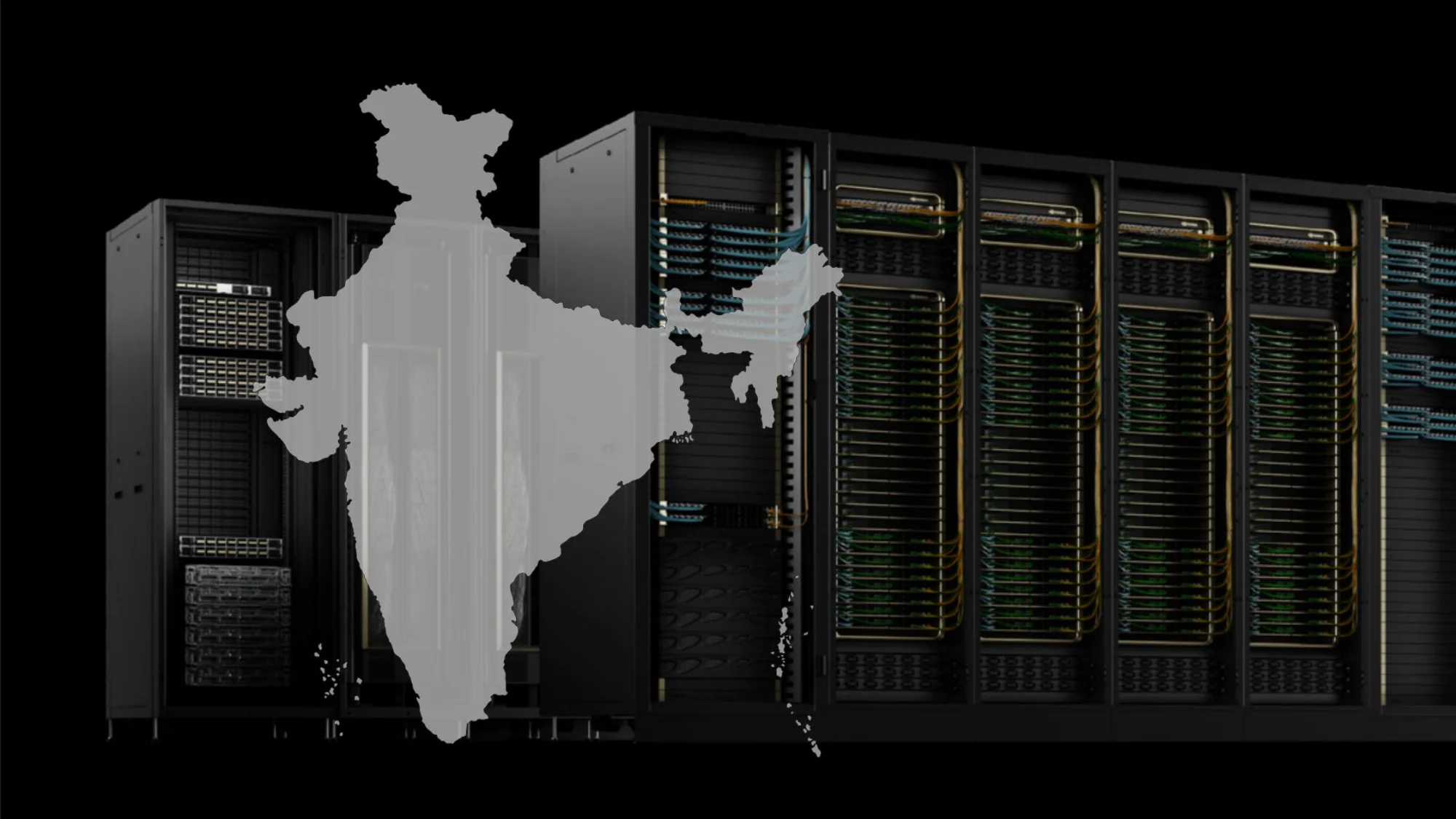
While the entire country waited for NVIDIA CEO Jensen Huang’s visit during the India AI Impact Summit in New Delhi, it was cancelled at the last minute “due to unforeseen circumstances,” as mentioned in an email to AIM.
During a recent media briefing, Vishal Dhupar, Managing Director for South Asia at NVIDIA, mentioned that Huang caught a bug and was “under the weather.” However, that didn’t dampen the company’s spirits as it announced partnerships with Yotta, L&T, E2E Networks, major manufacturers and IT firms.
This will expand AI infrastructure, build sovereign models and deploy enterprise AI agents at scale in the country. These collaborations aim to build AI factories, scale data centres with tens of thousands of GPUs and deploy AI agents across sectors including healthcare, telecom and manufacturing.
Yotta is developing Shakti Cloud powered by over 20,000 Blackwell Ultra GPUs, while E2E Networks is building a Blackwell cluster hosted at the L&T data centre in Chennai. Netweb Technologies is also launching AI supercomputing systems built on the Grace Blackwell architecture and manufacturing them in India.
The push will expand compute capacity, accelerate model development and industrialise AI applications in India. Under the IndiaAI Compute Pillar, India is building AI cloud capacity with systems that include tens of thousands of NVIDIA GPUs.
Manufacturing and Robotics
On the manufacturing side, Reliance New Energy is combining Siemens’ digital twin technology with Omniverse libraries to design gigafactories. Addverb Technologies is using digital twins and simulation to train robots before deployment and Havells has achieved six times faster fluid simulations using Synopsys tools accelerated by CUDA-X.
During the media briefing, Dhupar responded to AIM’s query on measurable automation outcomes over the next three to five years. He said AI-driven robotics will augment roles rather than replace them.
“Many people think that tasks which are getting replaced ends up replacing people. Actually is the change of the task, not the purpose,” Dhupar adds, emphasising that automation frees workers to focus on complex cases.
He refers to this as the “paradox of efficiency” and argues that higher productivity would create more skilled roles across AI factories. According to the company, India’s AI workforce and developer base position it to scale these systems across sectors in the coming years.
The AI Startups
The company points out that open models remain central to sovereign AI development. NVIDIA Nemotron models, datasets and libraries are enabling Indian firms to build language and multimodal systems across public services, finance and enterprise operations.
Several Indian firms are already deploying these systems. CoRover.ai supports around 10,000 concurrent users and more than 5,000 daily ticket bookings for railway services using Nemotron speech models. Gnani.ai has achieved a 15x reduction in inference costs while scaling to support over 10 million calls per day.
Dhupar mentions that open technology fuels faster progress and enables developers to customise models for local languages and use cases. He adds that more than 4,000 AI startups in India are part of the NVIDIA Inception programme.
The Enterprises
Wipro has deployed an AI agent-assisted solution for a US healthcare insurer. AI agents now handle 42% of inbound calls, support 900 concurrent calls and process 164 requests per second with sub-200 millisecond latency. The system uses NIM microservices and NeMo Guardrails to meet regulatory requirements.
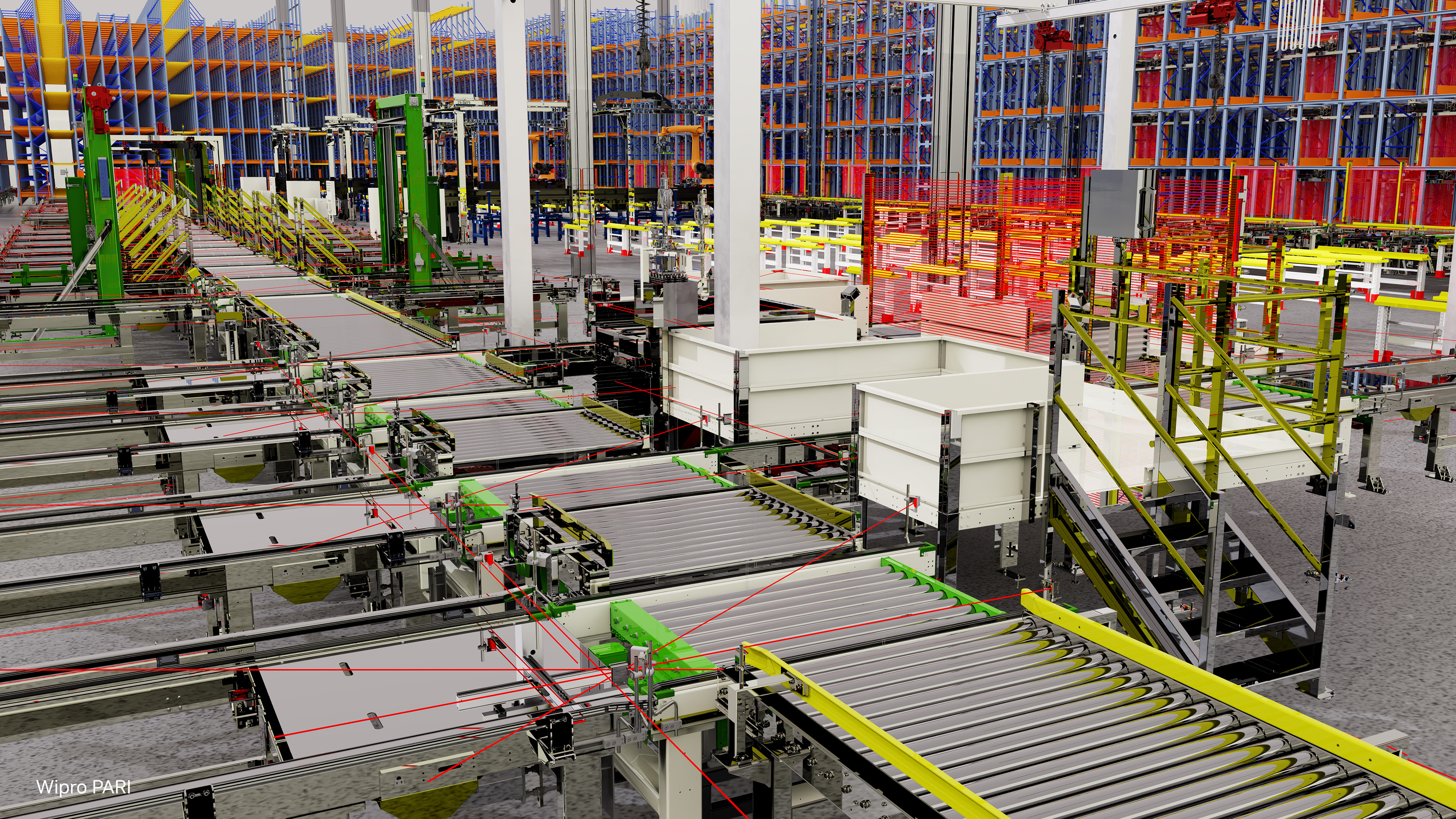
Additionally, Tech Mahindra is building a large telco model to generate data-driven recommendations for field technicians and improve network operations. Infosys has developed a 2.5 billion parameter coding model using the NeMo framework to support software engineering workflows. Persistent is applying AI to molecular discovery using the BioNeMo platform.
TCS is also delving into safety and precision benchmarks at Tata Motors by converting standard camera feeds into intelligent sensors for automated quality checks and real-time safety compliance. For this, it is harnessing the NVIDIA Metropolis platform, the NVIDIA Blueprint for video search, summarisation and digital twins built on Omniverse libraries.
Dhupar describes AI as a five-layer stack spanning energy, chips, infrastructure, models and applications. He says India is building capability across each layer through partnerships with academia, startups and enterprises.